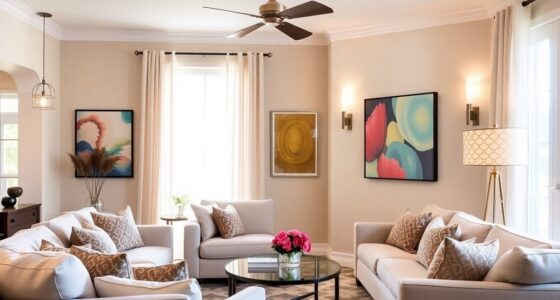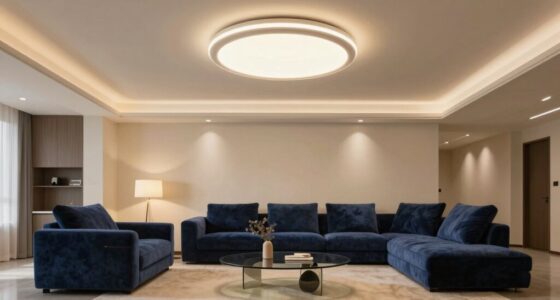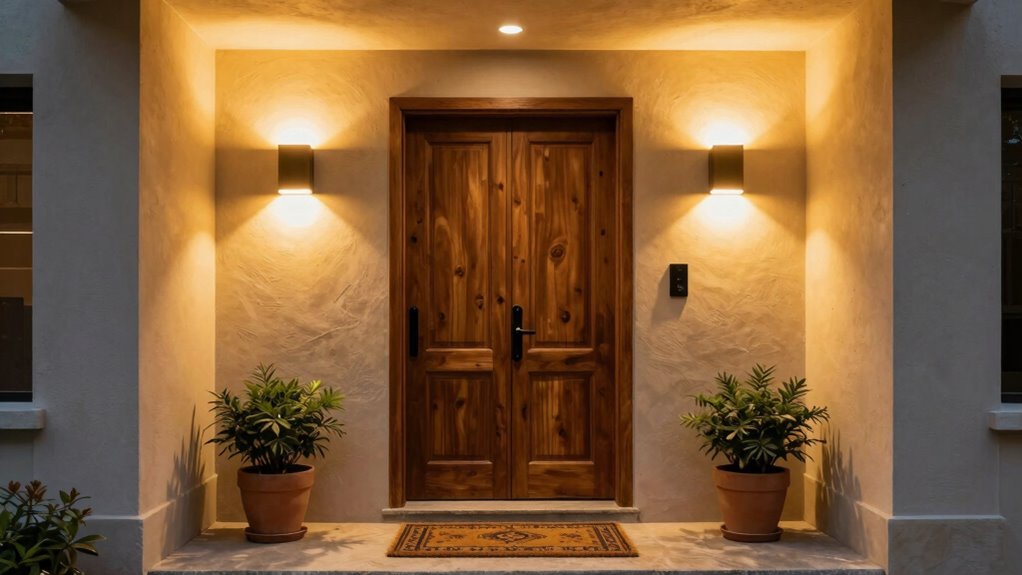

To make your home feel more welcoming instantly, focus on strategically placing warm, soft lighting at eye level near your entryway. Use wall sconces or picture lights to highlight artwork and hardware, creating focal points that draw guests in. Avoid harsh overhead lights, which can flatten the space. Instead, add dimmer switches for adjustable ambiance. Keep exploring to discover even more ways to create a warm, inviting entrance that leaves a lasting impression.

Get furniture and decor delivered free with Prime
- Fast, free delivery on millions of items
- Prime Video, Amazon Music and more included
- Member-only deals all year
Key Takeaways
- Install wall sconces at eye level on either side of the door for balanced, inviting illumination.
- Use soft, warm LED lights to create a cozy and welcoming atmosphere immediately.
- Highlight artwork and door hardware with targeted picture lights or accent fixtures.
- Incorporate dimmer switches to adjust lighting levels for different moods and times of day.
- Avoid harsh overhead lighting; focus on layered, focused lighting to add depth and warmth.

Ever wonder how a well-lit entryway can instantly make your home feel more inviting? The secret often lies in small but impactful details that set the tone for guests as soon as they step inside. One of the most effective tricks is to focus on your entryway lighting, but it’s not just about flipping on a switch. It’s about creating a carefully curated space where lighting highlights your artwork placement and complements your door hardware, making the entire area feel warm and welcoming. Incorporating biodiversity-friendly lighting can also enhance natural elements and promote eco-conscious living. Start by thinking about how your lighting can accentuate artwork near your entry. Whether it’s a beautiful painting, a framed photograph, or a decorative mirror, proper illumination draws attention to these pieces and adds personality to your space. Soft, directed lighting—like picture lights or adjustable wall sconces—can make artwork pop without overwhelming the senses. When you position your lights thoughtfully, you guide visitors’ eyes and create a focal point that immediately communicates style and care. It also helps to avoid harsh overhead lights that can flatten the artwork or cast unflattering shadows. Additionally, lighting placement can influence the perceived size and openness of your entryway, making it feel more spacious and inviting. Proper lighting design can also improve energy efficiency by reducing unnecessary light clutter and emphasizing key features.
Next, consider how your door hardware interacts with your overall aesthetic. The right lighting can highlight your choice of door handles, knobs, or even decorative hardware accents. For instance, installing sconces on either side of your door can cast a gentle glow that emphasizes the hardware’s design, whether it’s sleek modern, vintage brass, or rustic wrought iron. This subtle illumination adds depth and interest to the entryway, making your hardware stand out as a deliberate design feature. When your door hardware is showcased in the best light, it signals to visitors that your home is thoughtfully curated and inviting.
The placement of your lighting fixtures is just as important as the fixtures themselves. Position sconces at eye level, framing the artwork and door hardware symmetrically to create balance. Avoid placing lights too high or too low, which can distort the visual harmony. If you have a small entryway, consider using wall-mounted fixtures rather than ceiling lights, so you don’t clutter the space. Dimmer switches are a great addition, giving you control over the ambiance, whether you want a soft glow during evening arrivals or brighter light during daytime visits. Ensuring your lighting is energy-efficient and sustainable can also contribute to a more eco-conscious lifestyle, aligning with modern interior design principles.
Ultimately, the key is to combine thoughtful artwork placement, strategic lighting, and attention to door hardware. When you do, your entryway transforms into a warm, inviting space that greets visitors with style and comfort, making your home feel more welcoming immediately.
Products Worth Considering

Philips Hue Smart Light Starter Kit with Bridge and 4 White and Color A19 Bulbs

Samsung 55-Inch M80H Series 4K Mini LED Smart TV (2026 Model)

Philips Hue Bridge Pro Smart Lighting Hub
As an affiliate, we earn on qualifying purchases.
Frequently Asked Questions
How High Should Entryway Lights Be Installed?
You should install entryway lights about 7 to 8 feet above the floor, ensuring decorative fixtures provide ample illumination without overwhelming the space. Proper height balances style and function, enhancing energy efficiency by reducing the need for excessive lighting. Choose fixtures that complement your decor, and position them at this height for a welcoming ambiance that highlights your home’s entrance while saving energy.
Can Outdoor Bulbs Be Used Indoors for Entryway Lighting?
Yes, outdoor bulbs can be used indoors for entryway lighting, but you need to check indoor fixtures for bulb compatibility. Outdoor bulbs are designed to withstand weather, but they often work well indoors, too. Just make certain the wattage and base type match your indoor fixtures’ requirements. This way, you get durable, bright lighting that instantly makes your entryway more inviting without risking fixture damage.
What’s the Best Color Temperature for Welcoming Entry Lighting?
Brighten your entryway with a warm, inviting glow by choosing a color temperature around 2700K to 3000K. This range creates a cozy lighting ambiance that immediately makes visitors feel welcome and comfortable. Cooler temperatures, like 4000K, can feel stark, while warmer tones foster intimacy. Select bulbs within this spectrum to craft an ambiance that warmly greets everyone, making your home feel inviting from the moment they arrive.
Are Motion Sensors Effective for Entryway Lighting?
Yes, motion sensors are highly effective for entryway lighting, especially when integrated with smart technology. They automatically turn lights on when you arrive, creating a welcoming atmosphere, and turn off when you leave, saving energy. This improves energy efficiency and adds convenience. Plus, smart motion sensors can adapt to your schedule and preferences, ensuring your entryway is always well-lit without wasting electricity or requiring manual switches.
How Often Should Entryway Lighting Be Replaced or Maintained?
You should replace or maintain your entryway lighting every 1-2 years to guarantee decorative fixtures stay bright and energy efficiency remains ideal. Regularly check for dimming bulbs, corrosion, or damaged wiring, and clean fixtures to keep them looking inviting. Upgrading to LED bulbs enhances energy efficiency and longevity. Consistent maintenance helps your entryway stay welcoming, safe, and stylish, making a great first impression for anyone entering your home.
Conclusion
By simply upgrading your entryway lighting, you can turn your home into a glowing sanctuary that beckons everyone inside. A well-lit entrance doesn’t just brighten your space—it transforms it into an irresistibly warm haven that feels like a welcoming hug every time you walk through the door. So, don’t underestimate the power of a perfect light—your home’s first impression could be more radiant than a thousand sunsets, making everyone feel instantly at ease and enthusiastic to stay.