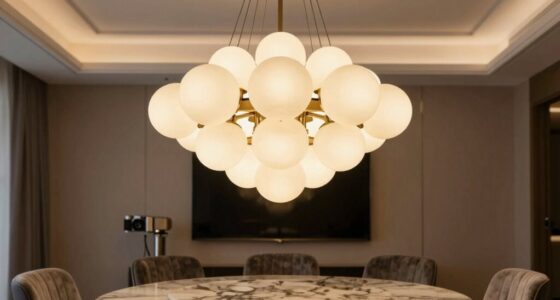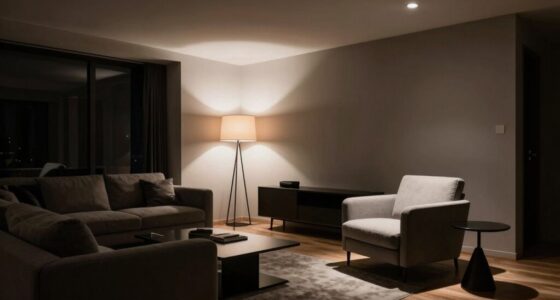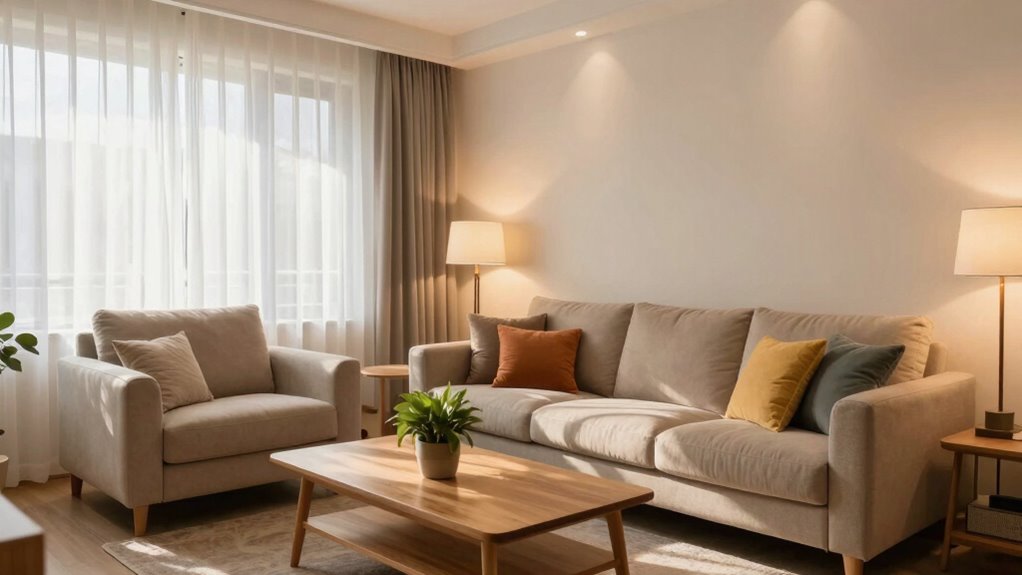

To fix a room that feels too bright or too dim, start by adjusting your color palette with muted warm tones for over-bright spaces or light, reflective colors to boost dim rooms. Rearrange furniture to block or redirect excess sunlight and bring seating closer to windows if it’s too dark. Use curtains or blinds to control light levels, and place reflective surfaces thoughtfully. Keep exploring these strategies to create a balanced, comfortable space tailored just for you.

Get furniture and decor delivered free with Prime
- Fast, free delivery on millions of items
- Prime Video, Amazon Music and more included
- Member-only deals all year
Key Takeaways
- Adjust the color palette with muted tones to absorb excess light or bright hues to reflect natural light effectively.
- Move reflective surfaces and furniture to minimize glare and control light distribution.
- Use curtains, blinds, or diffusers to regulate light entry and soften harsh illumination.
- Rearrange furniture to block or enhance light flow, making the room feel balanced and inviting.
- Incorporate light diffusion techniques to create a comfortable ambiance and prevent overly bright spots.

If your room feels too bright or too dim, adjusting the lighting can make a big difference in creating a comfortable space. But beyond just adding or removing light fixtures, your room’s overall ambiance depends heavily on your color palette and furniture placement. When the room is overly bright, a softer, more muted color palette can help absorb excess light and create a cozy atmosphere. Think of warm taupes, gentle grays, or pastel shades that reflect less light and tone down the brightness. Conversely, if your room feels too dim, brighter hues like whites, creams, or light blues can reflect available light and make the space feel more open and airy.
Furniture placement plays a critical role in controlling how light interacts with your room. If you’re dealing with too much brightness, try moving reflective surfaces like glass tables or shiny decor away from windows or light sources. Positioning furniture in a way that blocks direct sunlight—like placing a tall bookshelf or a sofa strategically—can help diffuse intense rays and prevent glare. On the other hand, if your room is too dim, arrange your furniture to maximize natural light. Pull seating closer to windows, and avoid blocking light with bulky furniture. Use open, uncluttered layouts to allow sunlight to spread evenly throughout the space, making it feel brighter and more inviting. Additionally, considering the light control options like curtains or blinds can further enhance your room’s brightness levels. Implementing light management strategies can also help you customize the lighting to suit different times of day and activities. Proper light balance is essential for achieving a comfortable and aesthetically pleasing environment. Incorporating light diffusion techniques can also soften harsh light and improve the overall ambiance. Using these methods, you can effectively optimize lighting to create a space that feels just right.
Products Worth Considering

Philips Hue Festavia Permanent Outdoor String Lights, 80 Lights, 150 ft

Philips Hue Smart Light Starter Kit with Bridge and 4 White and Color A19 Bulbs

Philips Hue Bridge Pro Smart Lighting Hub
As an affiliate, we earn on qualifying purchases.
Frequently Asked Questions
Can Window Tinting Help Control Room Brightness Effectively?
Yes, window tinting can effectively control room brightness. Window films work by reducing glare and blocking excess sunlight through light absorption, which helps balance the room’s lighting. When you install tinted films, you’ll notice a significant decrease in harsh sunlight and heat, creating a more comfortable environment. This simple upgrade allows you to manage brightness levels without sacrificing natural light, making your space more pleasant and energy-efficient.
What Color Schemes Make a Room Appear Brighter or Dimmer?
Ever wonder how color schemes influence a room’s brightness? Light colors like whites, pastels, or soft neutrals reflect light, making your space feel brighter. Darker shades, such as deep blues or browns, absorb light, creating a cozier, dimmer atmosphere. Color psychology plays a role here—bright hues energize, while muted tones calm. Pair these with appropriate lighting fixtures to achieve your desired ambiance and make your room feel just right.
How Does Furniture Placement Influence Room Lighting Perception?
Your furniture arrangement considerably influences how you perceive a room’s lighting. By strategically placing lighting accessories, like table lamps or wall sconces, you can create a balanced ambiance. Position larger furniture pieces away from windows to prevent blocking natural light, or use mirrors to reflect light and brighten the space. Adjusting furniture placement helps distribute light evenly, making the room feel more inviting, whether it’s too bright or too dim.
Are There Eco-Friendly Options for Adjusting Room Brightness?
Yes, you can choose eco-friendly options to adjust your room’s brightness. Switch to energy-efficient bulbs, like LEDs, which use less power and produce less heat. Consider biodegradable curtains made from natural fibers, which help control light without harmful chemicals and are sustainable. These choices not only reduce your environmental impact but also give you flexible, stylish ways to manage your room’s lighting naturally and responsibly.
How Can I Prevent Glare When Dimming Bright Rooms?
Did you know that glare can cause eye strain and headaches in over 70% of people? To prevent glare when dimming bright rooms, use smart dimmers to precisely control light levels. Pair them with light diffusers to soften harsh light and distribute it evenly. This combination reduces glare, creates a comfortable ambiance, and protects your eyes, making your space much more pleasant and visually balanced.
Conclusion
Adjusting your room’s brightness is like tuning a musical instrument—you want everything to play in perfect harmony. Whether it feels like you’re in the spotlight or hiding in the shadows, small tweaks can make a big difference. With just a few simple tricks, you’ll turn your space into a cozy retreat or a vibrant hub in no time. Remember, your room should be as welcoming as an old friend, not a spotlight or a cave.