To energize your home office and cut down eye strain, focus on maximizing natural light by positioning your desk near windows and diffusing direct sunlight with curtains. Use adjustable LED lighting with a cooler color temperature (around 5000K-6500K) for focus-driven tasks, and add task lamps to target specific areas. Combining ambient, task, and natural light creates a balanced setup that boosts energy and comfort. Keep exploring for more smart lighting tricks to transform your workspace.
Key Takeaways
- Use natural light by positioning your desk near windows and diffusing sunlight with sheer curtains to prevent glare.
- Incorporate adjustable LED task lamps with dimming features to customize brightness and color temperature for different tasks.
- Opt for cool white (5000K-6500K) lighting during work hours to boost alertness and focus.
- Combine ambient, task, and natural lighting to create a balanced, glare-free workspace environment.
- Adjust lighting based on activity, switching to warmer tones during breaks to reduce eye strain and promote relaxation.
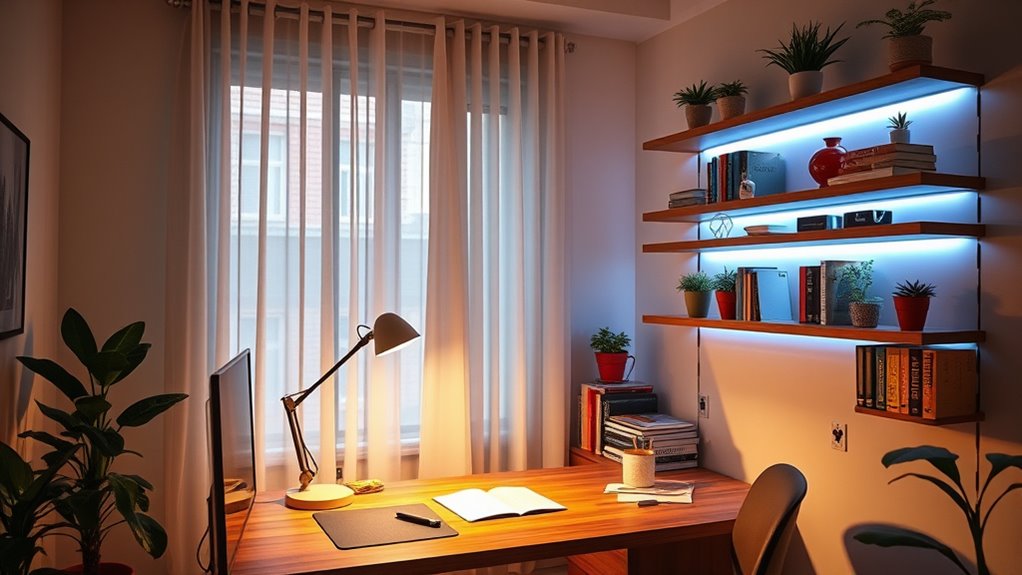
Good lighting can make or break your home office experience, so it’s essential to choose the right strategies to keep your space bright and energizing. One of the most effective ways to do this is by paying attention to color temperature and maximizing natural light. Color temperature refers to the hue of your lighting, measured in Kelvins, and it plays a significant role in how energized and focused you feel. Cooler temperatures, around 5000K to 6500K, emit a bluish-white light that mimics natural daylight, helping you stay alert and productive during work hours. Warmer tones, below 3000K, create a cozy atmosphere but can make you feel sleepy or less focused, so it’s best to reserve these for relaxation or after-hours.
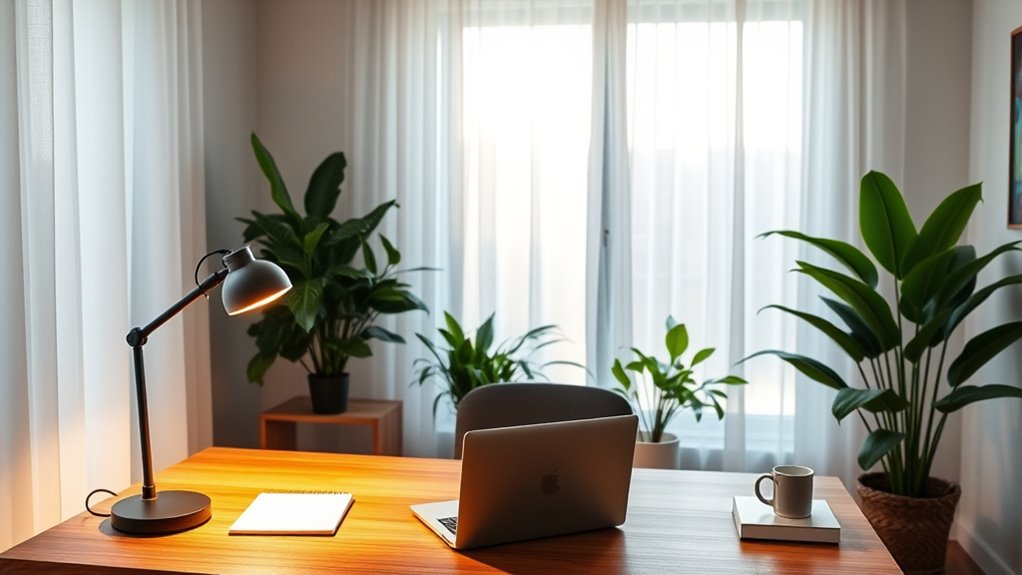
Natural light is your best ally in creating an energizing workspace. It not only boosts mood and concentration but also reduces eye strain, which is common when working under artificial lighting. Position your desk near a window, if possible, so you can benefit from daylight throughout the day. If direct sunlight causes glare, use sheer curtains or blinds that diffuse the light evenly across your workspace. This guarantees your eyes aren’t constantly adjusting between bright and shadowed areas, which can lead to fatigue.
Incorporating adjustable lighting fixtures allows you to tailor the brightness and color temperature to your needs. Opt for LED bulbs with adjustable settings, so you can switch from bright, cool light during intense work sessions to softer, warmer tones when wrapping up or taking breaks. Dimmable options provide even more control, letting you reduce brightness during late hours or when you need a calmer environment. Remember, it’s not just about brightness but also about creating a comfortable visual environment that minimizes eye strain.
Using task lighting is also essential. A focused desk lamp with adjustable brightness ensures you can illuminate your workspace without over-lighting the room. Position the lamp to avoid glare on your screens and papers, which can cause eye fatigue. Combining this with ambient lighting that complements natural light creates a balanced environment that energizes rather than exhausts your eyes. Incorporating appropriate lighting techniques can further enhance your workspace by reducing glare and shadows.
Ultimately, integrating the right color temperature, maximizing natural light, and using adaptable fixtures helps you craft a home office that energizes you, reduces eye strain, and enhances productivity. Pay close attention to the quality and placement of your lighting, and you’ll find that your workspace becomes a more inviting and efficient environment.

Airlonv LED Desk Lamp with Clamp, 17" Stepless Dimming Light, Black
- Stepless Dimming and Color Adjustment: Adjust brightness from 1% to 100% and change color temperature from 2700K to 6500K
- 360° Adjustable Flexible Gooseneck: Easily direct light with full range of motion
- Long Lifespan and Heat Dissipation: Made of aluminum and ABS for durability and heat management
As an affiliate, we earn on qualifying purchases.
As an affiliate, we earn on qualifying purchases.
Frequently Asked Questions
How Does Natural Light Affect Productivity in a Home Office?
Natural light greatly boosts your productivity in a home office. When you position your window properly, it provides ample daylight, reducing reliance on artificial lighting and creating a more inviting workspace. Strategic window placement ensures consistent light throughout the day, minimizing eye strain and fatigue. Combining natural light with well-designed artificial lighting creates a balanced environment that keeps you energized and focused, making your work more efficient and enjoyable.
What Are the Best LED Lighting Options for Eye Comfort?
They say “a picture is worth a thousand words,” and the right LED lighting can make your workspace more comfortable. For eye comfort, choose LEDs with a color temperature around 4000K to 5000K, mimicking natural daylight. Look for options with glare reduction features to prevent eye strain. These choices help you stay focused and energized while reducing fatigue, so your home office feels more inviting and productive.
Can Smart Lighting Systems Improve Work Focus?
Smart lighting systems can definitely boost your focus. By adjusting color temperature, you can create a brighter, cooler light during work hours to stay alert, then switch to warmer tones for relaxation. Smart dimming allows you to customize brightness levels, reducing eye strain and maintaining your concentration. These features adapt to your needs, making it easier to stay focused and comfortable throughout your workday.
How Should I Position My Desk Relative to Light Sources?
Imagine your desk basking in natural light, with a window positioned to the side. You should place your desk so that your computer screen faces away from direct sunlight and near a window, avoiding glare. Positioning your desk this way, with the light source to the side, prevents eye strain and shadows, creating a comfortable workspace. Adjust the desk placement as needed to optimize lighting and reduce discomfort during your workday.
Are There Specific Lighting Colors That Boost Concentration?
You might wonder if certain lighting hues can boost your concentration. Generally, cooler color temperatures, around 5000K to 6500K, promote alertness and focus, making them ideal for workspaces. These shades resemble daylight and can help you stay energized. Avoid warmer hues, like yellow or amber, which create a relaxing atmosphere but might reduce alertness. Experiment with different lighting hues to find what keeps you most productive throughout the day.
Conclusion
By choosing the right lighting, you can energize your space, reduce eye strain, and boost productivity. By maximizing natural light, layering your lighting, and adjusting brightness, you create an environment that works for you. When your lighting supports your focus, your mood, and your comfort, you set yourself up for success. Because a well-lit home office isn’t just about illumination — it’s about inspiring clarity, fostering creativity, and empowering your work every day.