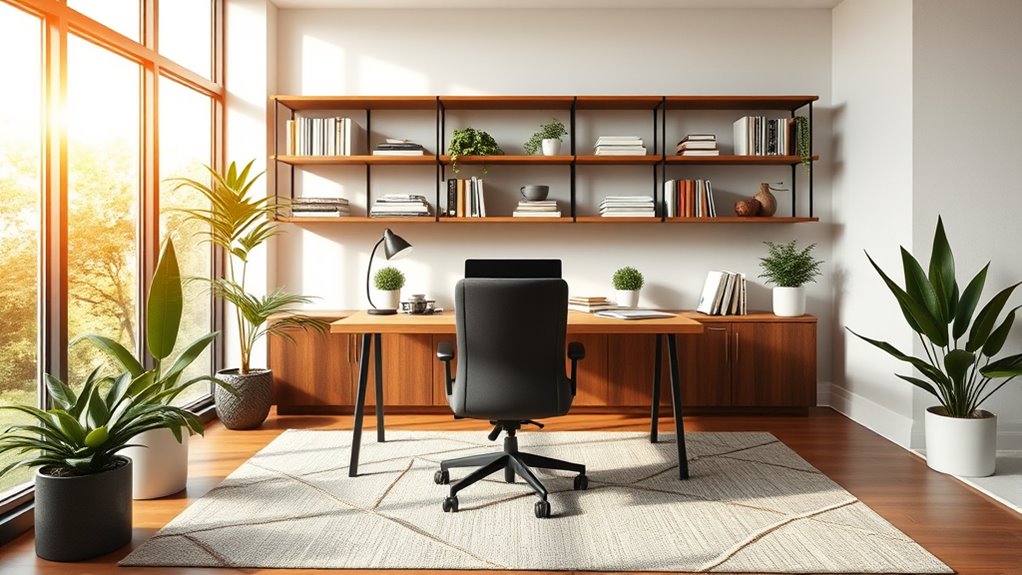

To create the ultimate study room, choose calming colors like soft blues or muted greens that promote focus. Position your desk near a window for natural light, and layer artificial lighting with ambient, task, and accent options to reduce eye strain. Opt for durable, lightweight furniture that supports good ergonomics, and use materials that enhance comfort. Thoughtful layout, decor, and lighting work together to boost productivity—keep exploring to discover more ways to optimize your space.
Key Takeaways
- Design a layout that maximizes natural light and ergonomics, positioning desks near windows for optimal daylight exposure.
- Choose calming color schemes like soft blues, muted greens, and warm neutrals to promote focus and reduce distractions.
- Incorporate layered artificial lighting with adjustable task, ambient, and accent lights to minimize eye strain and create a versatile environment.
- Select furniture made of durable, lightweight materials such as Baltic birch or pine, ensuring comfort and proper ergonomic support.
- Decorate with minimal clutter, using natural textures and calming decor elements to foster a tranquil, focused study atmosphere.
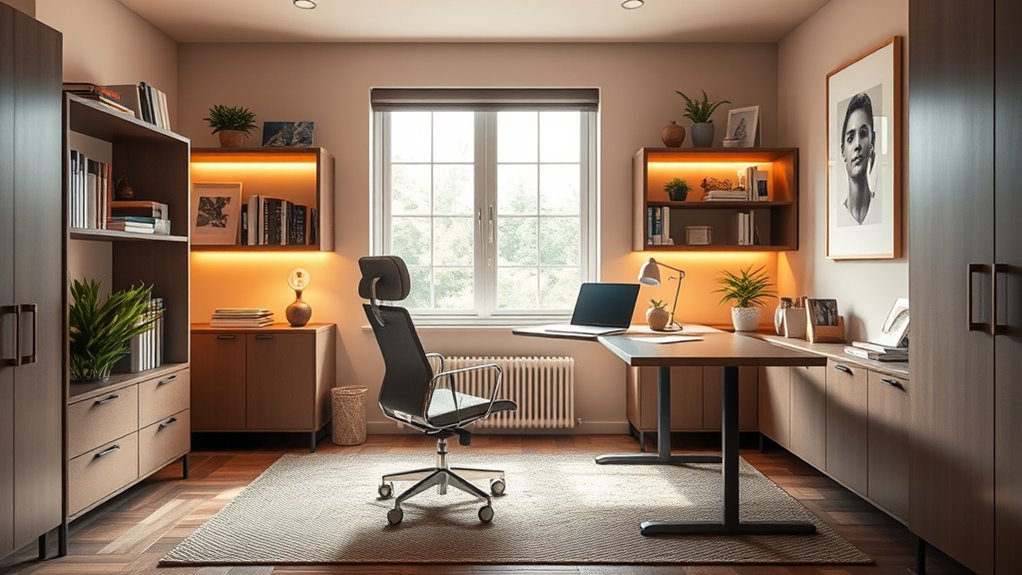
Creating the perfect study room involves more than just selecting a desk and chair — it’s about designing a space that boosts focus and productivity. One of the most impactful ways to do this is through thoughtful choices in color schemes and lighting options. Your color palette can influence your mood and concentration, so opt for calming hues like soft blues, muted greens, or warm neutrals. These colors create a tranquil environment that minimizes distractions and promotes sustained attention. Avoid overly bright or chaotic colors that might overstimulate your senses, and instead, choose shades that foster a sense of calm and clarity.
Lighting options are equally essential in shaping a productive study space. Natural light is your best friend — it reduces eye strain and keeps you alert. Position your desk near a window if possible, and use sheer curtains to diffuse harsh sunlight while still allowing plenty of daylight in. When natural light isn’t enough, supplement with layered artificial lighting. A combination of ambient, task, and accent lighting works best. For ambient lighting, consider ceiling fixtures that evenly illuminate the room without causing glare. Task lighting, such as adjustable desk lamps, should be directed towards your work area to minimize shadows and reduce eye fatigue during long study sessions. Accent lighting, like LED strips or small wall sconces, can add a warm glow that makes the space inviting and less sterile.
When choosing lighting options, think about color temperature. Cooler white light (around 4000K) mimics daylight and keeps you alert, making it ideal for focused work. Warmer tones (around 2700K) can create a cozy atmosphere for relaxing breaks but might not be the best choice for intensive study periods. Dimmers are a valuable addition, giving you control over brightness levels to match the time of day and your mood. Additionally, selecting furniture made from durable and lightweight woods like Baltic birch and pine can enhance both the aesthetics and functionality of your study space. Remember, the goal is to create a well-lit environment that reduces eye strain, enhances concentration, and makes your study time more efficient.
Incorporating these elements thoughtfully helps you craft a space that feels both inspiring and functional. By choosing the right color schemes and lighting options, you’ll create a study room that encourages focus, minimizes distractions, and makes every study session more productive.
Frequently Asked Questions
How Can I Incorporate Eco-Friendly Materials Into My Study Room?
You can incorporate eco-friendly materials into your study room by choosing sustainable furniture made from recycled materials. Opt for desks, chairs, and storage solutions crafted from bamboo, reclaimed wood, or recycled metal to reduce environmental impact. Additionally, look for products with eco-labels or certifications. This not only supports sustainability but also creates a healthier, more inviting space for your study sessions.
What Are the Best Lighting Options for Reducing Eye Strain?
Think of your study room as a stage—lighting sets the scene. To mitigate eye strain, use a mix of task lighting for focused work and ambient lighting for overall illumination. Adjustable desk lamps with soft white bulbs help prevent glare, while ceiling fixtures provide gentle ambient light. Combining these ensures your eyes stay comfortable, and your focus sharp, turning your study into a well-lit haven for productivity.
How Do I Optimize My Study Room for Multiple Users?
To optimize your study room for multiple users, create distinct group study zones that encourage collaboration and focus. Use adjustable furniture, like desks and chairs, so everyone can customize their space for comfort. Arrange the zones to minimize distractions and make certain easy access to shared resources. Incorporate good lighting and sound insulation where possible. This setup fosters productivity and comfort for all users, making your study room versatile and efficient.
What Storage Solutions Maximize Space Without Clutter?
Like a well-organized library of Alexandria, your study room benefits from smart storage solutions. You should maximize space with vertical storage options, such as tall cabinets and wall-mounted shelves, to keep surfaces clear. Modular shelving units offer flexibility, allowing you to customize and adapt as needed. These strategies help you maintain a clutter-free environment, ensuring your study space remains functional and inspiring without sacrificing style or efficiency.
How Can I Incorporate Personal Style Into a Functional Study Design?
To incorporate your personal style into a functional study design, start by choosing personal color schemes that energize or soothe you. Add decorative accents like artwork, cushions, or unique desk accessories that reflect your personality. Mix practicality with aesthetics by selecting stylish yet functional furniture. This balance creates a space that’s both inspiring and efficient, making your study area truly yours while remaining highly functional.
Conclusion
Now that you’ve got the perfect study room plan, remember that a well-designed space boosts focus and productivity. Did you know that an organized, comfortable workspace can increase efficiency by up to 25%? By incorporating thoughtful layout, stylish decor, and ergonomic furniture, you create an environment where learning feels effortless. So, take these tips, personalize your space, and watch your study sessions become more enjoyable and effective every day.