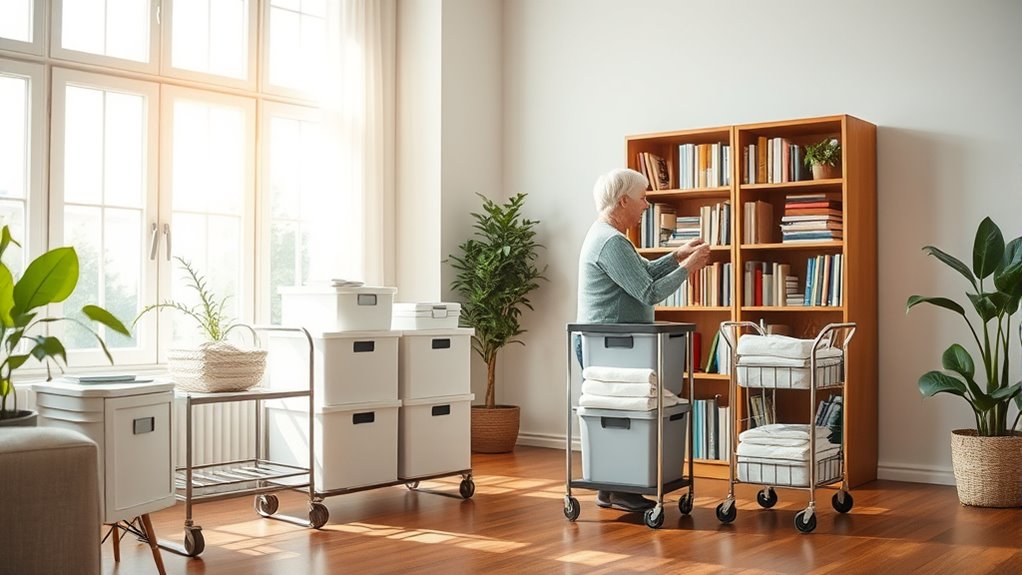

Helping seniors downsize and organize involves creating a gentle plan that respects their emotional ties while tackling clutter step by step. Start with small areas like closets, asking guiding questions to encourage decision-making. Be patient and compassionate, involving family members when possible. Use labels and boxes to keep things clear and honor sentimental items with care. Want to discover more effective strategies? You’ll find tips to make this process smoother and more meaningful.
Key Takeaways
- Develop a clear, step-by-step plan focusing on manageable areas to facilitate gradual downsizing.
- Use questions and reflection to help seniors decide what to keep, donate, or discard, respecting emotional attachments.
- Involve family members or friends for support and different perspectives during the decluttering process.
- Organize items with labeled containers or boxes to create visual progress and maintain motivation.
- Honor sentimental belongings with care, using photos or stories to preserve memories without physical clutter.

Have you ever felt overwhelmed by clutter and not sure where to start? When it comes to helping seniors downsize and organize, that feeling is common. The first step is understanding estate clearance, which involves sorting through a lifetime of belongings to determine what to keep, donate, or discard. This process can be emotional, especially when it involves sentimental items—those possessions that hold special memories or personal significance. Recognizing the importance of these items helps you approach the task with sensitivity, guiding seniors through decisions that respect their histories while making their living space more manageable.
Start by creating a plan. Break the task into smaller, manageable steps rather than trying to tackle everything at once. Begin with a specific area, like a closet or a bookshelf, to build momentum. As you go through belongings, ask questions to facilitate decision-making. For sentimental items, encourage seniors to reflect on the memories associated with each piece. Sometimes, a photograph or a story can preserve the significance without keeping the physical object. For items with little emotional value, consider donating or recycling, which helps reduce clutter and benefits others in need.
During estate clearance, it’s vital to stay patient and compassionate. Seniors may have difficulty letting go of certain possessions, especially those tied to loved ones or important milestones. Offer reassurance that their feelings are valid, and remind them that the goal isn’t to erase memories but to create a space that feels comfortable and manageable. If necessary, involve other family members or friends who understand the sentimental value of certain items, so everyone’s perspectives are considered. This collaborative approach can ease the emotional burden and guarantee that the final decisions reflect the senior’s wishes. Incorporating mindfulness practices can also help both caregivers and seniors stay grounded and focused during the process.
As you sort through belongings, keep organization in mind. Use boxes or labeled containers to separate categories—such as keepsakes, donations, and discard pile. This visual clarity helps both you and the senior see progress and stay motivated. Remember that estate clearance is not just about decluttering but also about honoring the past while making way for the future. By handling sentimental items carefully and respectfully, you help seniors preserve meaningful memories even as they simplify their living space. Ultimately, this process can bring a sense of relief and accomplishment, turning a formidable task into a positive step toward a more organized, comfortable life.

Tag-A-Room Color Coded Moving Box Labels 50 Pack (Storage)
As an affiliate, we earn on qualifying purchases.
As an affiliate, we earn on qualifying purchases.
Frequently Asked Questions
How Do I Start Decluttering With Limited Mobility?
You can start decluttering with limited mobility by first setting small, manageable goals. Use assistive technology like grab bars and ergonomic tools such as lightweight bins or reacher tools to minimize strain. Begin with easy-to-access areas, like countertops or reachable shelves, and work gradually. Enlist help from friends, family, or professional organizers if needed, and take frequent breaks to avoid fatigue. This approach makes decluttering safer and more achievable.
What Tools Are Best for Downsizing Small Spaces?
Imagine transforming a tiny room into a neat, inviting space. The best tools for downsizing small spaces include clever storage solutions like multi-functional furniture, stackable bins, and hanging organizers that maximize every inch. Organizational tools such as label makers and space-saving hangers help you categorize and access items easily. These tools turn chaos into order, making your small space feel spacious, organized, and welcoming.
How Can I Involve Family in the Decluttering Process?
You can involve your family in the decluttering process by encouraging open communication and sharing your goals. Seek their input on what to keep or donate, making them feel valued. Their emotional support can make the process easier, especially during sentimental decisions. Schedule family sessions to declutter together, turning it into a bonding activity. This involvement not only lightens your load but also helps everyone feel connected and supportive.
What Legal Considerations Exist for Donating Items?
When donating items, you should consider legal liabilities and donation documentation. Confirm the charity is reputable to avoid any legal issues, and keep detailed records of your donations, including receipts and item descriptions. This documentation can help you claim tax deductions and provide proof if questions arise later. Always verify the charity’s status and retain copies of all paperwork to protect yourself legally.
How Do I Handle Sentimental Items During Decluttering?
Think of sentimental items as delicate butterflies, representing your memories. To handle them, prioritize memory preservation by photographing or journaling each item’s story, then gently let go of emotional attachment. Keep a few meaningful pieces close, but avoid cluttering your space. This way, you honor your past while creating room for new experiences, making your decluttering journey both manageable and emotionally respectful.

Emotional Support Crochet Plush Book with Encouragement Card- Gifts for friends women, Friends, Teachers & Students. Perfect for Office Stress Relief, Reading Nook Decor, and Thank You Gifts.
Emotional Support Crochet Plush Book – A comforting handmade crochet Plush book designed to provide emotional support during…
As an affiliate, we earn on qualifying purchases.
As an affiliate, we earn on qualifying purchases.
Conclusion
As you help seniors downsize and organize, remember it’s like turning a cluttered attic into a shining, open space. One family I worked with found joy in rediscovering cherished memories hidden beneath piles of clutter, much like finding a favorite toy after years. Decluttering isn’t just about space; it’s about creating a fresh start filled with peace and clarity. Embrace the journey—you’re helping them open new chapters and rediscover what truly matters.

5 Tier Closet Hanging Organizer, Clothes Hanging Shelves with 4 Hanging Hooks 5 S Hooks, Wire Storage Basket Bins, for Clothing Sweaters Shoes Handbags Clutches Accessories Patent Design
Wall-mounted&Cabinet&Hanging Storage: Come with 4 sturdy large hanging hooks, you can use them to hang the basket on…
As an affiliate, we earn on qualifying purchases.
As an affiliate, we earn on qualifying purchases.

Artfeel Photo Album Self Adhesive Scrapbook,Large Photo Book for 4×6,5×7,8×10 Pictures,DIY Album for Baby Wedding Family Travel Birthday,with Metallic Pen and Scraper
📏Size of album: This album consists of 20 sheets/40 pages.It can hold photos of all sizes,as well as…
As an affiliate, we earn on qualifying purchases.
As an affiliate, we earn on qualifying purchases.