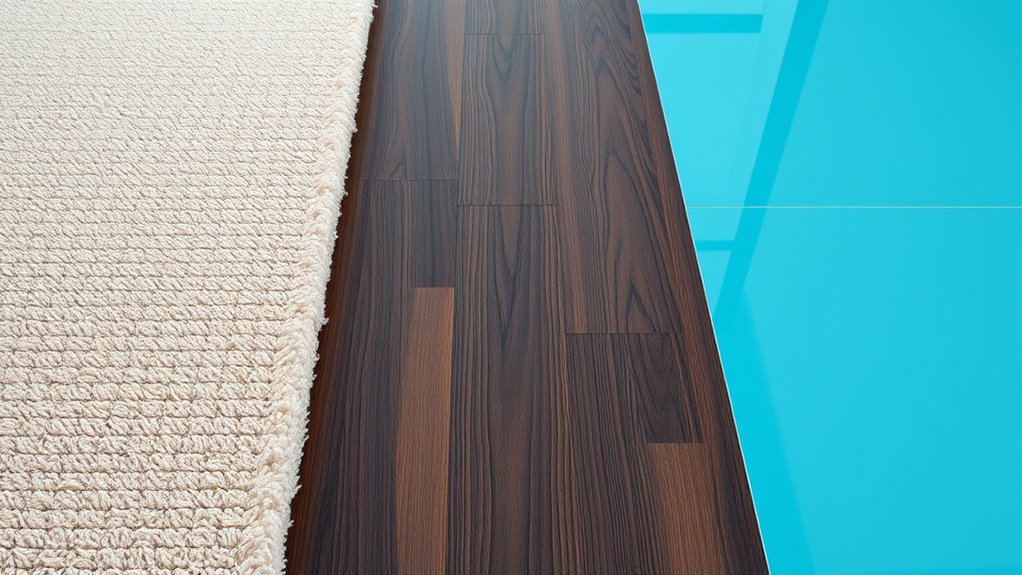

Choosing the right flooring depends on your household needs and style preferences. Carpet offers a cozy feel and budget-friendly options, but it wears out faster in high-traffic areas and is harder to clean. Hardwood is durable and elegant, lasting for decades with refinishing, but it comes with a higher price. Vinyl is versatile, affordable, and resistant to moisture, making it good for busy zones. Keep exploring — you’ll find the best fit by weighing these factors carefully.
Key Takeaways
- Hardwood offers unmatched durability and longevity, making it ideal for high-traffic areas, while carpet provides comfort but less durability.
- Carpet is the most budget-friendly option with easy installation, whereas hardwood has higher upfront costs but lasts for decades.
- Vinyl provides a versatile, moisture-resistant solution suitable for kitchens and bathrooms, balancing durability and cost.
- Hardwood can be refinished multiple times, extending its lifespan, unlike carpet which may need frequent replacement.
- Consider lifestyle, household demands, and aesthetic preferences to choose the best flooring type for your home.

When choosing new flooring for your home, understanding the key differences between carpet, hardwood, and vinyl can help you make an informed decision. One of the first factors to consider is area durability, which determines how well each material holds up under daily wear and tear. Carpet offers a soft, cozy feel but tends to be less durable in high-traffic areas like hallways or entryways. It can stain easily and may need replacement sooner, especially if you have pets or kids. Hardwood flooring, on the other hand, is renowned for its strength and longevity. It withstands heavy foot traffic and can be sanded and refinished multiple times, extending its lifespan over decades. Vinyl flooring strikes a balance, offering good durability in most settings. Modern vinyl options are quite resilient, resistant to scratches and moisture, making them suitable for kitchens, bathrooms, and busy zones. Additionally, understanding the durability of each material can help you choose the best option for your lifestyle and household needs.
Cost comparison is another critical aspect. Carpet generally has the lowest initial price, making it appealing if you’re on a tight budget or need to cover large areas quickly. Installation costs are also usually lower for carpet, especially for roll-out or plush varieties. Hardwood tends to be the most expensive upfront investment, considering both material and installation costs. Quality hardwood can be costly, but its timeless appeal and potential for refinishing often justify the expense. Vinyl flooring falls somewhere in between, with affordable options that mimic the look of wood or tile. Its installation costs are typically lower than hardwood but higher than carpet in some cases, especially for luxury vinyl planks or tiles.
When weighing your choices, think about how each flooring type will perform in your specific space. If you want a plush, comfortable feel and are okay with replacing it more frequently, carpet might be the right choice. For a sophisticated, lasting look with high durability, hardwood is unbeatable, though it comes with a higher price tag. Vinyl offers versatility and resilience, making it an excellent middle ground if you need something durable but budget-friendly. Ultimately, your decision will hinge on balancing your priorities of durability and cost. You want a material that can handle your lifestyle and fits within your budget, while also complementing your home’s aesthetic. By understanding these differences, you’re better equipped to select flooring that meets your needs now—and for years to come.
Frequently Asked Questions
Which Flooring Type Is Most Eco-Friendly?
You’ll find that hardwood flooring is generally the most eco-friendly choice, especially if made from sustainable materials like bamboo or reclaimed wood. It’s recyclable and durable, reducing waste over time. Carpets often use synthetic fibers that aren’t recyclable and may off-gas chemicals, while vinyl contains plastics with lower recyclability factors. By choosing hardwood, you support sustainability and reduce your environmental impact in your home.
How Do These Floors Perform in Allergy Prevention?
Carpet can trap dust and mold, making it less ideal if you’re prone to allergies, as dust accumulation and mold growth can worsen symptoms. Hardwood floors are easier to keep clean, reducing allergen buildup, but they can still harbor dust in cracks. Vinyl floors are low-maintenance, resisting dust and mold growth effectively. Overall, hardwood and vinyl are better choices for allergy prevention, while carpet may exacerbate allergy issues.
What Are the Best Options for High-Traffic Areas?
For high-traffic areas, vinyl flooring is your best choice because of its traffic durability and ease of maintenance. It withstands frequent wear without showing damage, making it ideal for busy spaces. Hardwood also offers good traffic durability and adds aesthetic versatility with timeless appeal, while carpet isn’t as durable and can wear quickly. Choose vinyl for durability and versatile style, especially in areas with heavy foot traffic.
How Do Installation Costs Compare Among the Types?
Installation costs for flooring options vary like a rollercoaster ride. You’ll find vinyl the most budget-friendly, with lower labor expenses making it quick and easy to install. Hardwood tends to be more expensive, reflecting its craftsmanship and material costs. Carpet falls somewhere in between, with moderate installation expenses. Your choice depends on your budget and desired look, but remember, higher costs often come with long-term durability and beauty.
Which Flooring Is Easiest to Maintain Long-Term?
Vinyl flooring is the easiest to maintain long-term because it offers excellent stain resistance and is highly durable. Unlike carpet, which can stain and trap dirt, vinyl resists spills and is simple to clean. Hardwood requires regular polishing and care to prevent scratches, making it less low-maintenance. Overall, vinyl’s durability and stain resistance make it the most hassle-free option for long-term upkeep.
Conclusion
Choosing the right flooring depends on your lifestyle and preferences. Did you know that hardwood floors can increase your home’s value by up to 2.5%? Whether you prefer the cozy warmth of carpet, the timeless elegance of hardwood, or the budget-friendly durability of vinyl, each option has its benefits. Make sure to take into account your daily needs and style to find the perfect fit. Your ideal floor is just a decision away, so choose wisely!