
Decorating with a monochromatic palette lets you create a sleek, cohesive look that promotes calmness and sophistication. By choosing shades of one color, you can evoke specific moods—like serenity with soft blues or warmth with terracotta. Layering textures such as velvet, linen, and rattan adds depth, while lighting enhances your space’s visual interest. If you continue exploring, you’ll discover how to perfectly balance color, texture, and light for a stunning environment.
Key Takeaways
- Monochromatic decorating creates a cohesive, elegant look that enhances visual unity and promotes a calming atmosphere.
- Use subtle variations in tone, texture, and finish within the same color family to add depth and visual interest.
- Incorporate diverse textures like velvet, linen, and rattan to prevent flatness and enrich the space.
- Strategic lighting emphasizes texture differences and influences mood, highlighting the monochromatic palette’s sophistication.
- Color psychology guides shade choices to evoke specific emotions, making spaces feel personalized and harmonious.
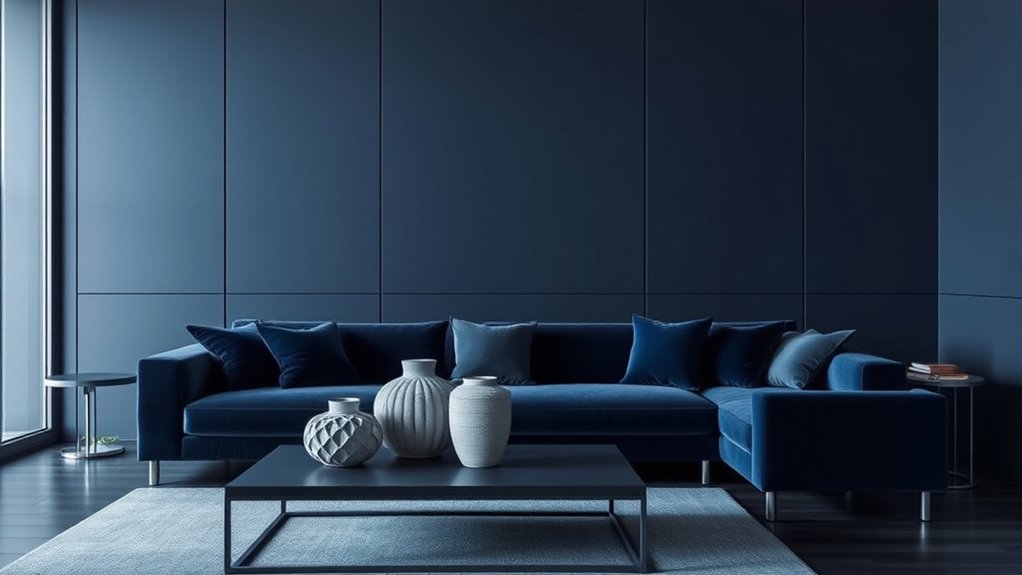
Decorating in a monochromatic palette offers a sleek, cohesive look that can make any space feel more harmonious and sophisticated. When you choose to work within a single color family, you create a visual unity that’s both calming and elegant. But the secret to truly elevating this style lies in understanding color psychology and mastering texture layering. Color psychology helps you select the right shades to evoke specific moods, whether you want your room to feel energizing, tranquil, or cozy. For instance, soft blues promote serenity, while warm terracotta tones foster comfort. By consciously choosing shades that align with your desired emotional response, you’ll craft a space that feels intentional and personalized.
Texture layering becomes your best tool to add depth and interest within a monochromatic scheme. Since you’re working with variations of the same color, incorporating different textures prevents the space from feeling flat or monotonous. Think plush velvet cushions, woven throws, matte and glossy finishes, or sleek metals—these textures catch the light differently and create visual contrast. When you mix smooth and rough surfaces, you draw the eye across the room, making each element stand out without breaking the color harmony. This technique allows you to showcase your style while maintaining a unified look.
You can also experiment with subtle tone-on-tone variations to add dimension. For example, pairing a matte charcoal wall with shiny black hardware, or layering different shades of beige with varying textures like linen curtains and rattan furniture. This approach ensures your space feels rich and layered, not dull or overly uniform. Texture layering also invites tactile engagement; you want your space to be as inviting to the hand as it is to the eye. Using a variety of fabrics, woods, and finishes makes the environment feel complex and thoughtfully curated, even when sticking to one color.
Experiment with tone-on-tone variations and textured layers to create a rich, inviting monochromatic space.
Incorporating lighting thoughtfully enhances these textural differences and amplifies the effects of your chosen shades. Soft, warm lighting can deepen the warmth of a monochromatic palette, while cool lighting accentuates crispness and clarity. The interplay of light and different textures adds subtle shadows and highlights, further enriching the room’s visual depth. Additionally, understanding color psychology can guide your lighting choices to evoke specific moods and emotional responses, making your space truly personalized.
Ultimately, decorating in a monochromatic palette isn’t about monotony; it’s about mastering the art of nuance. By understanding color psychology and skillfully layering textures, you can create a space that’s both cohesive and compelling. You’ll find it’s a sophisticated way to express your style, offering endless possibilities for personalization within a unified color story.
Frequently Asked Questions
How Do I Add Texture to a Monochromatic Room?
To add texture to a monochromatic room, focus on textural layering and fabric choices. Use varied materials like plush rugs, woven throws, and velvet cushions to create depth. Incorporate different fabric finishes, such as matte, shiny, or nubby textures, to make the space more dynamic. Mixing these elements keeps the monochrome palette engaging, inviting touch, and preventing the room from feeling flat or one-dimensional.
Can Monochromatic Schemes Work in Small Spaces?
A monochromatic scheme in a small space is like a revitalizing gust of fresh air. It works beautifully when you use space-saving furniture and color accent techniques to add depth. Light shades can make the room feel larger, while strategic pops of darker hues create visual interest. Keep accessories minimal and choose multi-functional pieces to maximize every inch, making your small space feel open and cohesive without overwhelming it.
What Are the Best Color Combinations for Monochrome Decor?
You should choose color combinations that evoke the right mood through color psychology, like calming blues or energizing yellows. For a modern minimalist look, stick to neutral shades like soft grays, whites, and blacks, adding depth with subtle textures. These combinations create a sleek, cohesive space, making it easier to maintain a clean aesthetic. Remember, simplicity enhances the modern minimalist vibe while still delivering visual interest.
How Do I Avoid a Monotonous Look?
You can avoid a monotonous look by adding layered textiles like throws and rugs, which create depth and texture. Incorporate contrasting accessories such as pillows or artwork in different finishes or subtle shades to break up the monochrome. These elements add visual interest and prevent the space from feeling flat, making your decor vibrant and engaging without straying from your monochromatic palette.
Which Lighting Options Enhance Monochromatic Interiors?
Lighting turns your monochromatic space into a symphony of shadows and highlights. You should layer ambient lighting with statement fixtures to add depth and intrigue. Use warm, soft whites to create a cozy glow, and let bold pendant lights or sculptural sconces serve as focal points. This interplay of light and shadow reveals textures and subtle shades, making your room feel lively rather than monotonous.
Conclusion
Imagine your room as a canvas, where a single hue becomes the masterstroke that unites the entire space. When I decorated my living room in shades of blue, it felt like wrapping myself in a calming ocean breeze—simple yet profound. A monochromatic palette can transform your space into a harmonious retreat, much like a symphony built on one note. Embrace this approach, and you’ll find your home radiates a quiet, elegant confidence.