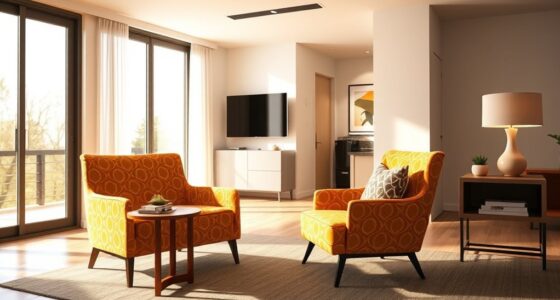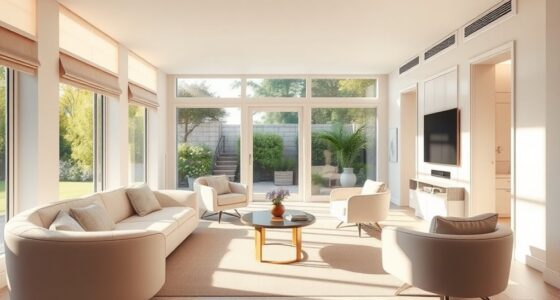
Creating mindful layouts in senior spaces involves designing clear, wide pathways that are easy to navigate and free of clutter, ensuring safety and independence. Add cozy corners with soft lighting, calming colors, and sound-absorbing materials to offer private retreats where residents can relax or have quiet conversations. Thoughtfully combining these elements helps promote comfort, security, and a sense of home. Keep exploring to discover more ways to balance safety and coziness effectively.
Key Takeaways
- Design wide, unobstructed pathways with clear signage and contrasting colors to facilitate easy navigation for seniors.
- Incorporate well-placed handrails and simple furniture arrangements to support safe movement and prevent clutter.
- Create private, tranquil corners using soft lighting, calming colors, and sound-absorbing materials to promote relaxation.
- Seamlessly integrate cozy retreat areas like enclosed gardens or soft-lit nooks into the overall layout for privacy.
- Balance open, accessible pathways with secluded spaces to foster independence, comfort, and a welcoming environment for seniors.

Designing senior space layouts involves creating environments that prioritize safety, accessibility, and comfort. When you plan these spaces, think about how residents will move around easily and confidently. Incorporating navigation aids is essential; clear signage, contrasting colors, and well-placed handrails help seniors find their way without confusion or frustration. These aids reduce fall risks and promote independence, making the entire environment more user-friendly. Equally important are privacy zones, which give residents a sense of personal space and control. Designate quiet corners or secluded areas where seniors can relax, reflect, or have private conversations. Privacy zones help maintain dignity and reduce feelings of overcrowding, especially in communal settings. When you combine navigation aids with thoughtfully designed privacy zones, you create a space that feels both safe and welcoming.
Creating senior spaces with clear navigation and private zones fosters safety, independence, and comfort.
To optimize navigation, consider the flow of movement throughout the space. Wide, unobstructed pathways allow for easy wheelchair or walker access, while strategically placed signs guide residents effortlessly from one area to another. Use visual cues like color-coded zones or symbols to help residents identify different sections quickly. For example, a distinct color for dining areas versus lounge zones minimizes confusion. Keep furniture arrangement simple, avoiding clutter that could trip someone or block pathways. When residents can navigate intuitively, they gain confidence and independence, which enhances their overall well-being. Additionally, integrating modern security features such as security cameras can further enhance safety and monitoring.
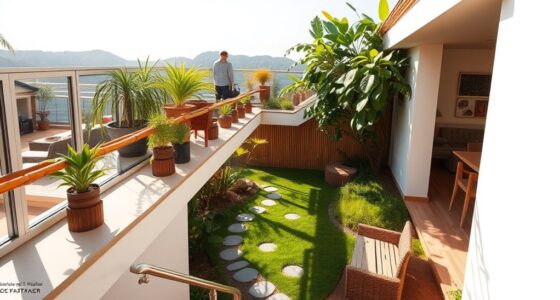
Privacy zones should be integrated seamlessly into the layout. You want to create areas where residents can retreat without feeling isolated or cut off from community life. These zones might include cozy nooks with comfortable seating, small enclosed gardens, or soundproofed rooms for quiet activities or rest. Position these spaces away from high-traffic zones but still within easy reach, so residents don’t feel isolated or disconnected. Incorporate soft lighting, calming colors, and sound-absorbing materials to foster a peaceful atmosphere. Providing a variety of privacy options ensures that each individual can choose a setting that suits their mood or needs, whether they want solitude or a quiet chat with a visitor.
Ultimately, your goal is to craft a senior space that balances safety with a sense of home. Clear navigation aids guide residents effortlessly, reducing stress and accidental injuries. Privacy zones offer refuge and promote mental well-being. When these elements are thoughtfully combined, you create an environment where seniors feel secure, respected, and comfortable—encouraging them to engage more fully in daily life while knowing their personal space is protected.
Frequently Asked Questions
How Can Lighting Enhance Senior Space Navigation?
Lighting design plays a vital role in enhancing senior space navigation by providing clear, consistent illumination that guides movement. You can incorporate navigation aids like well-lit pathways, adjustable fixtures, and task lighting to reduce shadows and glare. By focusing on strategic lighting placement, you help seniors move safely and confidently through their environment, minimizing fall risks and creating a cozy, welcoming atmosphere.
What Materials Are Safest for Flooring in Senior Areas?
Think of your floors as the foundation of safety—choose materials that act like gentle landings underfoot. Opt for cushioned flooring and non-slip surfaces that keep seniors steady and secure. These materials absorb shocks and prevent slips, turning every step into a confident stride. By prioritizing cushioned and slip-resistant options, you create a space where seniors feel safe, comfortable, and at ease moving through their environment.
How to Incorporate Personal Touches in Senior Layouts?
You can incorporate personal touches by adding personal photos and favorite objects in senior layouts. Place framed photos on shelves or walls where residents can easily see them, creating a sense of familiarity. Incorporate favorite objects into cozy corners or display areas to personalize their space. These touches help foster comfort and identity, making the environment feel warm and inviting while maintaining a mindful, accessible design.
What Furniture Styles Best Support Mobility and Comfort?
Choosing furniture like ergonomic chairs and adaptable pieces is like giving your space a gentle hug, supporting both mobility and comfort. You should opt for styles with rounded edges, adjustable heights, and sturdy frames to prevent falls and ease movement. These designs promote safety and independence, making it easier for seniors to navigate comfortably. Prioritize furniture that adapts to changing needs, ensuring a cozy, functional environment for years to come.
How to Reduce Noise and Promote Calm in Senior Spaces?
You can reduce noise and promote calm by installing soundproof barriers and adding acoustic treatments like carpets, curtains, or wall panels. These elements absorb sound and minimize echoes, creating a more peaceful environment. Arrange furniture to block noise sources and encourage quiet zones. Regularly maintain and update acoustic solutions to guarantee they stay effective, helping seniors feel more relaxed and comfortable in their space.
Conclusion
So, next time you design a senior space, remember—sometimes the simplest, most obvious layout creates the most comfort. Clear paths and cozy corners might seem basic, but they’re the secret to a truly welcoming environment. Ironically, in making everything straightforward and easy to navigate, you’ll craft a space so inviting that seniors might forget they’re even in a “special” setting at all. After all, comfort shouldn’t be complicated—yet somehow, it always is.