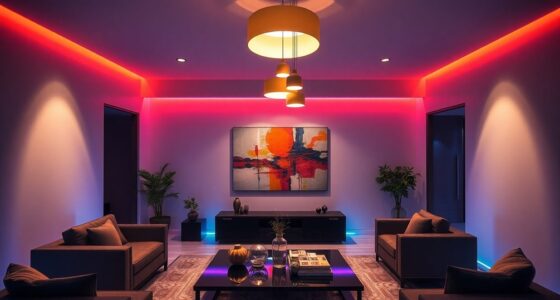
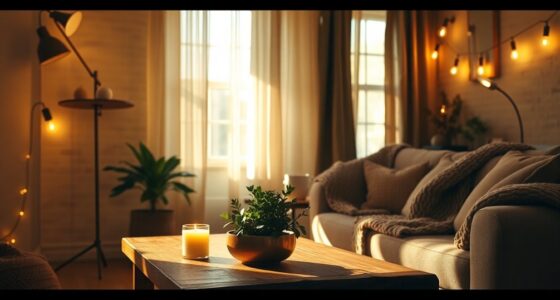
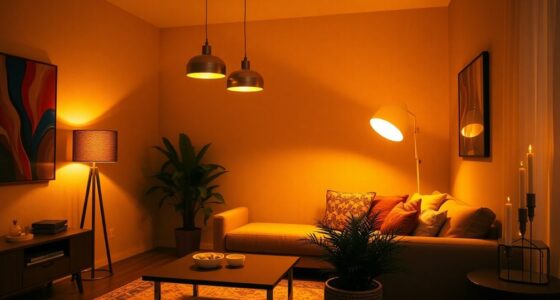
To create a calming glow for dementia care at home, focus on layered, dimmable lighting with soft, warm tones to promote relaxation. Use nightlights along hallways and near bathrooms for safety, and make sure switches are easy to find. Avoid harsh, bluish lights that can cause discomfort or disorientation. Position lights to minimize glare and shadows, adapting brightness to individual preferences. Keep these tips in mind to foster a soothing, safe environment—more ideas await to help you optimize your space.
Key Takeaways
- Use soft, warm-toned lighting to create a calming environment and reduce agitation.
- Incorporate dimmable lights and adjustable lamps for gentle brightness control during evenings.
- Place nightlights along hallways and bathrooms to ensure safe navigation at night.
- Highlight familiar features with localized lighting to aid orientation and comfort.
- Avoid harsh, flickering, or blue-toned lights that can cause discomfort or disorientation.
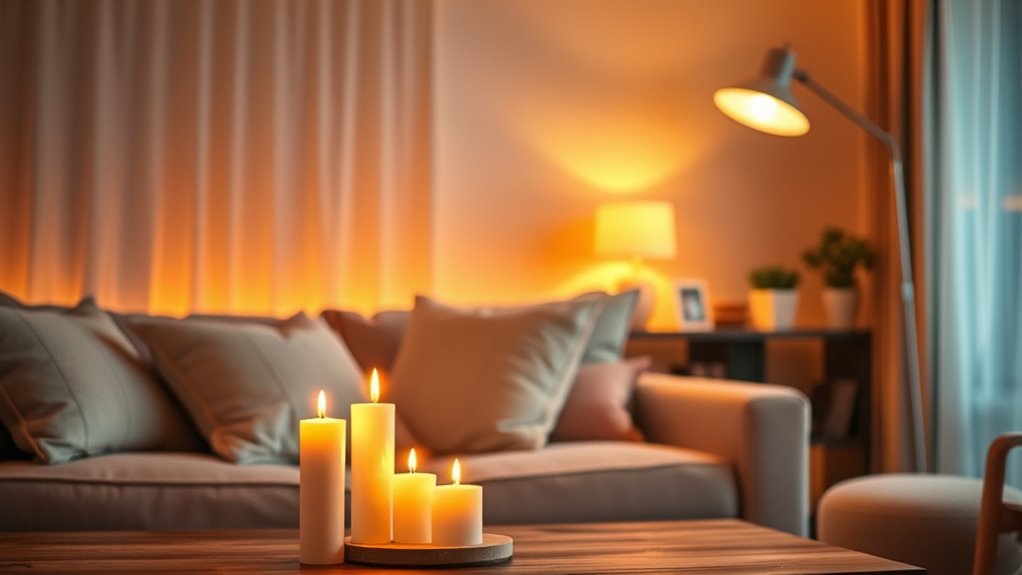
Lighting plays an essential role in creating a safe and comfortable environment for loved ones with dementia at home. When you choose the right lighting, you help reduce confusion, agitation, and the risk of falls, making daily life easier for everyone involved. Personalized lighting is key—tailoring brightness, color, and placement to suit your loved one’s specific needs can make a significant difference. It’s necessary to consider safety when designing your lighting plan. Bright, harsh lights can cause discomfort or disorientation, while dim lighting might increase the risk of trips and falls. Striking the right balance involves understanding how different lighting levels influence mood and safety.
Proper lighting reduces confusion and falls while creating a safe, soothing environment for loved ones with dementia.
Start by incorporating layered lighting throughout the home. Use a combination of ambient, task, and accent lighting to create a well-lit space that can be easily adjusted. For example, installing dimmable overhead lights allows you to control overall brightness, which is essential during evening hours or nighttime bathroom visits. Personalized lighting can also mean choosing fixtures with soft, warm tones that promote relaxation rather than stimulation. Avoid overly bright or bluish lights that can cause glare or disrupt circadian rhythms, especially in the evening.
Safety considerations extend beyond just the brightness and color temperature. You should also think about the placement of lights to minimize hazards. Place nightlights along hallways and in bathrooms to prevent falls during nighttime navigation. Ensure that switches are easily accessible and labeled clearly, so your loved one can turn lights on or off independently if possible. Motion-activated lights are another excellent option, as they turn on automatically when movement is detected, reducing the risk of stumbling in the dark. Additionally, selecting appropriate lighting fixtures that meet safety standards can further ensure a secure environment.
You can also personalize lighting by considering your loved one’s habits and preferences. For example, if they prefer softer lighting in the evening, install dimmers or use lamps with adjustable settings. If they tend to get confused or agitated in certain areas, consider adding localized lighting that highlights familiar features, such as artwork or furniture, to promote a sense of comfort and orientation. Remember, safety considerations should always guide your choices—avoid flickering or strobe lights, which can be unsettling, and ensure all wiring and fixtures are secure and meet safety standards.
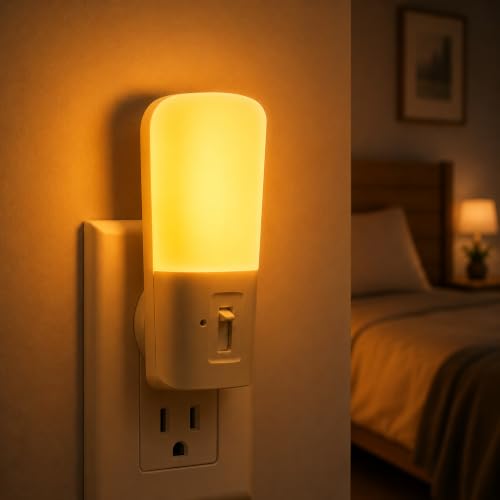
L LOHAS LED Amber Night Light, Dimmable Plug in Yellow Night Light with Dusk to Dawn Sensor, Kids Night Lights for Bedroom, 5-80LM Suit for Nursery, Hallway, Stairway,Bedroom, Bathroom, 2Pack
- Blue Light Free: Emits amber yellow light for better sleep
- Adjustable Brightness: Slide switch from 5lm to 80lm
- Dusk to Dawn Sensor: Automatically turns on/off based on ambient light
As an affiliate, we earn on qualifying purchases.
As an affiliate, we earn on qualifying purchases.
Frequently Asked Questions
How Can Lighting Improve Mood in Dementia Patients?
Lighting can considerably improve mood in dementia patients by providing clear visual cues that help them orient themselves and reduce confusion. Use warm, soft lighting to create a calming environment, offering emotional support during stressful moments. Proper lighting minimizes shadows and glare, making spaces more comfortable. By thoughtfully adjusting lighting, you can foster a sense of security, promote relaxation, and uplift their emotional well-being daily.
What Safety Features Are Essential in Dementia-Friendly Lighting?
Think of your home as a fortress, where safety is your top priority. You should install smart switches and motion sensors to prevent falls and make sure easy access. Smart switches allow you to control lighting remotely or set schedules, reducing confusion. Motion sensors automatically turn on lights when needed, providing seamless illumination. These features keep your loved one safe, alert, and comfortable, creating a secure environment that adapts to their needs.
Are There Specific Colors That Help Reduce Agitation?
Yes, certain colors can help reduce agitation through color therapy and ambient hues. Soft, warm tones like gentle yellows, soothing blues, and calming greens promote relaxation and comfort. Avoid harsh or overly bright colors, which can increase confusion. You should choose lighting that employs these calming hues to create a peaceful environment, helping to ease agitation and support a more comfortable, dementia-friendly space at home.
How Does Natural Light Impact Dementia Care at Home?
Imagine waking up to the gentle warmth of sunlight streaming through your windows—natural light profoundly impacts dementia care at home. Sunlight therapy boosts mood and circadian rhythms, while it also promotes Vitamin D synthesis, essential for overall health. You’ll notice improved sleep and reduced agitation, as natural light helps your loved one feel more connected and calm. Embracing daylight creates a soothing environment that truly supports well-being.
What Are Cost-Effective Lighting Solutions for Dementia-Friendly Homes?
You can create a dementia-friendly home using affordable fixtures and DIY lighting solutions. Opt for simple, energy-efficient LED bulbs and install adjustable or dimmable fixtures to control brightness easily. Use motion sensors or timers to reduce confusion and guarantee safety. Reusing or repurposing existing lamps and adding soft, warm light strips are cost-effective options that promote comfort and calmness without breaking the bank.
Conclusion
By choosing gentle, calming lighting, you create a sanctuary where your loved one feels safe and secure—like a lighthouse guiding a ship through the night. Your thoughtful lighting choices illuminate their world with warmth and familiarity, helping to ease confusion and anxiety. Remember, just as the stars softly glow in the darkness, your mindful lighting can bring peace and comfort, turning your home into a gentle harbor amid life’s stormy seas.