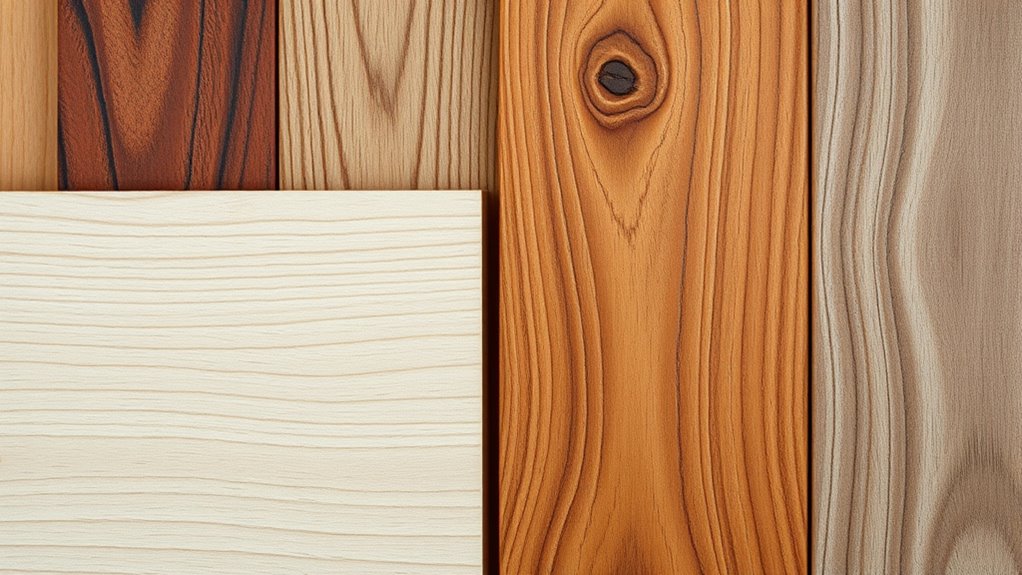

To mix and match woods effectively, consider how grain patterns and colors complement each other. Combining straight and wavy grains creates visual interest without chaos, while pairing light and dark tones adds contrast and depth. Choose finishes like matte or gloss thoughtfully to enhance cohesion or add texture. Balancing these elements helps craft a harmonious space that reflects your style. Keep exploring to discover tips that make your blending seamless and beautifully unified.

Get furniture and decor delivered free — and shop member deals
- Fast, free delivery on millions of items
- Access to Prime Big Deal Days deals on October 6–7
- Prime Video, Amazon Music and more included
Key Takeaways
- Use complementary grain patterns, balancing straight and wavy textures for visual harmony.
- Match finishes like matte or gloss across woods to unify the overall look and prevent visual discord.
- Incorporate contrasting finishes strategically to add depth, such as pairing matte with glossy accents.
- Consider color tone compatibility when blending different woods to maintain a cohesive, sophisticated palette.
- Plan the design to ensure grain directions and finishes enhance, rather than clash, for a polished aesthetic.
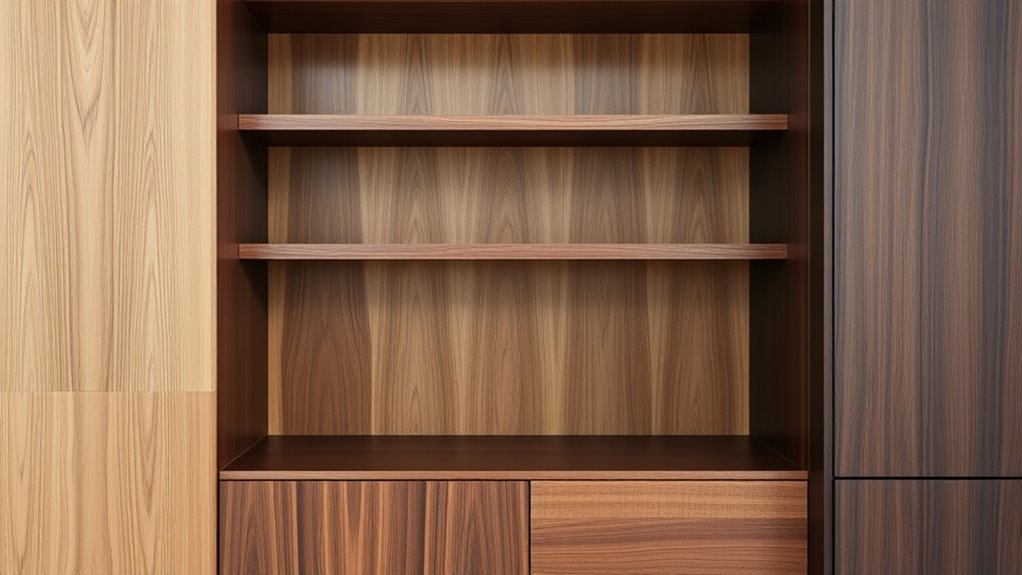
Mixing different types of wood in your furniture or flooring can create a unique and stylish look that reflects your personal taste. When combining woods, paying attention to grain patterns helps you achieve a harmonious appearance. Grain patterns—whether straight, wavy, or irregular—add texture and visual interest. If you’re blending woods with contrasting grain directions, aim for a balance that guides the eye smoothly across your space. For example, pairing a straight-grained oak with a wavy-grain walnut can add depth without overwhelming the design. You want the grains to complement each other, creating a cohesive flow rather than competing for attention. This careful consideration helps your furniture or floors look intentional and polished. Additionally, understanding how grain patterns influence visual cohesion can assist in making more informed choices when blending woods.
Mixing woods with different grain directions creates harmonious, polished furniture and flooring.
Color coordination is equally essential when mixing woods. Different species often feature varying tones—from light maple and ash to rich mahogany or dark walnut. To avoid visual chaos, choose woods whose colors complement each other or create a pleasing contrast. For instance, pairing a light-colored wood like birch with a darker one such as cherry can produce a striking yet balanced look. Alternatively, sticking to a monochromatic palette—like different shades of brown—can maintain a subtle, sophisticated vibe. If you want more vibrancy, consider incorporating accent pieces with bold hues or different finishes to add pops of color without overwhelming the overall scheme. The key is to think about how the shades interact, ensuring they work together to enhance the space rather than clash.
When you’re mixing woods, consider also how the finishes affect the overall look. Matte, gloss, or satin finishes can alter the perception of color and grain. A glossy surface might make the wood’s natural grain more prominent, while a matte finish offers a more muted, understated effect. Texture plays a role too—smooth versus rough finishes can influence how the grain patterns are perceived and how well the different woods blend visually. You might decide to keep the finishes consistent across different woods or intentionally vary them for a layered effect. The goal is to create a unified design that feels intentional and balanced.
Ultimately, successful wood mixing hinges on your ability to balance grain patterns and color coordination. Think about the mood you want to evoke, whether warm and cozy or sleek and modern. By considering how different woods’ grains and shades interact, you can craft a space that reflects your style while showcasing your skill in blending diverse materials. With a little planning and an eye for detail, you’ll turn contrasting woods into a cohesive, eye-catching design feature that’s uniquely yours.
As an affiliate, we earn on qualifying purchases.
Frequently Asked Questions
Can Different Wood Types Be Stained to Match?
Yes, you can stain different wood types to match, but it depends on the grain pattern and stain compatibility. You’ll want to test stains on small areas first, as some woods absorb stain differently. By considering each wood’s unique grain pattern and choosing compatible stains, you can achieve a more uniform look. Patience and experimentation are key to blending diverse woods seamlessly.
How Do I Prevent Wood Finishes From Clashing?
To prevent wood finishes from clashing, start by choosing finishes with similar sheen levels to guarantee consistency. Pay attention to grain contrast; selecting woods with complementary grain patterns helps create harmony. Test small areas first to see how different finishes interact, and consider using a neutral or matching stain to unify the look. This approach ensures your project looks cohesive without visual discord.
What Tools Are Best for Blending Woods?
You should use soft brushes, foam applicators, or blending sponges to smooth out wood grain and blend finish sheen seamlessly. These tools help you gently fade between different finishes, preventing harsh lines or contrast. A fine-grit sanding pad can also assist in light touch-ups, ensuring the wood grain flows naturally. Always work with the grain and keep your tools clean to achieve a consistent, professional blend.
Are There Specific Woods That Pair Better Together?
Think of it like a symphony where certain woods harmonize beautifully. You’ll find that oak and walnut, with their contrasting grain patterns, create a striking yet balanced look. Maple pairs well with cherry, thanks to their similar wood grain and complementary tones. Generally, woods with similar grain patterns and tones blend more naturally, so choose like-minded varieties for a cohesive aesthetic. Trust your eye and experiment for the best results.
How Do Lighting Conditions Affect Wood Color Matching?
Lighting conditions substantially impact your wood color matching. Natural light reveals the true hues, so you see how woods look during daytime. Artificial lighting, especially warm or cool bulbs, can alter perceived colors, making woods appear different than in natural light. To guarantee a perfect match, view your wood samples under both lighting conditions before finalizing your selection, adjusting as needed to achieve consistent, balanced aesthetics.
Conclusion
So, don’t be afraid to mix and match woods—it’s like creating a symphony of textures and tones. By thoughtfully blending different finishes, you add depth and personality to your space, turning plain into extraordinary. Think of it as painting with a diverse palette, where each piece plays a essential role. With a little confidence and creativity, your woodworking project will sing with harmony, making your home uniquely yours and beautifully one-of-a-kind.
Fall Picks
fall essentials
As an affiliate, we earn on qualifying purchases.