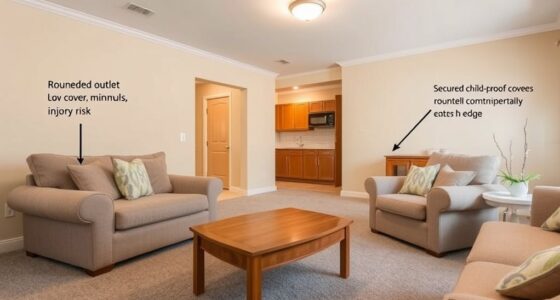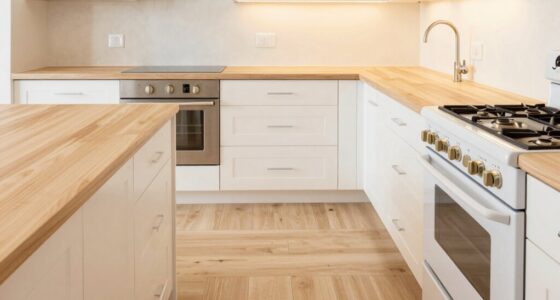
To create a cozy and safe home for everyone, focus on simple upgrades like installing grab bars, adding bright, even lighting, and removing clutter to prevent falls. Use smart tech, such as motion-activated lights and voice assistants, to boost convenience and safety. Incorporate slip-resistant flooring and ramps for accessibility. Small modifications can make a big difference in comfort and security. Keep exploring these tips to transform your space into a truly welcoming environment.
Key Takeaways
- Incorporate bright, even lighting and night lights to ensure clear visibility throughout the home.
- Install grab bars and slip-resistant flooring in bathrooms and high-traffic areas for added safety.
- Use smart motion sensors and voice-activated devices to enhance convenience and reduce fall risks.
- Remove clutter and loose rugs to create clear, unobstructed walkways that prevent trips.
- Design with smooth ramps and accessible features to support mobility and promote independence for all ages.
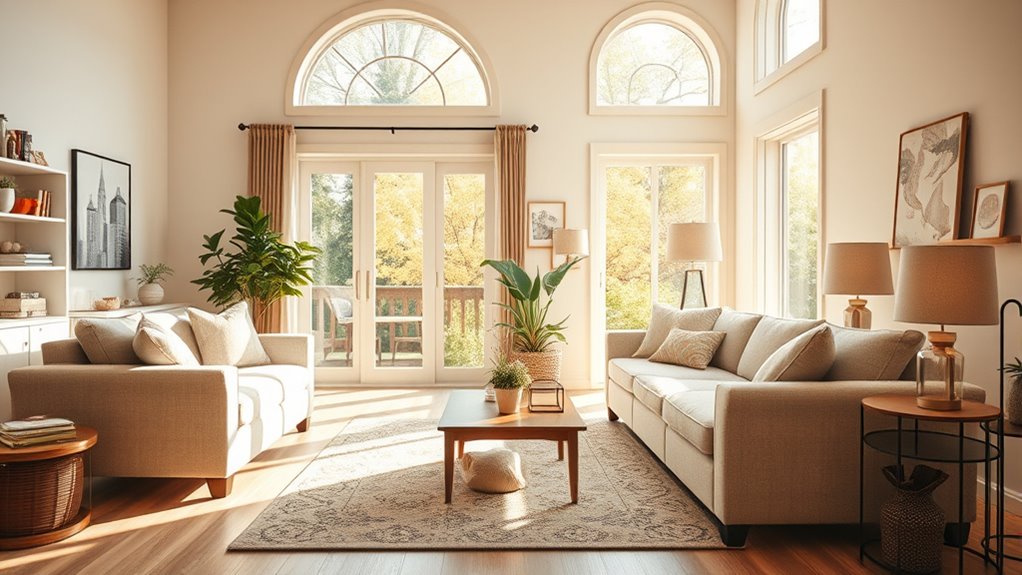
Creating an age-friendly home is essential for maintaining independence and safety as you age. One of the most effective ways to achieve this is by integrating smart technology into your living space. Smart devices, such as motion sensors, voice-activated assistants, and automated lighting, can help you navigate your home more easily and reduce the risk of accidents. For instance, smart lighting systems can be programmed to turn on automatically when you enter a room, eliminating the need to fumble for switches in the dark. Voice-controlled devices allow you to operate appliances, adjust thermostats, or even call for help without needing to move around unnecessarily. By embracing smart technology, you create a more responsive environment that adapts to your needs, making daily tasks simpler and enhancing your overall safety.
Fall prevention is a critical aspect of designing an age-friendly home. Falls are one of the leading causes of injury among older adults, but many can be prevented with thoughtful modifications. First, ensure there are no loose rugs or cluttered walkways that could cause tripping. Installing grab bars in key areas like bathrooms and near stairs provides extra support and stability. Slip-resistant flooring is a must-have; it reduces the likelihood of slipping on wet or uneven surfaces. You should also consider adding ramps or step modifications if you have stairs, making transitions smoother and safer. Adequate lighting is vital—bright, evenly distributed light helps you see potential hazards clearly. Complement this with night lights in hallways and bathrooms to prevent accidents during nighttime visits. Additionally, smart technology can play a role here as well. Motion-activated lights can turn on automatically when you enter a room at night, avoiding the need to search for switches in the dark. Some smart systems even monitor your movements and can alert family members or caregivers if they notice unusual patterns, such as a fall or extended periods of inactivity. Research indicates that brain rewiring through science-backed strategies can significantly improve cognitive resilience and safety. These tools work together to create a safer environment and give you peace of mind.
Incorporating these age-friendly design tips doesn’t mean sacrificing comfort for safety. Instead, it’s about creating a harmonious space that supports your lifestyle and independence. Smart technology and fall prevention measures are practical, effective solutions that can be tailored to your unique needs. Small modifications, like installing better lighting, adding grab bars, and using smart devices, can make a significant difference in how safe and comfortable your home feels. Remember, the goal is to foster an environment where you can move freely, live confidently, and enjoy your space for years to come. With a few thoughtful updates, your home can become not just more secure but also more inviting and convenient—truly a cozy sanctuary designed with your safety and comfort in mind.
Frequently Asked Questions
How Can I Incorporate Smart Technology Into an Age-Friendly Home?
You can incorporate smart technology into your home by installing voice-controlled lighting, making it easier to adjust brightness without bending or reaching. Smart security systems add safety and peace of mind, allowing you to monitor and control access remotely. These features make your home more accessible and secure, helping you stay independent and comfortable. Embrace these innovations to create a safer, more convenient living environment that adapts to your needs.
What Are Budget-Friendly Modifications for Aging in Place?
You can make budget-friendly upgrades by focusing on simple DIY aging in place modifications. Replace traditional doorknobs with lever handles for easier access, add grab bars in the bathroom, and improve lighting in key areas. These affordable, straightforward changes help you stay safe and comfortable at home without spending much. With a little effort, you can create a more accessible living space that supports your independence and peace of mind.
How Do I Choose Non-Slip Flooring Options?
Choosing non-slip flooring options can feel overwhelming, like maneuvering a maze of slippery surfaces! You should look for textured surfaces that grip your feet firmly. Non-slip rugs are essential for added safety, especially in high-traffic areas. Focus on materials like vinyl, cork, or textured tile, which provide excellent traction. Remember, your goal is to create a home where every step feels secure and confident, preventing slips and falls.
What Color Schemes Promote Safety and Comfort?
You want color schemes that promote safety and comfort, so consider color psychology to choose calming, neutral shades like soft blues, greens, and warm beiges. These hues create visual harmony, reducing strain and enhancing mood. Avoid overly bright or stark colors that can cause glare or confusion. Opt for gentle, consistent tones throughout your home to foster a soothing environment, making it safer and more inviting for everyone.
How Can I Improve Acoustics for Better Communication?
To improve acoustics for better communication, consider adding acoustic panels to absorb sound and reduce echo. You can also implement soundproofing solutions like door sweeps, window seals, and heavy curtains to block noise from outside. These adjustments help create a quieter environment, making conversations clearer and more comfortable. By combining acoustic panels and soundproofing measures, you’ll enhance overall sound quality and guarantee everyone can communicate effortlessly.
Conclusion
By embracing these age-friendly design tips, you create a home that welcomes everyone — a sanctuary where comfort and safety dance in harmony. Think of your space as a warm embrace, wrapping your loved ones in security and ease. With thoughtful adjustments, you turn your home into a timeless haven, proving that comfort isn’t just a goal but a journey. After all, a well-designed home isn’t just lived in — it’s loved.