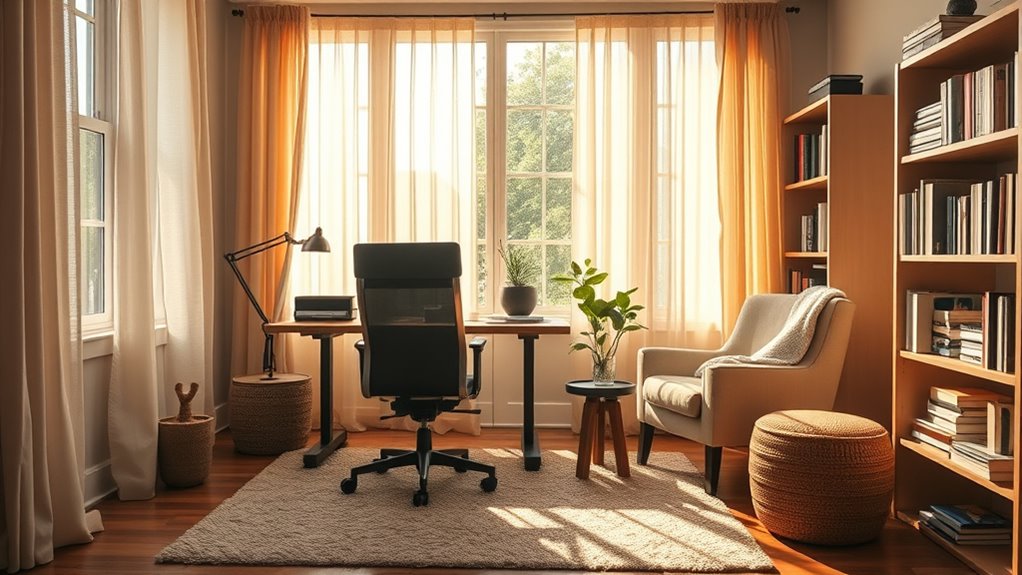

To create a productive and comfy age-friendly home office, focus on ergonomic furniture that supports natural posture, such as adjustable chairs with lumbar support and armrests. Guarantee your desk and workspace are at comfortable heights, and add proper lighting with layered sources to reduce glare and shadows. Incorporate easy-to-reach accessories and consider wider, stable furniture options. Keep going to discover simple tips that can turn your space into a functional, cozy environment tailored for everyone.
Key Takeaways
- Choose ergonomic furniture with adjustable height, lumbar support, and armrests to promote proper posture and reduce fatigue.
- Ensure the desk height allows comfortable arm placement and neutral wrist positioning to prevent strain.
- Incorporate layered lighting with natural light, task lamps, and dimmable overhead lights for optimal visibility.
- Position lighting fixtures to minimize glare and reflections on screens, enhancing visual comfort and reducing eye strain.
- Design the workspace to be easily accessible, with clear pathways, non-slip flooring, and furniture that accommodates mobility needs.
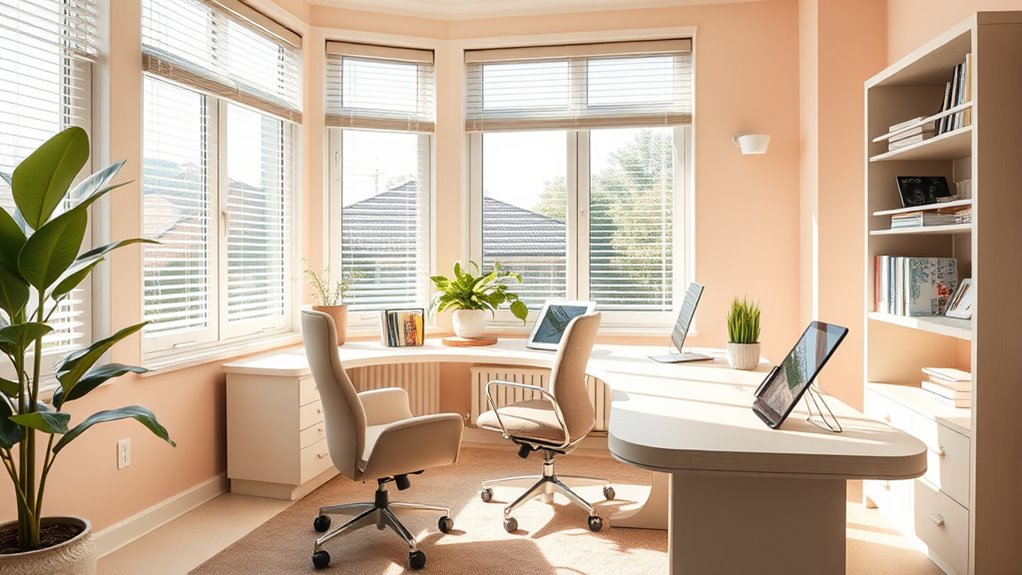
Creating a home office that’s truly age-friendly involves more than just adding a desk and chair. To make your workspace both productive and comfortable, you need to pay attention to details like ergonomic furniture and lighting solutions. Ergonomic furniture is essential because it supports your body’s natural posture, reducing strain and preventing discomfort over long periods of work. Invest in a chair that offers adjustable height, lumbar support, and armrests. When your chair fits well, you’ll avoid slouching or putting unnecessary pressure on your back and neck. Additionally, consider a desk at the right height so your arms can rest comfortably and your wrists stay in a neutral position. This minimizes fatigue and the risk of repetitive strain injuries.
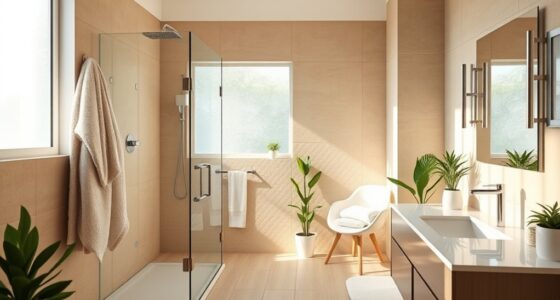
Ergonomic furniture supports good posture, reducing strain and enhancing comfort during long work hours.
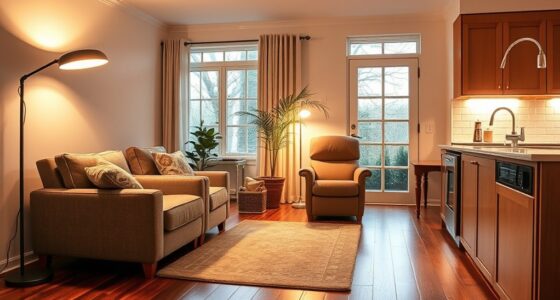
Lighting solutions are equally important in creating an age-friendly environment. Proper lighting reduces eye strain and enhances focus. Natural light is best, so position your desk near windows if possible. But since natural light isn’t always enough, supplement it with layered lighting. Use adjustable task lamps that direct light exactly where you need it, avoiding glare on your screen. Overhead lighting should be bright enough without being harsh, which can cause discomfort or headaches. Warm-toned bulbs can create a cozy environment, but ensure they provide adequate brightness for detailed work. Dimmers are a valuable addition, allowing you to modify the lighting intensity based on the time of day and your needs.
You should also consider the placement of your lighting fixtures to minimize shadows and reflections that could hinder your visibility. Position lamps so they don’t cast glare directly onto your screen or work surface. If you use a computer, a screen filter or anti-glare coating can further reduce strain. Keep your workspace clutter-free to ensure your lighting reaches every corner effectively. Bright, well-placed lights make it easier to see documents, read small print, and work comfortably without squinting or leaning forward. Incorporating ergonomic furniture and proper lighting solutions can significantly enhance your overall health and productivity.
Finally, don’t overlook the importance of ergonomic furniture and lighting solutions in relation to your overall health and productivity. When these elements work together, you’ll find it easier to stay focused, reduce discomfort, and enjoy your workday. Making small but thoughtful adjustments to your home office setup can greatly improve your daily experience, helping you stay energized and engaged in your tasks. With the right furniture and lighting, your home office becomes a space that supports your needs at every age, fostering both efficiency and well-being.
Frequently Asked Questions
How Can I Improve Lighting for Aging Eyes?
To improve lighting for aging eyes, you should maximize natural light by placing your desk near windows and using sheer curtains. Incorporate adjustable fixtures like task lamps with dimming options so you can customize brightness levels as needed. Avoid harsh or direct light, and make certain your workspace is evenly lit to reduce eye strain. This setup helps you see clearly and stay comfortable during work or hobbies.
What Are the Best Ergonomic Furniture Options for Seniors?
Think of your home office as a well-tuned orchestra, where ergonomic chairs and adjustable desks play the lead roles. You should choose ergonomic chairs that cradle your back like a gentle hug, providing support and comfort. Pair it with adjustable desks that adapt to you, allowing you to switch between sitting and standing effortlessly. This harmony creates a workspace that keeps you comfortable, focused, and ready to conquer your day.
How Can Noise Levels Be Minimized in a Home Office?
To minimize noise levels in your home office, you should implement soundproofing techniques like adding acoustic panels, weatherstripping doors, and sealing gaps around windows. Use noise-canceling devices such as headphones or white noise machines to block out distractions. These strategies create a peaceful environment, helping you focus better and work more efficiently. Combining soundproofing with noise-canceling devices guarantees a quieter, more comfortable workspace tailored to your needs.
Are There Technologies to Assist With Mobility in the Workspace?
Yes, you can enhance mobility in your workspace with voice-activated assistants and smart mobility devices. Voice assistants help you control lights, desks, or other equipment hands-free, making movement easier. Smart mobility devices, like motorized sit-stand desks or robotic carts, provide greater independence and flexibility. These technologies allow you to navigate, adjust, and operate your home office more comfortably, promoting safety and efficiency in your daily tasks.
What Safety Features Should Be Included in an Age-Friendly Office?
You should include safety features like hazard prevention measures, such as non-slip rugs and good lighting, to reduce falls. Install emergency preparedness tools like easily accessible fire alarms, emergency contact stations, and clear evacuation routes. Make sure switches and controls are within reach, and add grab bars where needed. These features help create a safer workspace, giving you peace of mind while maintaining independence and comfort in your home office.
Conclusion
Creating an age-friendly home office isn’t just about comfort; it’s about making sure you’re set up for success. When you prioritize safety, accessibility, and a cozy atmosphere, you’ll find work becomes a breeze rather than a burden. Remember, it’s better to be safe than sorry—so invest in thoughtful design now. With a little effort, you’ll turn your space into a haven that works as hard as you do, no matter your age.