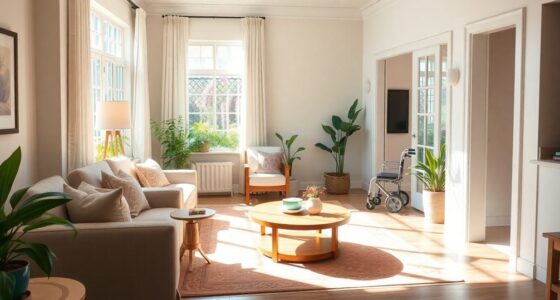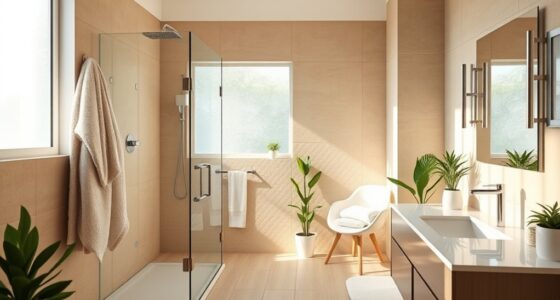
To create a home comfortable for all ages, focus on multifunctional furniture like sofa beds, ottomans with hidden storage, and fold-away beds to maximize space and flexibility. Incorporate layered lighting with dimmer switches to adjust brightness for safety and ambiance. Thoughtful furniture choices and adaptable lighting help maintain independence, safety, and comfort for both grandkids and grandparents. Keep exploring how these practical design tips can transform your home into a welcoming space for everyone.
Key Takeaways
- Incorporate multifunctional furniture like sofa beds and storage ottomans to maximize space and accommodate different needs.
- Use layered, adjustable lighting with dimmers to enhance safety, comfort, and flexibility for all ages.
- Plan open layouts that promote accessibility and easy movement for seniors and children.
- Add safety features such as non-slip flooring, secure furniture, and adequate lighting to prevent accidents.
- Design with purpose-driven elements that support independence, convenience, and a welcoming environment for everyone.
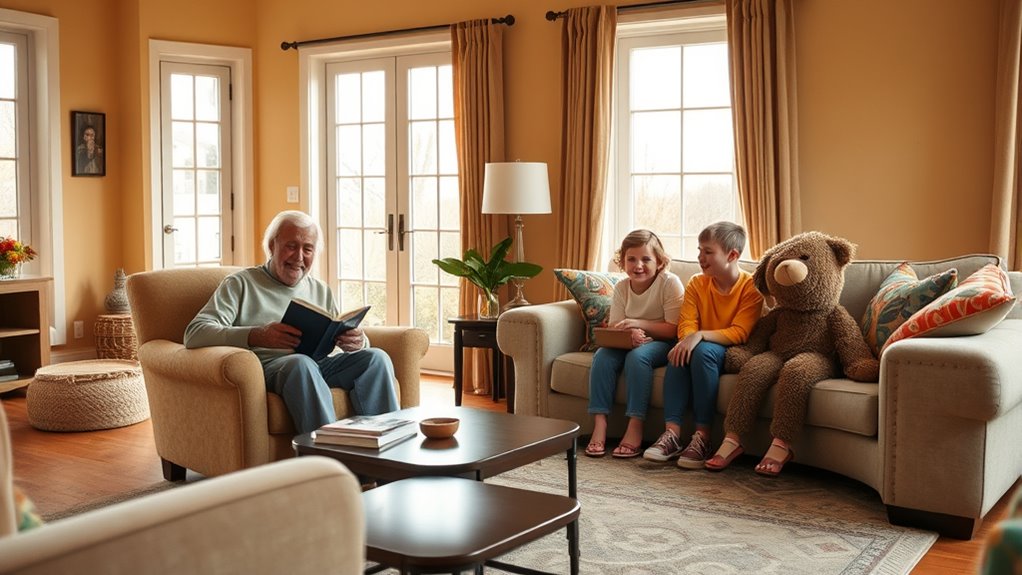
Creating a home that suits all ages requires thoughtful planning and intentional design choices. When you’re designing a space for both grandkids and grandparents, you want to prioritize versatility and comfort. One effective way to do this is by incorporating multifunctional furniture. These pieces serve multiple purposes, making your home adaptable to different needs. For example, a sofa bed provides a cozy spot for guests to sleep and also functions as a regular seating area during the day. Ottomans with hidden storage can hold toys or blankets, keeping your space tidy while offering extra seating. Murphy beds or fold-away beds save space for when you need a guest room without sacrificing open area. Multifunctional furniture not only maximizes your space but also makes daily handoffs easier, especially when accommodating visitors or changing family needs.
Alongside furniture, adaptive lighting plays a paramount role in creating a home that’s welcoming and practical for everyone. Different age groups have varied lighting needs, so it’s essential to incorporate options that can be easily adjusted. Installing layered lighting—such as overhead fixtures, task lighting, and ambient lamps—allows you to tailor the brightness to suit different activities and times of day. Dimmer switches are a simple, effective addition that let you soften the light for relaxation or brighten it for reading and playing. For older adults, good lighting reduces eye strain and minimizes fall risks, especially in areas like stairs and hallways. For kids, adjustable lighting can keep rooms bright enough for homework or creative play, yet cozy enough for winding down at bedtime. Adaptive lighting also creates a flexible environment that adjusts to the natural light coming in from windows, reducing the need for harsh artificial lighting during the day. Additionally, choosing a home theater projector with adjustable brightness and color settings can further enhance the visual comfort for all users.
Thinking about these elements from the start helps you craft a home that feels inclusive and functional. Use furniture that can serve multiple roles and adapt to different needs, making certain your space remains open and clutter-free. Pair that with lighting that can be customized to enhance safety and comfort, regardless of who’s using the space. When you combine these thoughtful choices, you’re creating a home that promotes independence for seniors, fun for grandchildren, and convenience for everyone in between. Keep in mind that small adjustments—like adding a few dimmer switches or choosing versatile furniture—can make a big difference in how your home functions day-to-day. Ultimately, designing with purpose and flexibility guarantees your house truly becomes a comfortable, accessible haven for all ages.
Frequently Asked Questions
How Can I Incorporate Technology for Easy Use by All Ages?
To incorporate technology that’s easy for everyone, consider creating a smart home with user-friendly interfaces. Opt for intuitive controls like large touchscreens, voice commands, or remote access to simplify daily tasks. You can also install automation for lighting, climate, and security, making it accessible for all ages. Regularly update devices and offer simple instructions, so even less tech-savvy family members feel confident using the technology comfortably.
What Are the Best Safety Features for Multi-Generational Living?
You should prioritize safety features that support all ages by implementing home automation and universal design. Install smart locks, motion sensors, and voice-activated controls to enhance security and accessibility. Use low-threshold doorways, lever-style handles, and non-slip flooring to prevent accidents. These features make your home safer and more functional for everyone, allowing easy access and reducing hazards across generations.
How Can I Create Private Spaces Within Shared Areas?
To create private spaces within shared areas, consider using flexible furniture like fold-away beds or room dividers. Incorporate personalized decor to distinguish each space, making everyone feel at home. You can also use curtains or sliding doors to provide quick privacy when needed. These strategies help you balance shared living with individual privacy, ensuring comfort for everyone without sacrificing the open, welcoming feel of your home.
What Are Cost-Effective Ways to Make a Home More Accessible?
You might worry that making your home accessible costs too much, but affordable renovations and DIY adaptations can help. Consider installing grab bars, ramping doorways, or adding stair lifts—many of which are budget-friendly and doable yourself. These changes improve mobility and safety without breaking the bank, creating a more inclusive space. With some planning, you can adapt your home to meet everyone’s needs without overspending.
How Do I Balance Style and Functionality for Different Age Groups?
To balance style and functionality, you should select ergonomic furniture that supports comfort for all ages while maintaining a cohesive aesthetic with accents. Incorporate versatile pieces that blend practicality with visual appeal, such as sleek storage solutions or stylish rugs. Keep safety in mind by choosing design elements that are both trendy and accessible. This approach helps create a space that’s functional and inviting for everyone, regardless of age.
Conclusion
By designing your home with every age in mind, you’re creating a space so perfect, even the most picky grandkids and the most stubborn grandparents will want to live forever. Imagine a house where everyone’s comfort is guaranteed—no more battles over stairs or tricky corners. It’s not just a home; it’s a magical paradise where love and laughter flow endlessly, making every moment unforgettable. Get ready to turn your house into the ultimate family haven!