
Designing a multi-generational home means creating spaces that balance privacy, comfort, and legal rules. You can incorporate private zones with separate entrances, soundproofing, and visual barriers to respect everyone’s needs. Make sure to understand local zoning regulations before making structural changes, like adding in-law suites or converting garages. Thoughtful layout and legal planning help your home welcome both kids and seniors comfortably. If you keep exploring, you’ll discover great ideas to turn your house into a true family haven.
Key Takeaways
- Incorporate private zones with soundproofing and visual barriers to meet privacy needs of both kids and seniors.
- Design separate entrances or designated areas to enhance autonomy and reduce disturbances within the home.
- Ensure compliance with local zoning laws by exploring options like basement apartments or accessory dwelling units.
- Use thoughtful layout strategies, including strategic room placement and privacy features, to balance openness and seclusion.
- Collaborate with professionals to create legal, functional, and comfortable multi-generational living spaces.
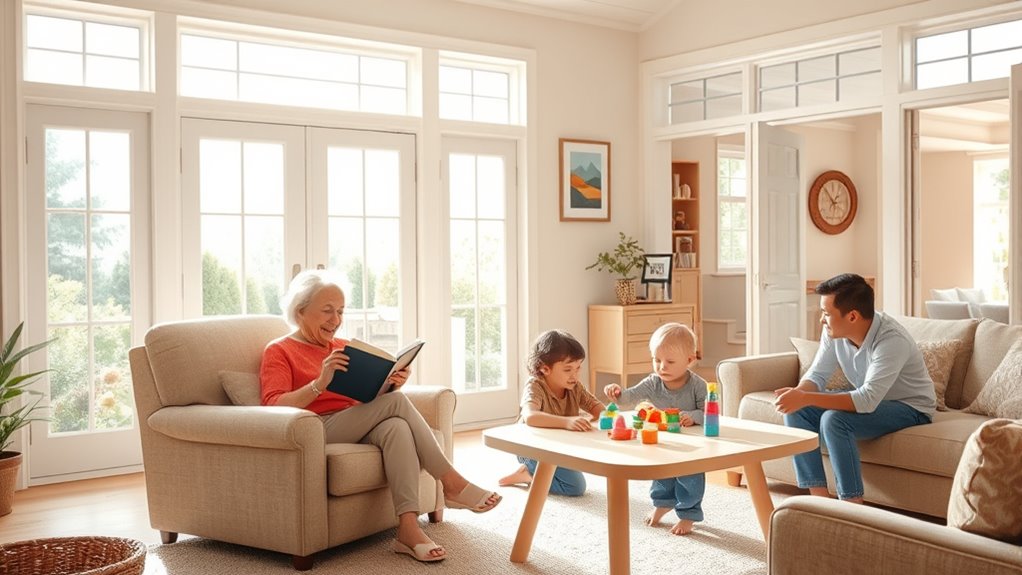
Have you ever considered how our living spaces can accommodate multiple generations seamlessly? Creating a home that suits kids and seniors alike requires thoughtful planning, especially when it comes to addressing privacy concerns and maneuvering zoning regulations. These are often the biggest hurdles in designing multi-generational spaces, but with the right approach, you can turn your home into a welcoming and functional environment for everyone.
Privacy concerns are at the forefront when designing a multi-generational home. Different generations have varying needs for privacy, which means your layout must balance openness with secluded areas. For instance, older adults might appreciate a private bedroom or a small sitting area where they can relax without interruptions, while children need safe, dedicated spaces for play and study. Incorporating separate entrances or designated zones helps minimize disturbances and gives each family member autonomy over their space. Using soundproofing techniques, such as insulated walls or strategic placement of bedrooms away from common areas, can further enhance privacy. Also, installing locks on bedroom doors and creating visual barriers like curtains or furniture arrangements can provide additional privacy without sacrificing the home’s overall flow. Additionally, understanding suction power and other vacuum performance metrics can help maintain a clean environment in shared spaces.
Prioritize private zones and soundproofing to create a comfortable, respectful multi-generational living space.
Zoning regulations pose another significant challenge in multi-generational design. Local zoning laws often dictate how many unrelated individuals can live together and what modifications are permissible within a property. These regulations can limit the ability to add in-law suites or convert garages into independent living spaces. To work around these rules, you should start by researching your local zoning codes thoroughly. Sometimes, you might need permits or variances to legally create separate living units within your home. Working with local authorities or a knowledgeable architect can help you find compliant solutions that meet your family’s needs. For example, designing a basement apartment or converting an accessory dwelling unit (ADU) can be excellent options, but they must adhere to zoning restrictions. Staying informed about these rules ensures your modifications are legal, avoiding future complications or penalties.
Ultimately, designing a multi-generational home requires balancing privacy concerns with legal considerations like zoning regulations. It’s about creating distinct, comfortable zones for different family members while respecting local laws. By planning carefully, you ensure everyone feels secure, respected, and at home. Thoughtful layout choices—like separate entrances, soundproofed walls, and designated private spaces—can make all the difference. And by understanding your local zoning regulations from the start, you avoid costly surprises down the line. With patience and strategic planning, you can craft a home that truly welcomes and supports multiple generations, making it a place where families grow closer while maintaining their independence.
Frequently Asked Questions
How Does Multi-Generational Design Impact Property Value?
Multi-generational design positively impacts your property value by boosting property appreciation and meeting market demand. When your home accommodates different age groups comfortably, it becomes more attractive to buyers seeking versatile living spaces. This adaptability can lead to quicker sales and higher offers, as multi-generational homes stand out in the market. Ultimately, thoughtful design enhances your property’s appeal, making it a smart investment for long-term appreciation.
What Safety Features Are Essential for Seniors in These Homes?
Imagine a cozy home where seniors feel safe and secure. You should prioritize fall prevention features like grab bars, non-slip flooring, and sturdy handrails. Emergency preparedness is equally crucial; install accessible alarm systems and clear escape routes. These safety features help prevent accidents and ensure quick response during emergencies, giving everyone peace of mind. Focusing on these essentials creates a nurturing environment that promotes independence and safety for your senior loved ones.
How Can Noise Be Minimized Between Different Generations?
To minimize noise between generations, you should incorporate soundproofing solutions like insulated walls, acoustic panels, and carpets to absorb sound. Additionally, consider privacy enhancements such as separate entrances or designated quiet zones. These strategies help create a peaceful environment, allowing everyone to enjoy their space without disturbance. By actively implementing soundproofing and privacy features, you foster harmony and comfort for all household members.
Are There Specific Zoning Laws for Multi-Generational Homes?
You might find zoning restrictions or legal requirements influencing your multi-generational home plans. For example, in some neighborhoods, local zoning laws limit the number of unrelated residents or require special permits. These laws vary widely by area, so it’s crucial to check with your city’s planning department. Understanding specific zoning restrictions ensures you stay compliant while creating a functional, welcoming space for all generations.
What Are Cost-Effective Ways to Modify Existing Homes?
You can save money by focusing on cost-effective upgrades like painting, installing new fixtures, or adding grab bars in bathrooms. DIY modifications such as creating accessible ramps or widening doorways are also budget-friendly options. Prioritize small, impactful changes that improve safety and comfort for all ages. With some effort, you can transform your existing home into a more inclusive space without breaking the bank.
Conclusion
By embracing multi-generational design, you create homes that truly welcome everyone, from kids to seniors. Did you know nearly 20% of U.S. households now include three or more generations? This trend highlights the importance of adaptable, inclusive spaces. When you design with all ages in mind, you foster stronger family bonds and guarantee comfort for everyone. So, consider these thoughtful features—your home can be a sanctuary for generations to come.