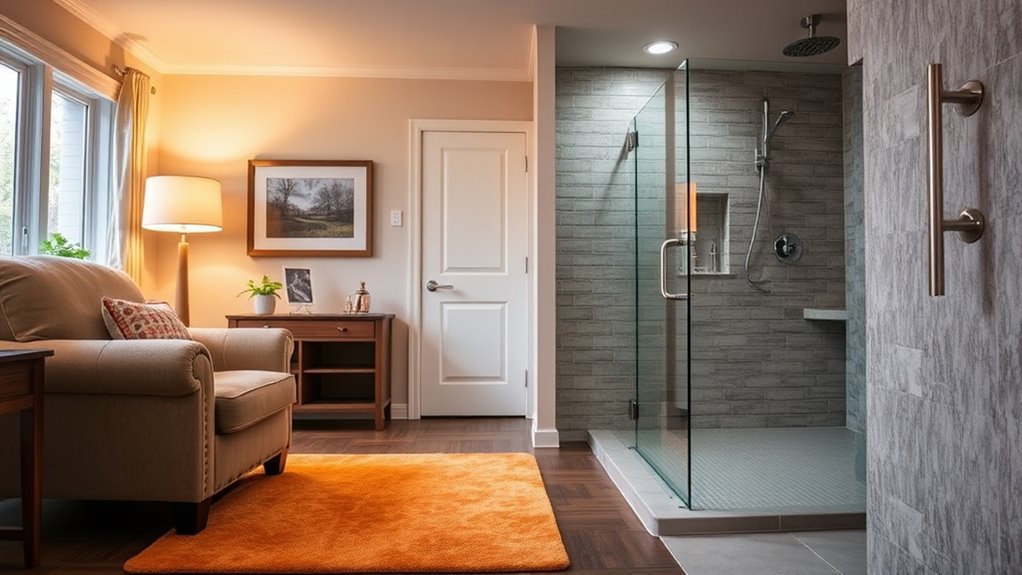

You can create a safe home on a budget by making simple upgrades like securing loose rugs, adding non-slip mats, and installing grab bars in key areas. Improving lighting with affordable fixtures and nightlights helps prevent falls, while keeping pathways clutter-free boosts safety. Also, assembling an emergency kit and checking alarms regularly guarantees you’re prepared without high costs. Keep exploring for more practical tips to make your home safer and more secure affordably.
Key Takeaways
- Focus on low-cost modifications like installing grab bars and non-slip mats in key areas.
- Improve lighting with affordable options such as nightlights and brighter bulbs.
- Keep pathways clutter-free and secure loose rugs to prevent falls.
- Assemble a basic emergency kit and ensure safety devices like smoke alarms are working.
- Regularly review safety plans and make practical updates without expensive gadgets.

Are you wondering how to make your home safer without breaking the bank? You’re not alone. Many seniors want to improve safety at home but worry about the costs. The good news is, you can make meaningful upgrades that protect you without spending a fortune. Start with fall prevention, which is vital because falls are a leading cause of injury among seniors. Simple changes like securing loose rugs, adding non-slip mats in the bathroom, and installing grab bars near the toilet and shower can greatly reduce the risk of falls. These modifications are inexpensive but effective, providing extra stability and confidence as you move around your home. Also, make sure pathways are clear of clutter, cords are tucked away, and lighting is bright enough to eliminate shadows. Installing motion sensor lights or nightlights can help you navigate safely at night without stumbling. Incorporating total-cost clarity into your safety planning ensures you make budget-friendly choices without sacrificing effectiveness.
Emergency preparedness is another key area you should focus on. Being ready for unexpected situations can make all the difference. Start by assembling a basic emergency kit with essentials like bottled water, non-perishable food, a flashlight, batteries, a first aid kit, and any necessary medications. Keep this kit in a convenient, easily accessible location. Make sure your home has working smoke alarms and carbon monoxide detectors, and check them regularly to verify they’re functioning properly. It’s also wise to create a simple emergency plan. Know the quickest exits from each room and share this plan with family or neighbors who can assist if needed. Keep important phone numbers written down and stored in an accessible place or programmed into your phone. If you have a medical alert system, verify it’s working and that contacts are up to date.
Incorporating these affordable safety measures doesn’t require a lot of money but can greatly enhance your peace of mind. Fall prevention strategies help you stay steady on your feet, reducing the risk of injury from falls. Meanwhile, being prepared for emergencies ensures you’re ready to handle unexpected events calmly and confidently. Regularly reviewing and updating your safety plans and home modifications keeps you protected as your needs change. Remember, safety isn’t about expensive gadgets or extensive renovations; it’s about making smart, practical choices that prioritize your well-being. With a little effort and some budget-friendly upgrades, you can create a safer home environment that supports your independence and gives you peace of mind every day.
Frequently Asked Questions
How Can I Find Affordable Professional Installation Services?
You can find affordable professional installation services by comparing local options online, reading reviews, and asking for quotes. Look for companies that specialize in home safety and offer budget options, such as discounts or package deals. You might also check with community centers or senior organizations for recommendations. Don’t forget to verify credentials and ask about warranties to guarantee quality service without overspending.
Are DIY Safety Upgrades as Effective as Professional Ones?
Did you know that over 60% of falls happen at home? DIY safety upgrades can be effective if you follow proper guidelines, but professional installation often guarantees better reliability and compliance with safety standards. While DIY safety is budget-friendly, it may lack the precision of professional installation, which can better prevent accidents. Consider your skills and the complexity of the upgrade to decide whether to go DIY or hire a pro.
What Are the Best Budget-Friendly Safety Devices for Seniors?
You can enhance safety with budget-friendly devices like medication management tools, such as pill organizers and reminder apps, to prevent accidents. Emergency preparedness is crucial, so consider easy-to-use alert systems and smoke detectors. These affordable options help seniors stay safe, promote independence, and provide peace of mind without breaking the bank. Regularly check and update these devices to guarantee they function properly and continue protecting your loved ones effectively.
How Often Should Safety Equipment Be Inspected or Replaced?
You should check your safety equipment regularly, ideally once a month. Perform fire alarm maintenance by testing alarms and replacing batteries if needed. Inspect stair rails for stability and secure any loose fittings promptly. Replace safety devices like non-slip mats or grab bars yearly or if they show signs of wear. Regular inspections guarantee your home remains safe, helping prevent accidents and giving you peace of mind.
Are There Government Programs Offering Financial Assistance for Safety Upgrades?
You can find government programs offering financial aid for safety upgrades, making it easier than ever to protect your loved ones. Many programs provide grants or assistance specifically for seniors, helping cover costs of safety equipment and modifications. Check with local agencies or federal websites for available government grants. These resources could be a game-changer, turning safety improvements from a formidable expense into an achievable goal with little to no out-of-pocket costs.
Conclusion
So, who knew that making your home safer for seniors could be so budget-friendly? With just a few clever upgrades, you’ll prove that safety doesn’t have to break the bank—just your old habits of overspending. After all, the real investment isn’t in expensive gadgets, but in peace of mind. So go ahead, save some money and keep your loved ones safe—because nothing says “I care” like a well-lit, clutter-free home on a dime.