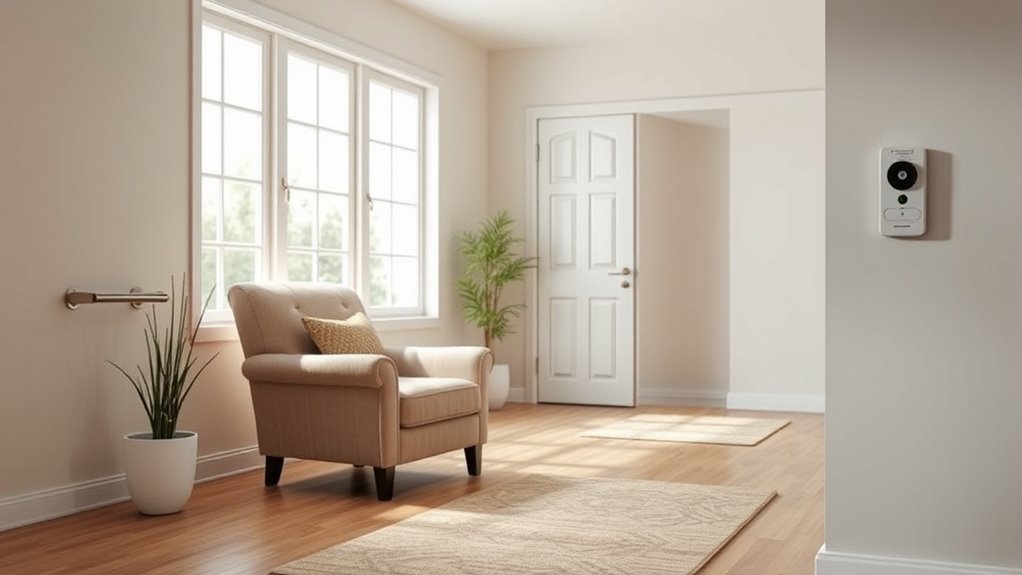

To guarantee you’re prepared and give yourself peace of mind, make essential home modifications like installing smoke and carbon monoxide detectors, adding sturdy grab bars, and removing fall hazards such as loose rugs. Keep fire extinguishers accessible and improve lighting throughout your home. Regularly check safety devices and clear escape routes. These adjustments help protect your loved ones and make emergency responses quicker. Keep exploring for more tips to create a safer, more prepared home environment.
Key Takeaways
- Install and regularly test smoke and carbon monoxide detectors in key areas for early warning.
- Keep fire extinguishers accessible and ensure all household members know how to use them.
- Remove tripping hazards and add grab bars and non-slip mats to prevent falls.
- Improve lighting and secure loose rugs to enhance visibility and stability throughout the home.
- Develop an emergency evacuation plan with clear routes and ensure all contacts are easily accessible.
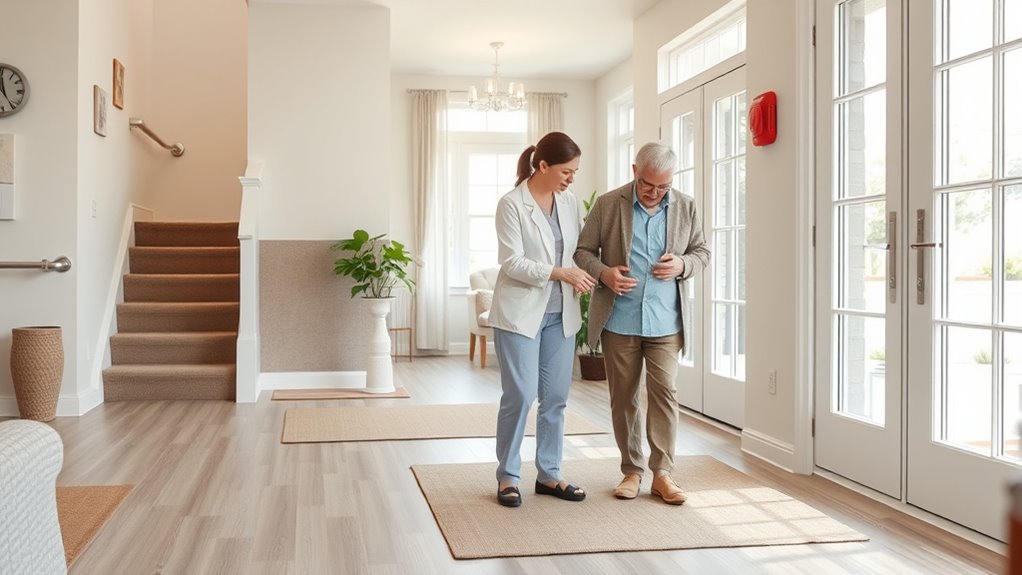
Emergencies can strike unexpectedly, making it essential to adapt your home quickly to guarantee safety and accessibility. When you’re caring for someone vulnerable or managing a household, having a plan in place is important. One of the most significant steps you can take is implementing emergency home modifications that prioritize fire safety and fall prevention. These changes can make a substantial difference in how swiftly you respond to crises and how safely everyone can navigate your space during stressful moments.
Start by evaluating your home for fire safety. Install smoke detectors on every level, especially near bedrooms and kitchens, and make sure they’re working correctly. Regularly test alarms and change batteries at least once a year. Consider adding carbon monoxide detectors as well, since this odorless gas can be deadly if undetected. Keep fire extinguishers within easy reach, particularly in the kitchen and garage, and ensure everyone in the household knows how to use them. Replace any frayed electrical cords, avoid overloading outlets, and store flammable items away from heat sources. These measures minimize fire risks and provide peace of mind, knowing you’re prepared to act swiftly if a fire occurs.
Fall prevention is equally essential, especially if you care for someone who has mobility challenges or balance issues. Remove loose rugs or secure them with double-sided tape to prevent tripping. Install grab bars in bathrooms near toilets and in showers or tubs to provide support. Use non-slip mats on slippery surfaces like kitchen floors and bathroom tiles. Make sure lighting is ample throughout the house, particularly in hallways, staircases, and entryways, so you can see clearly at all times. If stairs are present, add sturdy handrails on both sides and mark the edges with contrasting tape to enhance visibility. Rearrange furniture to create clear pathways, reducing the risk of bumping into objects or tripping. These modifications enable safer movement within your home, especially during emergencies when clarity and stability are essential.
Frequently Asked Questions
How Do I Prioritize Home Modifications for Different Emergency Scenarios?
You should prioritize home modifications by evaluating the most likely emergency scenarios, like fire or medical emergencies. Install a fire escape and clear escape routes for safety. Keep medical supplies easily accessible in a designated area. Address urgent needs first, such as installing grab bars or ramps, and then focus on less critical updates. Regularly review and update your plans to guarantee safety measures are effective and tailored to your specific risks.
What Budget Considerations Should I Keep in Mind for Emergency Modifications?
Think of your budget like a toolbox—prioritizing essential tools first. For emergency modifications, consider insurance coverage options that can offset costs and explore DIY solutions to save money. For example, upgrading door handles or installing grab bars might be affordable and straightforward. Keep a list of must-haves versus nice-to-haves, and plan for unforeseen expenses to guarantee safety without overspending.
Are There Temporary Solutions Before Permanent Adjustments Are Made?
Yes, you can use temporary fixes and DIY solutions before making permanent adjustments. For example, you might place non-slip mats in slippery areas or use furniture risers to improve accessibility. These temporary solutions are cost-effective and quick to implement, giving you peace of mind while planning for more permanent modifications. Just guarantee safety remains a priority, and consult professionals if needed for long-term solutions.
How Often Should Emergency Preparedness Assessments Be Updated?
They say, “Forewarned is forearmed,” so you should update your emergency preparedness assessments at least once a year. Regular reviews ensure your evacuation planning and disaster drills stay relevant, especially if your home or care needs change. Stay proactive by scheduling assessments annually, and after any significant events or modifications. This way, you’re always prepared to respond swiftly and confidently in an emergency, providing peace of mind for you and your loved ones.
Can Professional Installers Help Customize Modifications for Specific Needs?
Yes, professional installers can help you customize modifications tailored to your specific needs. They start with a professional assessment, guaranteeing they understand your unique situation. Based on this evaluation, they offer customization options that improve safety and accessibility in your home. By working with experts, you ensure that the modifications are both effective and personalized, giving you peace of mind and making your home safer for everyone involved.
Conclusion
By making these emergency home modifications, you create a safer environment and gain peace of mind. Remember, studies show that 70% of falls happen at home, often in the bathroom or on stairs. Installing grab bars, ramps, and improving lighting can markedly reduce these risks. Taking proactive steps not only protects your loved ones but also eases your worries during emergencies. A little effort now ensures everyone’s safety and confidence in your home’s preparedness.