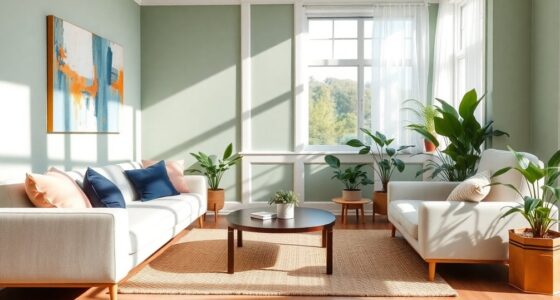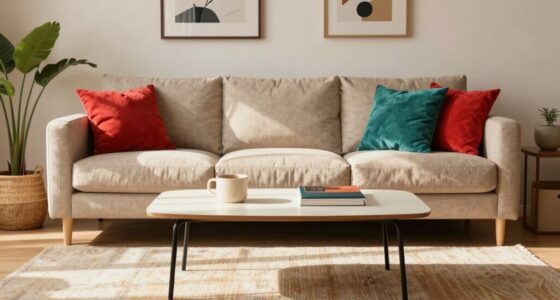
To make a cramped space feel larger, opt for light colors like soft blues, gentle greens, or warm neutrals that reflect more light and create an airy atmosphere. Use layered lighting and mirrors to bounce light around the room, enhancing the sense of openness. Keep furniture scaled down and away from walls to prevent clutter. Combining thoughtful color choices with smart lighting and placement will help open up your room—if you want more tips, there’s plenty more to explore.
Key Takeaways
- Use light, soft hues like pale blues and gentle greens to reflect more light and create an airy feel.
- Opt for neutral and muted tones to visually expand small spaces and prevent overwhelming the room.
- Incorporate reflective surfaces and mirrors to enhance natural light and amplify the sense of openness.
- Choose furniture in scaled-down sizes and place it away from walls to maintain a spacious flow.
- Combine light colors with layered lighting to maximize brightness and make the room appear larger.
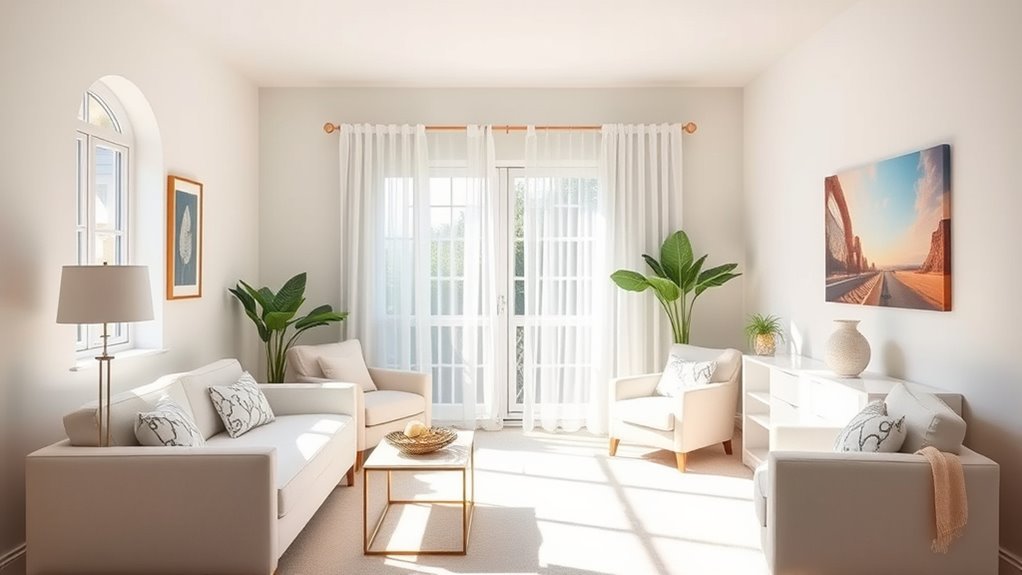
When space feels limited, choosing the right colors can make a significant difference in how your room looks and feels. Lighter hues tend to reflect more light, which helps open up small areas and makes them appear larger. Opt for soft shades like pale blues, gentle greens, or warm neutrals, as these colors create an airy, spacious vibe. But color alone isn’t enough—how you use lighting techniques and furniture placement can amplify this effect. Bright, natural light is your best friend, so try to maximize windows or add mirrors to bounce light around the room. If natural light is limited, incorporate layered lighting with wall sconces, table lamps, or LED strips. Position your lighting to highlight open spaces and avoid casting shadows that can make the room feel cramped. Additionally, understanding the impact of color psychology can help you choose hues that promote a sense of openness and calm in small rooms.
Furniture placement plays a *vital* role in creating a sense of openness. When arranging your furniture, keep pieces away from walls to avoid crushing the space, and choose scaled-down furniture that fits proportionally to the room. Multi-functional furniture, like a storage ottoman or a bed with drawers underneath, minimizes clutter and frees up floor space. Keep the center of the room relatively clear to foster a sense of flow, and consider floating your furniture instead of pushing everything against the walls. This creates pathways and prevents the space from feeling overwhelmed.
Frequently Asked Questions
Which Color Combinations Make a Room Appear Larger?
To make a room appear larger, you should choose neutral tones like whites, beiges, or soft grays, as they reflect light and create an open feel. Pair these with contrasting shades, such as darker accents or bold trims, to add depth without closing in the space. Keep walls light and incorporate contrasting furniture or accessories to enhance the sense of openness and make the room feel more expansive.
How Do Lighting Choices Affect Color Perception in Small Rooms?
Natural light brightens your space and makes colors appear more vibrant, enhancing the sense of openness. In contrast, artificial lighting can warm or cool a room, altering how hues are perceived. Soft, white bulbs mimic daylight, helping small rooms feel larger, while harsh or colored lights can make them seem cramped. Your lighting choices directly influence how your colors look, so select wisely to maximize space and create an inviting atmosphere.
Can Bold Colors Be Used Effectively in Cramped Spaces?
You can definitely use bold colors effectively in cramped spaces by understanding bold color psychology. Incorporate vibrant color accents to create focal points and add personality without overwhelming the room. Use bold hues on a single wall or in accessories to make a statement, while balancing with neutral tones for harmony. This approach enhances visual interest, making your small space feel lively and inviting rather than cramped.
What Are the Best Accent Wall Colors for Small Rooms?
Think of your accent wall as a powerful storyteller in your small space. Opt for calming blues or energetic reds based on what vibe you want, leveraging color psychology to influence mood. Matte or eggshell finishes work best, adding depth without overwhelming. You’ll create a focal point that enlarges the room visually, making it feel more inviting and open—perfect for transforming a tiny area into a stylish retreat.
How Does Furniture Color Impact the Sense of Space?
You’ll find that furniture color psychology plays a key role in how spacious your room feels. Light, neutral shades make the space seem larger and more open, while contrasting furniture shades create visual interest without shrinking the room. By choosing furniture in colors that complement or contrast wisely, you can enhance the sense of openness and balance, making your small space feel more inviting and less cramped.
Conclusion
By choosing light, airy hues for your cramped space, you can make it feel instantly larger and more inviting. Remember, over 60% of people report feeling more relaxed in rooms with bright, open colors. So, don’t underestimate the power of color—small changes can make a big difference. With the right hues, you’ll transform your tight space into a welcoming retreat that feels much roomier than it truly is.