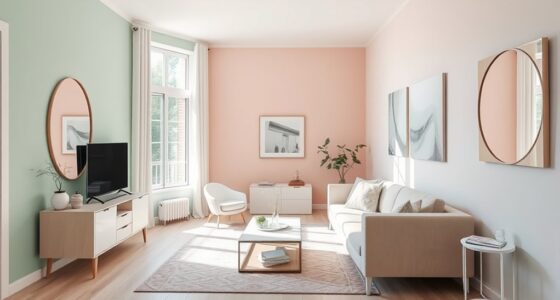
Using high-contrast colors at home can greatly improve visibility and safety by making hazards and objects easier to spot. Focus on strong color contrasts, like red and green or blue and orange, to guarantee key features stand out against their backgrounds. Proper lighting and visual cues enhance overall safety, especially for those with visual impairments or in low light. Want to discover proven tips and strategies for applying these principles effectively? Keep exploring to learn more.
Key Takeaways
- Use high-contrast color combinations, like blue & orange or red & green, to improve object visibility and recognition.
- Ensure sufficient contrast ratios (4.5:1 for text, 7:1 for critical signage) to meet safety standards.
- Apply contrasting markings on stairs, edges, and handles to alert and guide occupants effectively.
- Incorporate proper lighting and visual cues to enhance clarity and reduce accident risks in all home areas.
- Avoid subtle color blends and busy patterns that can diminish visibility and create visual clutter.
Understanding the Importance of Color Contrast for Safety

Color contrast plays a crucial role in guaranteeing safety around your home because it helps you quickly distinguish objects and hazards from their backgrounds. If you or family members have color blindness, high contrast is essential because it compensates for difficulty in differentiating certain colors. Understanding color symbolism also matters; for example, red often signals danger, while green indicates safety. Using contrasting colors enhances visibility, reducing accidents and making navigation easier. By intentionally selecting colors that stand out against their surroundings, you create a safer environment. Remember, the goal isn’t just aesthetic—it’s about functional clarity. Whether marking steps, doorways, or hazards, high contrast ensures everyone can recognize critical features instantly, regardless of visual limitations or color perception differences.
Choosing the Right High-Contrast Color Combinations

When selecting high-contrast color combinations, it’s important to take into account contrast ratio standards to ensure visibility. Pair colors that are complementary, like blue and orange or red and green, to maximize clarity. These choices help create effective, eye-catching contrasts that improve safety around your home. Additionally, incorporating elements like color accuracy and natural textures can enhance visual interest while maintaining high contrast.
Contrast Ratio Standards
Have you ever struggled to read text or spot important details because of poor contrast? That’s where contrast ratio standards come in. These standards measure the difference in luminance between text and background, ensuring readability and safety. When considering color naming, it’s essential to pick high-contrast combinations that enhance visual acuity, especially for those with visual impairments. A good contrast ratio typically starts at 4.5:1 for regular text and 7:1 for enhanced visibility. By following these standards, you can select colors that maximize contrast without causing eye strain. Proper energy distribution can also influence how colors appear in different lighting conditions, affecting contrast perception. This makes your home safer and more accessible, helping everyone see clearly and avoid hazards. Additionally, understanding luminance contrast is crucial for creating effective visual hierarchies that guide attention appropriately. Choosing colors with appropriate contrast ratios is essential for ensuring safety and clarity in any environment. Recognizing the importance of visual perception can further help in designing spaces that are both functional and user-friendly. Remember, choosing the right contrast ratio isn’t just about aesthetics—it’s about clarity and safety. Incorporating color combinations that adhere to contrast standards can significantly improve the overall visibility and safety of your environment.
Complementary Color Pairings
Choosing the right high-contrast color combinations can markedly improve visibility and safety around your home. Using the color wheel helps you identify complementary color pairings—colors directly opposite each other—such as blue and orange or red and green. These combinations create striking contrast that enhances visual acuity, making objects easier to see at a glance. When selecting colors for signs, markings, or safety cues, opt for pairs that stand out against their background, ensuring they’re easily distinguishable. Keep in mind that high-contrast pairings aren’t just about brightness; they’re about effective differentiation. Properly chosen complementary colors increase clarity and reduce the risk of accidents, especially for individuals with limited vision. Additionally, understanding AI’s role in safety innovations can inform better design choices for high-contrast signaling. For instance, color contrast analysis tools can help you select optimal color combinations for maximum visibility. This strategic use of color can significantly boost safety in your home environment and support the principles of mindful decluttering, which emphasize clear and organized visual cues. Incorporating these techniques with color psychology can further enhance the effectiveness of safety markings by choosing colors that evoke appropriate responses. Moreover, selecting colors that are consistent with trusted safety standards ensures your markings meet recommended visibility criteria.
Practical Applications of Color Contrast in Different Rooms

Using color contrast effectively can dramatically enhance visibility and functionality in each room. In kitchens, opt for high-contrast colors on appliances, counters, and storage to make items easily identifiable, helping those with color blindness distinguish between objects. In bedrooms, leverage color psychology by choosing calming contrast combinations, like soft blues with white, to promote restful sleep while ensuring key features like light switches stand out. Bathrooms benefit from contrasting tiles and fixtures, improving safety and navigation, especially for individuals with visual impairments. Living rooms can incorporate bold contrasts in furniture and decor to define spaces clearly. By thoughtfully applying color contrast, you create a safer, more accessible environment that caters to diverse needs without sacrificing style. Additionally, selecting high-contrast color schemes can further improve overall visibility and safety throughout your home. Incorporating knowledge about visual perception can help you choose the most effective contrast strategies for each space. Understanding how color contrast influences our perception can lead to more effective safety and design choices, particularly for those with sensory sensitivities. Incorporating contrast sensitivity considerations can also aid in designing spaces that are easier to interpret visually.
Tips for Incorporating Contrasting Colors in Your Home Decor

Incorporating contrasting colors into your home decor can instantly add visual interest and improve functionality. To do this effectively, consider color psychology—using bold hues like red or yellow to energize spaces, or calming blues and greens for relaxation zones. Stay updated with current interior design trends, which favor high-contrast palettes like black and white or jewel tones paired with neutral shades. Start small by adding contrasting accessories, such as cushions or artwork, then expand to larger elements like furniture or walls. Balance is key; avoid overwhelming the space by maintaining harmony through thoughtful color placement. Remember, the goal is to enhance visibility without sacrificing style. With intentional choices, contrasting colors will boost safety and elevate your home’s aesthetic appeal. Incorporating design principles can help you create a cohesive and visually appealing environment. Additionally, using the right lighting can further enhance the impact of your contrasting color choices.
Common Mistakes to Avoid When Using Color for Visibility

One common mistake is ignoring contrast levels, which can make important areas hard to see. Overusing bright colors can also create visual clutter and reduce overall clarity. Being mindful of these pitfalls helps guarantee your home remains both safe and visually effective. Incorporating color contrast principles can further optimize color choices for maximum visibility and safety. Additionally, understanding visual perception can help you select colors that are easily distinguishable for everyone, including those with vision impairments. Paying attention to lighting conditions is also crucial, as proper illumination can significantly enhance the effectiveness of your color choices. Recognizing vehicle tuning effects can also inform how different colors are perceived under various lighting, contributing to better visibility strategies.
Ignoring Contrast Levels
Ignoring contrast levels can severely undermine the effectiveness of your color choices, making important objects or areas hard to see. Without proper contrast, even bold colors can blend into backgrounds, compromising visibility. Beware of these common pitfalls:
- Using monochrome minimalism with subtle color blending that reduces contrast, making objects indistinct.
- Choosing similar hues for foreground and background, causing important details to fade.
- Overlooking lighting conditions that affect how contrast appears in different parts of your home.
- Failing to consider color contrast standards, which are essential for ensuring that visual cues are accessible and effective.
- Ignoring how visual perception influences the way colors are seen in various lighting environments, leading to less effective visibility.
- Not accounting for the lifecycle analysis of colors and materials, which can impact how long contrast remains effective under different conditions.
To improve visibility, prioritize high contrast between key objects and their surroundings. Avoid monochrome schemes that lack contrast, especially in areas requiring safety. Clear distinctions help ensure that objects stand out, even in low light. Always test your color combinations under different lighting to confirm they’re effective.
Overusing Bright Colors
While bright colors can make your home more vibrant and lively, overusing them can actually harm visibility. High color saturation can overwhelm your eyes, making it difficult to distinguish important features quickly. Similarly, excessive pattern complexity can create visual noise, reducing contrast and causing confusion. When surfaces or objects are too saturated or overly patterned, your brain struggles to identify key areas, especially in emergencies. To avoid this, limit the use of intensely saturated colors to specific accents or safety zones. Keep patterns simple and minimal to enhance clarity. Striking the right balance ensures that colors serve as effective cues, rather than distractions, improving overall safety and visibility at home.
Enhancing Safety With Additional Visual Aids and Lighting

Enhancing safety at home often requires more than just choosing the right colors; additional visual aids and proper lighting play a crucial role. They help everyone, including those with visual impairment awareness and color blind accessibility, navigate spaces safely. Consider these strategies:
Visual aids and good lighting ensure safe, accessible navigation for everyone in your home.
- Install task lighting in key areas like stairs and kitchens to improve visibility.
- Use contrasting tape or markings on edges, steps, and handles to highlight hazards.
- Incorporate motion-activated lights for automatic illumination, reducing accidents during darkness.
These aids make it easier for individuals with visual impairments or color vision deficiencies to identify hazards quickly. Proper lighting and visual cues create a safer environment, helping everyone move around your home confidently and securely.
Frequently Asked Questions
How Does Age Affect Color Contrast Needs for Safety?
As you age, your visual needs change due to age-related visual decline and decreased contrast sensitivity. You might find it harder to distinguish objects with low contrast, increasing safety risks. To improve visibility, you should use high-contrast colors in your environment. This helps your eyes better differentiate between surfaces and objects, reducing the chances of accidents and making your home safer and more accessible as you get older.
Can Color Contrast Help Individuals With Visual Impairments?
Imagine a world where you can see clearly despite your visual challenges. Color contrast can be a powerful tool for individuals with visual impairments, enhancing their perception of objects and surroundings. By leveraging differences in color vision and contrast sensitivity, you can improve safety and independence. Bright, contrasting colors make it easier to distinguish hazards and navigate, transforming everyday environments into safer, more accessible spaces for everyone.
Are There Specific Colors Best Suited for Outdoor Safety?
When selecting colors for outdoor safety, you should focus on weather-resistant materials and adhere to established color coding standards. Bright, high-contrast colors like neon yellow, orange, and red are excellent choices because they stand out in various weather conditions. These colors, combined with durable, weather-resistant materials, make certain of visibility and safety in outdoor environments, making it easier for you to notice hazards and navigate safely regardless of the weather.
How Often Should I Update Color Schemes for Safety?
Imagine your home’s safety colors as a vibrant garden that needs regular tending. You should update your color schemes with seasonal color updates at least once a year to keep visibility fresh and effective. Personal preferences also play a role; if you notice fading or confusion, don’t hesitate to refresh your palette sooner. Regular updates guarantee that your safety cues stand out clearly, making your home safer year-round.
What Are the Cost Implications of Implementing High-Contrast Designs?
When considering the cost implications of implementing high-contrast designs, you should do a thorough cost analysis to understand expenses. It’s essential to include these costs in your budget planning, as high-contrast materials or repainting can vary in price. While initial investments might seem higher, the improved visibility and safety can reduce long-term risks and potential costs from accidents, making it a worthwhile allocation in your safety budget.
Conclusion
Remember, safety starts with awareness and clear visuals. By choosing high-contrast colors and incorporating them thoughtfully, you make your home safer and more navigable. Don’t forget to add proper lighting and visual cues—they’re the icing on the cake. As the saying goes, “A picture is worth a thousand words,” so use colors wisely to communicate safety at a glance. When you prioritize visibility, you create a space that’s both beautiful and secure.