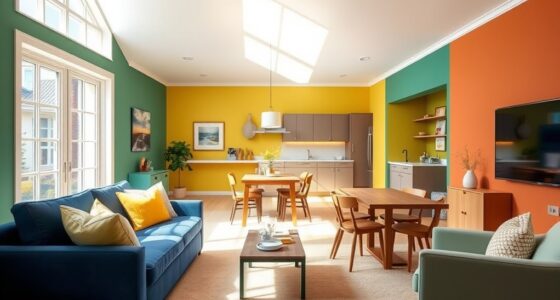

Lighting plays a big role in how your paint colors appear. Natural sunlight varies throughout the day, making warm tones feel softer in the morning and cooler shades pop at midday. Artificial lights, like incandescent or LED bulbs, can also change colors, adding warmth or coolness depending on their type. Understanding how both natural and artificial light affect your space helps you choose colors that look perfect all day long. Keep exploring to find out how to get the best results.
Key Takeaways
- Lighting conditions, natural or artificial, can significantly alter how paint colors appear in a space.
- Sunlight’s changing angle throughout the day shifts color perception, making colors look different at morning, noon, or evening.
- Artificial lighting, such as incandescent or LED, can enhance or mute certain paint shades depending on their warmth or coolness.
- Testing paint samples under various lighting conditions helps predict their true appearance in different environments.
- Considering both natural and artificial light interactions ensures chosen colors maintain their intended look at all times.
Lighting and Paint Colors
Choosing the right lighting and paint colors can dramatically transform the look and feel of any space. When you’re selecting paint, it’s easy to focus solely on the color itself, but lighting plays a pivotal role in how that color appears. Natural sunlight can make a room feel vibrant and warm, or cool and invigorating, depending on the time of day and weather. Meanwhile, artificial lighting can alter the perception of your paint colors entirely, sometimes making them appear darker, lighter, or even different shades altogether. Understanding how these lighting types interact with your chosen paint colors helps you create the desired atmosphere in your space.
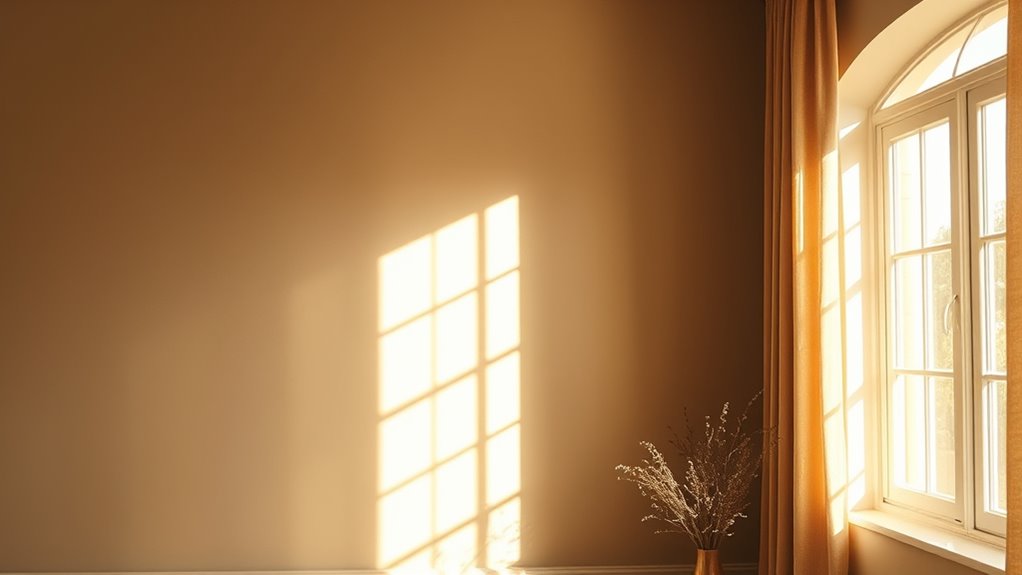
Natural sunlight is dynamic; it shifts throughout the day, bathing your room in different intensities and hues of light. In the morning, sunlight tends to be softer and warmer, which can make warm-toned paints like yellows, oranges, or warm beiges look even more inviting. As midday approaches, sunlight becomes brighter and cooler, often highlighting cooler shades like blues and grays. If you’re painting a room that receives lots of natural sunlight, it’s wise to test your paint samples at different times of the day. This way, you can see how the colors change and decide whether they match the mood you want to create. Additionally, considering lighting and paint colors together helps ensure your chosen palette will complement the overall lighting design in your space.
Natural sunlight varies throughout the day, affecting how paint colors appear and look in your space.
Artificial lighting, on the other hand, can be controlled and adjusted. The type of bulbs you choose—incandescent, LED, or fluorescent—will influence how your paint colors appear. Incandescent bulbs tend to cast a warm, yellowish glow, making warm colors appear richer and more inviting. Fluorescent and some LED lights often emit cooler, bluish tones, which can make cool colors like blues and greens look more subdued or even slightly altered. If your room heavily relies on artificial lighting, choosing paint colors that complement your lighting setup is essential. For example, if you prefer cooler lights, selecting warmer paint shades can help balance the overall look.
To truly see how your paint colors will look once the room’s finished, you should consider both natural sunlight and artificial lighting during your testing phase. Bring home sample swatches and observe them at different times and under various light sources. This practice ensures that you’re making an informed decision based on how the space will look during the day and at night. Ultimately, understanding the relationship between light and color helps you avoid surprises and guarantees your space looks exactly as you envision—bright and lively in the daytime or cozy and inviting after sunset.
Frequently Asked Questions
How Does Natural Sunlight Differ From Artificial Lighting on Paint Appearance?
Natural sunlight differs from artificial lighting mainly because of color temperature and light spectrum. Sunlight has a full spectrum, providing a balanced, bright appearance that enhances true colors. Artificial lighting varies in color temperature, which can cast warm or cool tones, altering how your paint looks. You might notice colors seem different under different lights, so choosing the right lighting helps you see your paint’s true hue and vibrancy.
Can Specific Light Bulbs Enhance or Diminish Certain Paint Colors?
Irony strikes—you think your paint looks perfect until you switch bulbs. Yes, specific bulb colors and fixture placement can really make your colors pop or fade. Warm bulbs enhance cozy tones, while cool bulbs boost vibrant hues. Strategic fixture placement guarantees even lighting, preventing unwanted shadows. So, choose your bulbs wisely—they can truly transform your space, making your paint colors more lively or subdued, just as you desire.
How Do Seasons Affect How My Paint Colors Look in Different Lighting?
Seasons cause seasonal color shifts, affecting how your paint colors appear. As daylight variation changes throughout the year, colors may look warmer or cooler depending on the season. During winter, you might notice colors appear more subdued due to lower light levels, while summer’s brighter days can make hues seem more vibrant. Keep in mind that seasonal shifts influence your perception, so always view paint samples under different seasonal lighting to choose confidently.
What Lighting Conditions Are Best for Accurately Viewing Paint Colors?
To accurately view paint colors, you should test them in natural daylight or under neutral, balanced lighting. Avoid harsh or colored lighting that can distort color perception. Use light with a consistent, moderate light temperature, around 5000K, to reflect true colors. Understanding paint color psychology helps you choose lighting that enhances your space’s mood. Always compare paint swatches in different lighting conditions to make certain your chosen color looks right everywhere.
Do Different Rooms Require Different Lighting Setups for Optimal Color Display?
Sure, every room’s a special snowflake, so why settle for uniform lighting zones? You need different setups—warm light for cozy bedrooms and bright, cool tones for kitchens—to truly showcase your paint colors. Ignoring color temperature and lighting zones can turn your masterpiece into a confusing mess. So, tailor each space’s lighting to its vibe, and watch your colors pop like never before. Who knew lighting could be this fun?
Conclusion
Remember, lighting isn’t just a background feature; it’s the stage that transforms your paint colors from mere hues to mesmerizing elements of your space. Without it, even the most perfect shade can fall flat. So, don’t underestimate the power of light—let it be your secret weapon in bringing out the true beauty of your walls. After all, isn’t it the light that truly reveals what lies beneath the surface?