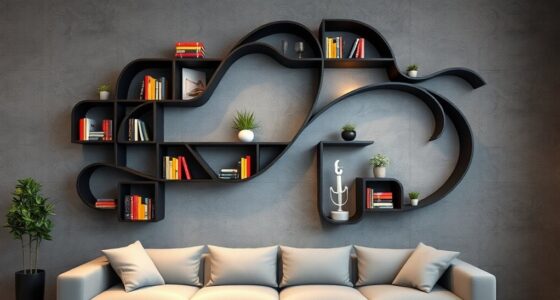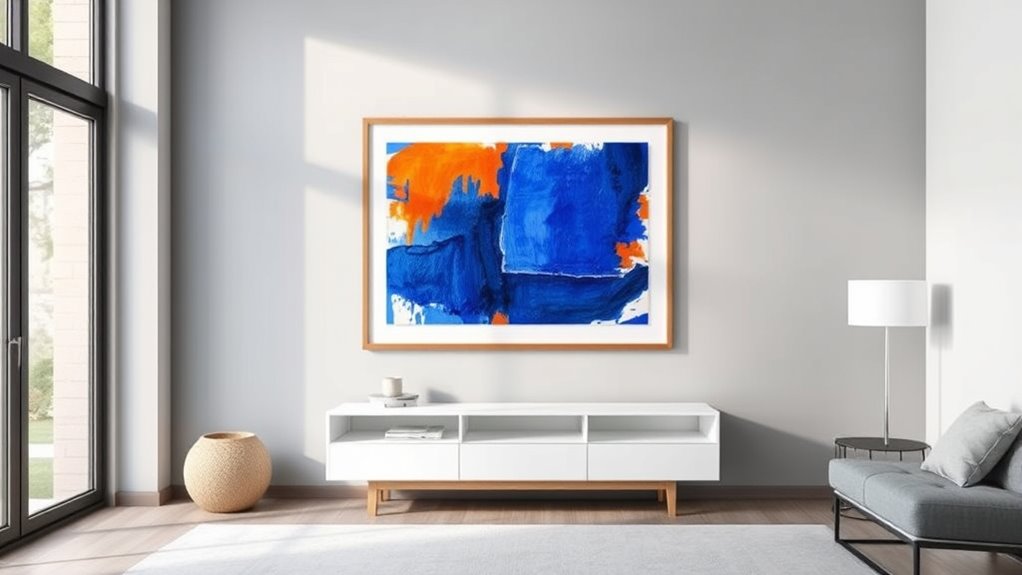

To hang art at the perfect height, aim for the artwork’s center to be about 57-60 inches from the floor, adjusting based on your ceiling height and furniture placement. Use measurements to guide your placement, but trust your eye for balance. When hanging above furniture, align the art’s center with the piece’s height. If you’d like tips on creating a harmonious display that catches the eye, keep exploring for more expert advice.
Key Takeaways
- Hang artwork so the center is approximately 57-60 inches from the floor for optimal viewing.
- Measure from the floor to the artwork’s center, adjusting for furniture and ceiling height.
- When above furniture, align the artwork’s center with the furniture’s height for balance.
- Use adjustable lighting to highlight details and reduce glare, enhancing the artwork’s impact.
- Consider wall color and room design to ensure the art placement complements the overall space.
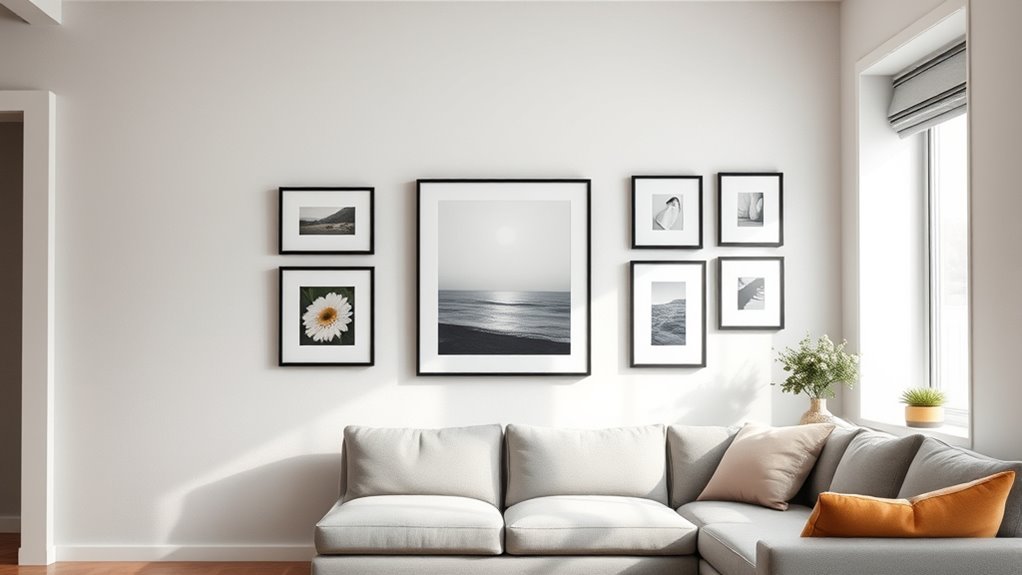
Have you ever wondered if your artwork is hanging at the right height? It’s a common question, and the answer isn’t always straightforward. The key lies in understanding how gallery lighting and wall color selection influence how your art is perceived. When you hang art at the proper height, it allows viewers to engage with the piece naturally, making the experience more immersive and meaningful.
Start by considering the eye level of the average viewer. Typically, this is around 57 to 60 inches from the floor to the center of the artwork. But don’t think of this as a strict rule—your space’s ceiling height, furniture, and overall design can shift this ideal. For example, if your artwork is going above a sofa or a console table, align the center of the piece with the furniture’s height instead. This creates a harmonious visual flow that feels intentional.
Aim for 57-60 inches from floor to art center, adjusting for furniture and space.
Gallery lighting plays a significant role in how your art appears once hung. Proper lighting can highlight textures, colors, and details, making your piece stand out at the perfect height. Use adjustable fixtures, so you can direct light precisely where it’s needed. Avoid harsh overhead lighting that causes glare or casts unflattering shadows. Instead, opt for soft, focused lighting that enhances the artwork’s features. When you position your art correctly, good gallery lighting will elevate its presence, drawing viewers into its details and nuances.
Another essential aspect is wall color selection. The background behind your artwork can dramatically influence how it’s perceived. If you have a vibrant or dark-colored wall, hanging your art at the right height becomes even more vital, as the wall color can either complement or clash with the piece. Lighter or neutral tones tend to make colors pop and create a clean, modern look, so hanging art at the right height ensures it remains the focal point without blending into the background. Conversely, if your wall color is bold or textured, consider how the height impacts the overall balance and visual weight of your display.
Ultimately, the goal is to create a cohesive display where your artwork feels natural and inviting. Paying attention to gallery lighting and wall color selection will guide you in choosing the perfect height. It’s not just about measurements but about crafting a space where your art can truly shine, drawing viewers in and encouraging them to appreciate every detail. Properly hanging artwork and considering these elements will help your pieces look their best and make a lasting impression. When you get these elements right, your art will feel right at home, inviting admiration and conversation.
Frequently Asked Questions
How Do I Hang Art in a Non-Traditional or Irregular Wall?
When hanging art on a non-traditional or irregular wall, you should first consider the wall texture and irregularities. Use gallery lighting to highlight your artwork and make adjustments for uneven surfaces. Secure hooks or mounting hardware carefully, possibly using shims or spacers to level pieces. Take your time to measure and mark the placement, ensuring your art looks balanced despite the wall’s unique shape.
What Tools Are Best for Precise Art Placement?
Think of your tools as your guiding stars. Use a measuring tape to mark exact spots and a level indicator to guarantee everything aligns perfectly. These tools are your allies in creating harmony, turning chaos into order. With precision, you’ll avoid crooked art and achieve a balanced display. Trust your tools to translate your vision into reality, making your space both beautiful and meaningful.
How Can I Adapt Height for Multi-Piece Displays?
To adapt height for multi-piece displays, consider your gallery arrangements and wall height adjustments. Measure the total height of your arrangement, including spacing, and decide on a central eye level to create balance. Use painter’s tape to outline the layout before hanging, ensuring each piece aligns well. Adjust based on wall height, making sure the display feels cohesive and visually appealing at the intended viewing height.
What’s the Best Way to Hang Art Above Furniture?
You should hang art about 4-6 inches above your furniture to create a polished look, aligning with art gallery standards. Imagine a perfectly balanced display where the artwork complements the piece below. Visual balance is key, so consider the size of both the art and furniture; larger pieces work well above sizable sofas or buffets. This approach guarantees your space feels harmonious and professionally styled.
How Do I Ensure Safety When Hanging Heavy Artwork?
To guarantee safety when hanging heavy artwork, you need to focus on proper weight distribution and anchor selection. First, choose strong, appropriate anchors like heavy-duty toggles or hooks designed for your wall type. Distribute the weight evenly by using multiple hooks if needed. Always verify that the anchors are securely installed into wall studs or solid backing, preventing accidents and ensuring your artwork stays safely mounted.
Conclusion
Remember, hanging art is like planting seeds of inspiration. When you place it just right, you nurture your space with meaning, allowing your personality to bloom. Each piece becomes a guiding star, illuminating your surroundings and reflecting your true self. So, trust your instincts, and let your walls tell your story at the perfect height—because when art is positioned thoughtfully, it becomes a beacon that lights up your life.