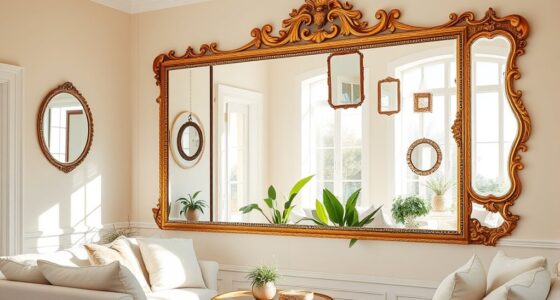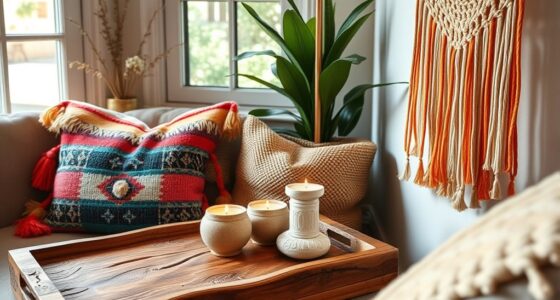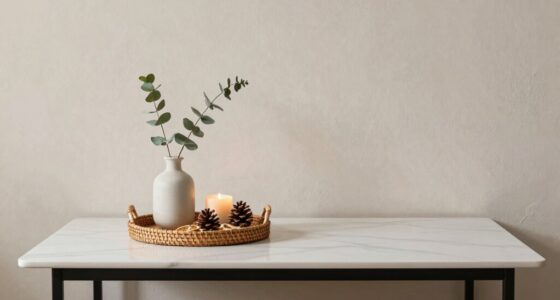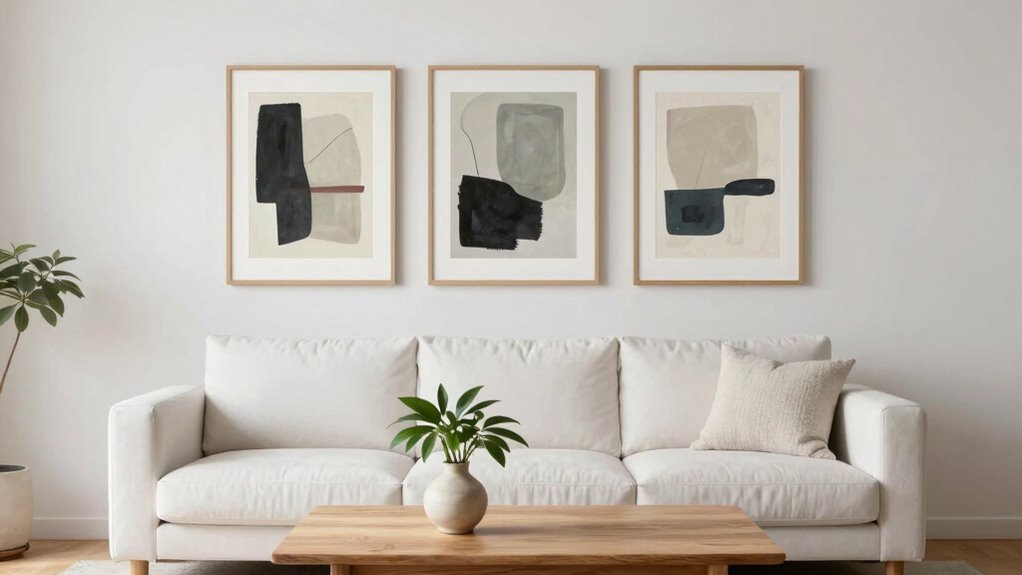

To stop over-decorating, use the rule-of-three to keep your space balanced and cohesive. Group items in threes with varied sizes, textures, and heights, avoiding clutter. Focus on intentional placements to create harmony without overwhelming the senses. Balance bold and subtle pieces, and give each item enough space to breathe. Mastering this simple trick helps your decor look polished and intentional—if you want to learn more about applying this principle effectively, keep exploring.
Key Takeaways
- Use groups of three to create visual harmony and prevent clutter in your decor.
- Vary object sizes and heights within each trio for dynamic, balanced arrangements.
- Focus on color cohesion and texture contrast to enhance the visual appeal of each group.
- Avoid overcrowding by leaving negative space around grouped items for a clean look.
- Keep decor simple and intentional, limiting to three bold or statement pieces per area.
What Is the Rule-of-Three in Interior Design?
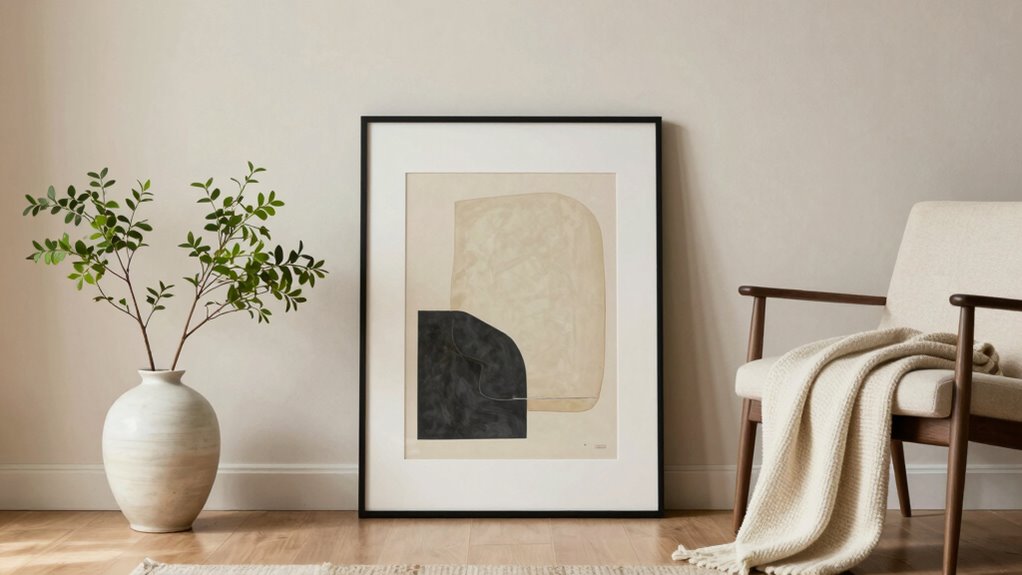
The rule of three is a simple yet effective principle in interior design that helps create balanced and visually appealing arrangements. It involves grouping objects in threes, encouraging a sense of harmony and cohesion. When applying this rule, pay attention to color harmony, ensuring the grouped items share complementary or related hues, which ties the display together. Additionally, incorporating texture contrast adds visual interest; pairing smooth with rough surfaces or soft with hard materials creates dynamic focal points. By sticking to three items, you avoid clutter and maintain a clean, organized look. This approach makes your space feel thoughtfully curated without overdoing it. Recognizing the importance of visual hierarchy can further enhance the effectiveness of this styling trick. Understanding how to balance elements within your decor enhances overall harmony and ensures each grouping contributes to a cohesive aesthetic.
Why Grouping Items in Threes Creates Visual Balance?
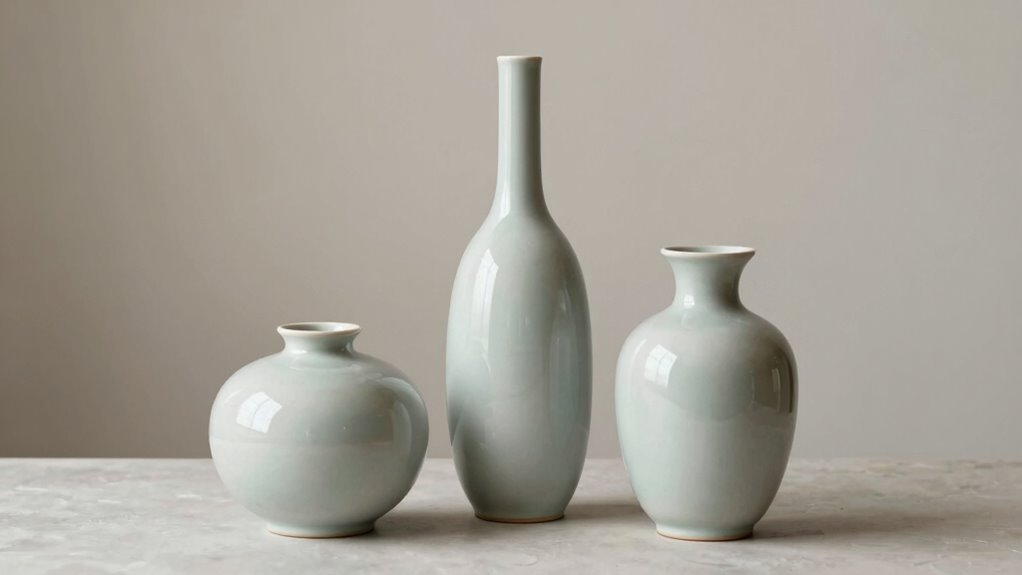
Grouping items in threes creates a sense of harmony that appeals to the eye and makes a space feel more intentional. When you arrange objects in groups of three, it naturally guides the viewer’s gaze and establishes balance. Incorporate color coordination to unify the group, ensuring the items complement each other without competing. Adding texture contrast among the trio enhances visual interest, making each piece stand out while still feeling cohesive. This combination of color and texture creates a dynamic yet harmonious display that doesn’t overwhelm the space. Additionally, understanding contrast ratio principles helps you choose the right projector settings to optimize image quality. By sticking to this rule, you avoid clutter and over-decoration, allowing your decor to breathe. Recognizing visual balance principles helps you design more appealing arrangements. Incorporating an understanding of design harmony ensures your decor feels unified and polished. Applying emphasis on simplicity enables you to highlight key decorative elements without distraction. Being mindful of spatial relationships further enhances the overall aesthetic, making your arrangements feel more intentional. Ultimately, grouping in threes fosters a polished look that’s effortlessly balanced and visually appealing.
Practical Tips for Applying the Rule-of-Three on Shelves, Walls, and Tables
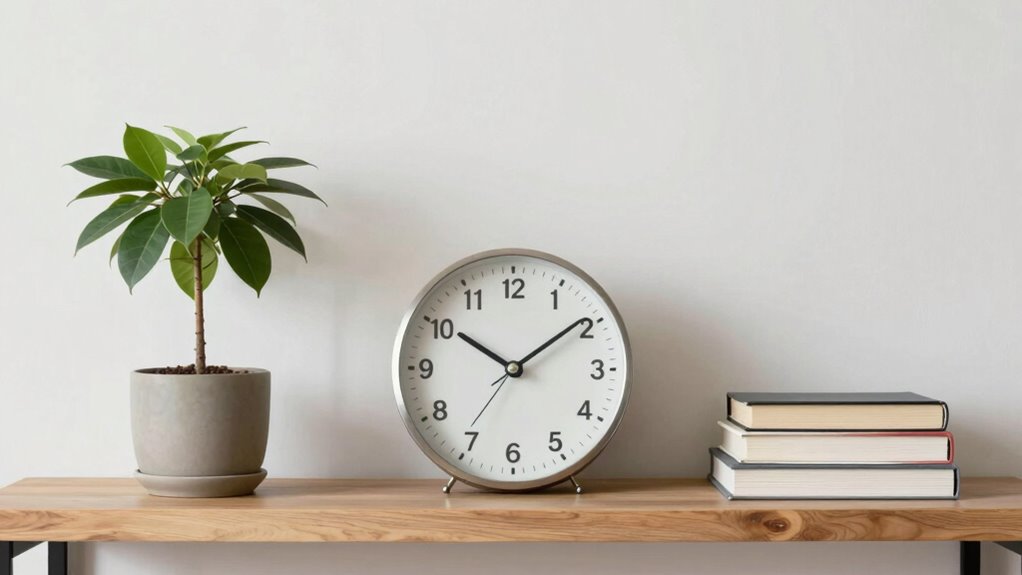
To effectively apply the rule-of-three, start by varying the heights and sizes of your items to create visual interest. Use odd-number groupings, like threes or fives, to keep arrangements balanced yet dynamic. Focus on creating visual harmony by distributing objects thoughtfully across your shelves, walls, or tables. Additionally, considering interior design principles can help ensure your styling choices enhance the overall aesthetic of your space.
Vary Heights and Sizes
Have you ever noticed how a cluttered shelf or wall can feel overwhelming? Varying heights and sizes adds visual interest and prevents overload. To do this effectively:
- Mix tall, medium, and small objects to create a balanced look
- Use different textures—smooth ceramics, rough wood, soft fabrics—to add depth
- Incorporate contrasting colors to make individual items stand out
- Arrange items asymmetrically to keep the eye moving naturally
Use Odd Number Groupings
Arranging decor items in odd numbers creates a natural sense of balance and visual rhythm that’s pleasing to the eye. Using odd groupings, like threes or fives, enhances decorating symmetry without feeling rigid. It encourages a more organic, effortless look that draws attention without overwhelming. When grouping items, focus on color coordination to unify the display, ensuring the colors complement each other and create harmony. For example, place three decorative objects in varying heights or shapes, but keep their color palette cohesive. This technique helps break the monotony of even groupings and adds visual interest. Whether on shelves, walls, or tables, odd number groupings keep your decor lively and engaging, preventing clutter while maintaining a curated, intentional feel.
Create Visual Balance
Creating visual balance with the rule of three is a straightforward way to make your shelves, walls, and tables look intentionally styled. By grouping items in threes, you establish symmetry and harmony, preventing clutter and emphasizing focal points. To achieve this, consider these tips:
- Arrange objects at varying heights for dynamic interest.
- Use similar colors or textures within each group to unify the display.
- Balance large and small items evenly across the space.
- Avoid overcrowding by leaving negative space around each group.
- Incorporate visual weight considerations to maintain equilibrium within your displays. Recognizing how load distribution impacts overall harmony can further enhance your styling choices.
These strategies help create a pleasing rhythm that guides the eye naturally. The key is maintaining harmony through balanced groupings, ensuring your décor feels cohesive and well thought-out without overdoing it. Keep it simple, and let the rule of three work its magic. Additionally, integrating connected home fitness elements can add a modern touch to your décor, blending style with functionality.
Common Mistakes to Avoid When Using the Rule-of-Three

When applying the rule-of-three, avoid overcrowding your display, which can make it look cluttered and chaotic. Make sure you balance the scale so your arrangement feels harmonious, not awkward or uneven. Also, pay attention to visual flow to guide the eye smoothly across the display, preventing it from feeling disjointed. Additionally, understanding media literacy can help you recognize when visual elements are intentionally balanced or deliberately chaotic, aiding in more effective styling choices. Being aware of visual hierarchies can further improve how viewers interpret your layout and emphasize key elements effectively. Recognizing visual balance principles ensures that your styling maintains a pleasing and cohesive appearance. Developing an understanding of compositional techniques can also enhance your ability to create visually appealing displays that are both engaging and well-structured. Moreover, honing your perceptual skills allows you to better assess how different elements interact and contribute to the overall aesthetic.
Overcrowding the Display
Overcrowding the display is a common mistake that can undermine the effectiveness of the rule of three. When you pack too much into one area, it creates clutter and distracts from your intended focal points. This overload can lead to decorating mishaps and turn your carefully curated space into a visual chaos. To avoid this, give each item room to breathe and maintain a sense of visual balance. Remember, less is often more when applying the rule of three. Be selective with what you display, ensuring each piece complements the others without creating design distractions. Keep your arrangement simple and intentional, allowing the eye to flow naturally without feeling overwhelmed. Incorporating visual harmony principles can help guide your choices and create a more cohesive display. This approach will make your display more appealing and harmonious, rather than cluttered and confusing.
Ignoring Scale Balance
Ignoring scale balance is a common mistake that can throw off the harmony of your display. When you overlook proportion errors, you risk creating a scale mismatch that feels awkward and unbalanced. To avoid this, consider how each item relates in size to the others. The goal is to maintain visual harmony by choosing objects with compatible proportions. Here’s a simple guide:
| Larger Items | Smaller Items |
|---|---|
| Tall vases | Small candles |
| Wide picture frames | Miniature decor |
| Heavy books | Delicate accessories |
Matching scale ensures your arrangement looks intentional and cohesive. Pay close attention to proportion errors, and you’ll create a more balanced, appealing display that feels just right. Incorporating visual balance can further enhance the harmony of your decor.
Neglecting Visual Flow
Neglecting visual flow can disrupt the balance and harmony of your arrangement, making it feel disjointed or chaotic. When your decor lacks a natural path for the eye to follow, it creates confusion and diminishes visual harmony. To improve clutter reduction and guide the viewer smoothly through your space, consider these tips:
- Arrange objects at varying heights to create a dynamic flow
- Use lines or shapes that lead the eye from one focal point to another
- Balance bold and subtle pieces to maintain rhythm
- Avoid clustering all items in one spot, spreading visual weight evenly
- Incorporate visual hierarchy principles to structure your decor effectively
How to Use the Rule-of-Three to Boost Your Decor Style
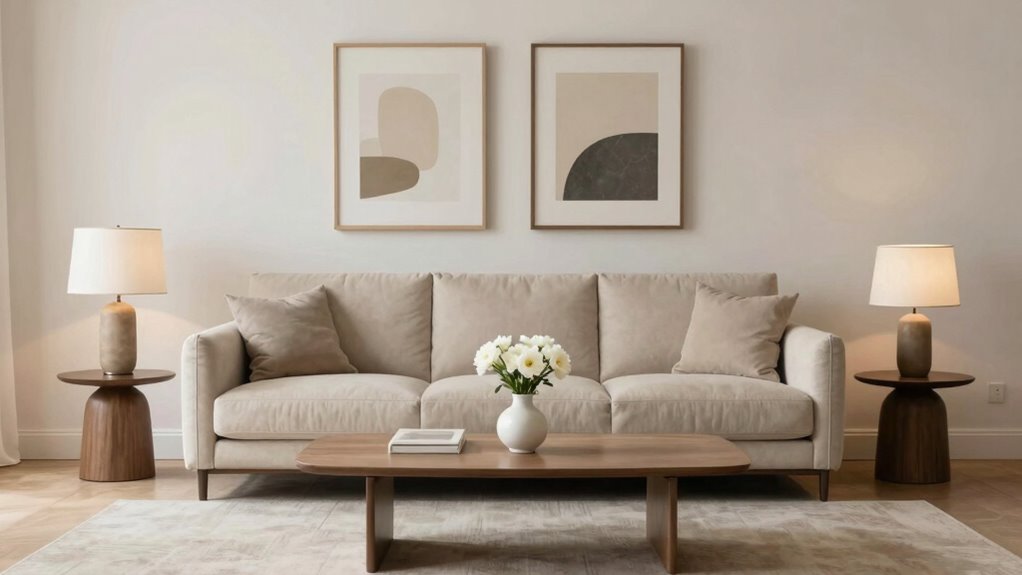
The rule-of-three is a simple yet powerful principle that can instantly elevate your decor style. To use it effectively, start by selecting three complementary items or elements. Focus on color coordination to create harmony—choose shades that work well together without overdoing it. Incorporate material contrast to add visual interest; pairing smooth ceramics with textured textiles, for example, creates depth and balance. Place these three items thoughtfully, ensuring they aren’t crowded or too far apart. This approach guides your eye naturally and keeps your space feeling curated rather than cluttered. Remember, the goal is to create a cohesive look that draws attention without overwhelming. When you master the rule-of-three, your decor feels intentional, stylish, and effortlessly put together. Effective preparation for interior styling can further enhance your ability to achieve a balanced space.
Real-Life Examples of Stunning Decor Using the Rule-of-Three
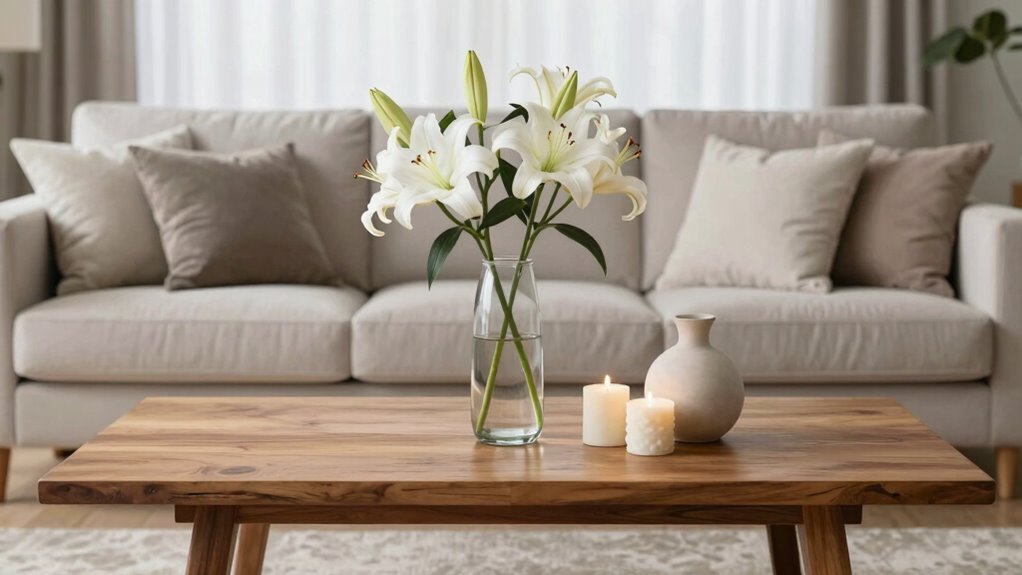
Seeing the rule-of-three in action can truly transform your space. It creates visual harmony and keeps your decor balanced without feeling cluttered. For example, a living room with a vivid color palette uses three bold accents—like a striking rug, a vibrant throw pillow, and a statement art piece—avoiding over-decoration. In minimalist themes, placing three carefully chosen decor items, such as a sleek vase, a small sculpture, and a simple plant, maintains interest without overwhelming the eye. You might also use three different-sized candles grouped together for a cozy ambiance. These real-life examples show how the rule-of-three enhances style by focusing on just enough elements to make your space visually appealing, sophisticated, and cohesive. Understanding decor principles can help you apply these techniques more effectively for a balanced and harmonious look. Additionally, paying attention to visual weight ensures each element contributes to overall harmony without overpowering the space.
Frequently Asked Questions
Can the Rule-Of-Three Be Used in Small Spaces Effectively?
Yes, the rule-of-three works well in small spaces. You should consider scale considerations to avoid clutter and maintain visual balance. Use three related items in varying heights or textures to create interest without overwhelming the area. This trick helps small spaces feel intentional and organized, guiding the eye naturally around the room. Keep the items proportional and thoughtfully arranged for maximum impact and a cohesive look.
Does the Rule-Of-Three Apply to Modern or Minimalist Decor Styles?
Yes, the rule-of-three works well with modern aesthetics and minimalist principles. You can use it to create balanced, eye-catching displays by grouping three simple, cohesive items. This approach helps avoid clutter and emphasizes clean lines, which are key in minimalist decor. When you apply the rule-of-three, your space stays stylish and uncluttered, aligning perfectly with contemporary design trends that favor simplicity and harmony.
How Do I Adapt the Rule-Of-Three for Asymmetrical or Eclectic Designs?
Did you know that 65% of designers say asymmetry adds more visual interest? To adapt the rule-of-three for eclectic or asymmetrical styles, focus on balancing asymmetry by grouping objects in odd numbers, like threes or fives. Mix sizes and textures to create eclectic harmony, while maintaining a visual flow. This approach keeps your space lively without feeling cluttered, ensuring your decor feels intentional and balanced.
Are There Specific Colors or Textures That Work Best With This Rule?
You’ll want to choose color combinations that create contrast and harmony, like complementary or analogous palettes, to make your decor pop without overwhelming the space. For textures, mix smooth and rough surfaces—think velvet with wood or metal—to add visual interest. Stick to a cohesive color scheme and balanced texture pairings, which help maintain the rule-of-three’s simplicity while enhancing eclectic or asymmetrical designs.
What Are Signs That I’Ve Over-Applied the Rule in My Decor?
You’ll notice signs of over-application when your space feels cluttered or chaotic, losing the clean, balanced look the rule of three aims for. If your decor creates a visual imbalance or draws too much attention to specific areas, it’s a sign you’ve gone beyond the intended simplicity. Trust your eye—if it feels overwhelming or crowded, it’s time to pare down and restore harmony to your space.
Conclusion
Think of the rule-of-three as your guiding star in decorating—it’s the compass that keeps your space balanced and inviting. By grouping items in threes, you create a harmonious dance of visual weight, like a well-orchestrated symphony. Remember, less is often more; don’t let over-decoration drown out your style. Trust this simple rule to illuminate your space with elegance and purpose, turning your home into a beautifully crafted masterpiece.