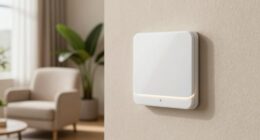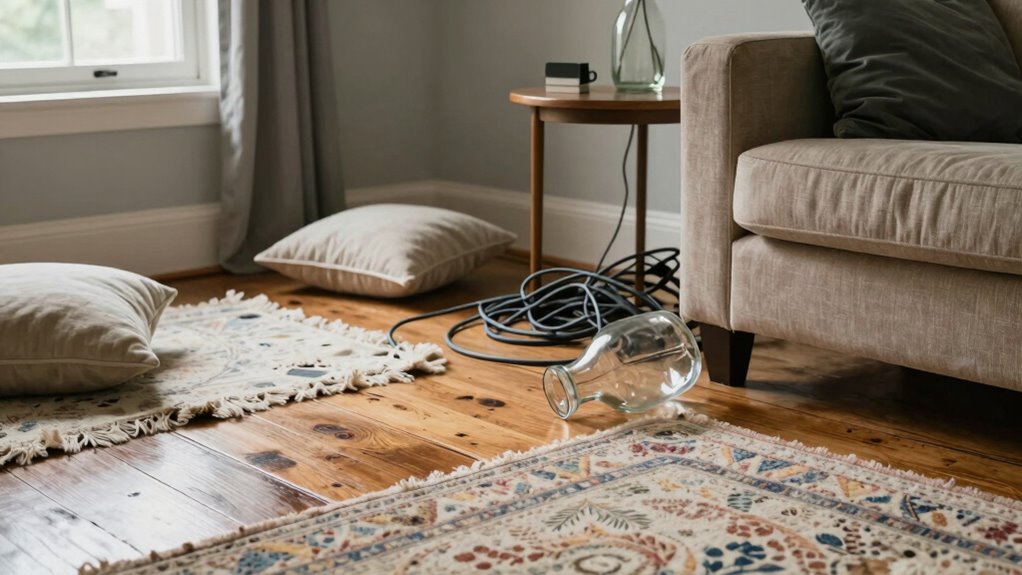
Seniors often trip at home due to hidden hazards like poor lighting, cluttered walkways, slippery floors, and uneven surfaces. Hazards in bathrooms and kitchens, such as wet areas and sharp objects, also contribute to falls. Obstructed pathways and loose rugs increase the risk of injuries, especially if safety features aren’t in place. If you want to spot these dangers early and learn simple ways to prevent them, keep going for helpful tips.
Key Takeaways
- Poor lighting and dark areas can cause seniors to misstep or miss hazards, leading to trips.
- Clutter, loose rugs, and obstructions in walkways increase fall and trip risks.
- Uneven or slippery flooring surfaces, especially in kitchens and bathrooms, pose hazard dangers.
- Unsafe staircases without proper handrails or lighting heighten the likelihood of trips and falls.
- Lack of safety modifications like grab bars and clear pathways can contribute to tripping hazards at home.
How to Identify Hidden Home Hazards for Seniors
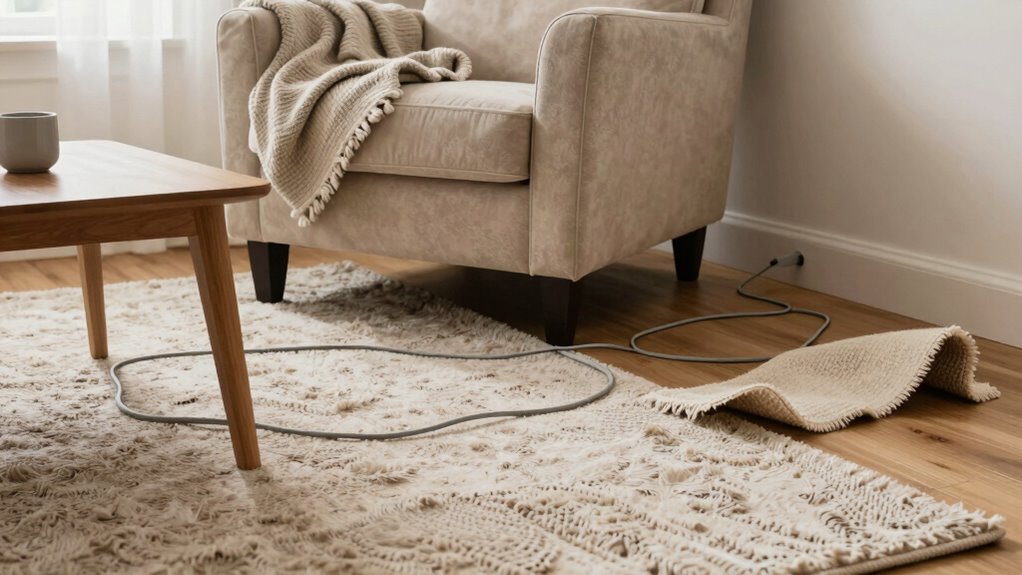
Since many home hazards are not immediately obvious, it’s important to actively look for potential dangers that could harm seniors. Hidden staircases can be a major risk if they’re narrow, steep, or lack proper markings. Check for stairs that may blend into the background or are poorly lit. Loose handrails are another common hazard; they can cause falls if they wobble or aren’t securely fastened. Walk through your home and test handrails to ensure stability, fixing any that feel loose or wobbly. Look for uneven flooring, loose rugs, or clutter that can trip someone. Regular inspections help you identify these hazards before accidents happen. Additionally, the contrast ratio of the environment can affect visibility and the ability to distinguish hazards, making it easier to prevent falls. Using lighting improvements can further enhance safety by illuminating dark areas and reducing shadows that obscure hazards. Incorporating home safety assessments can help you systematically identify potential risks around your house. Conducting a hazard awareness check regularly ensures that new dangers are promptly addressed. To support these efforts, educating seniors about common hazards can empower them to recognize and avoid risks themselves. By being vigilant and proactive, you reduce the risk of falls and create a safer environment for seniors.
Why Proper Lighting and Decluttering Are Key to Prevent Falls
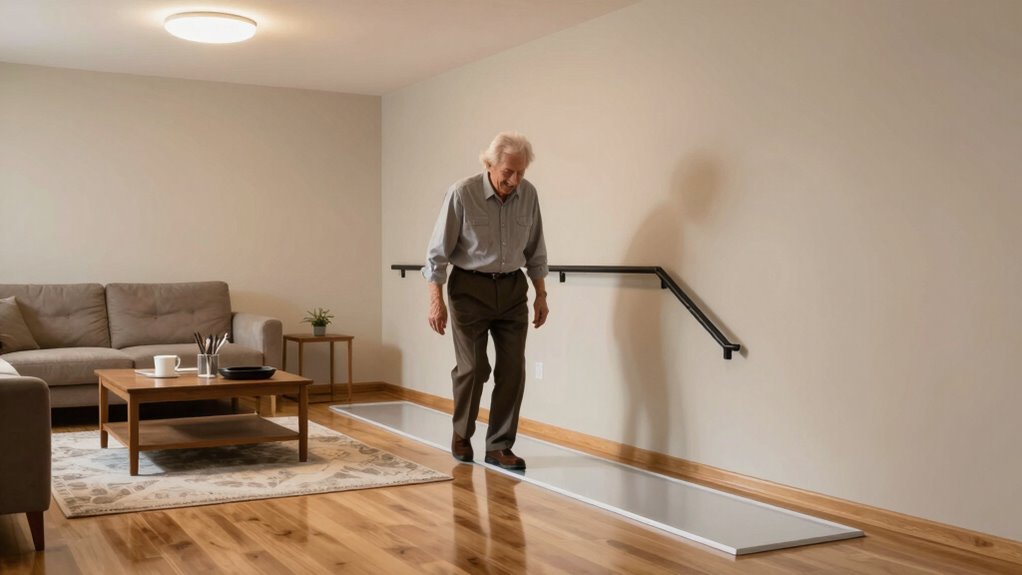
Proper lighting and decluttering are essential to prevent falls in a senior’s home. Good lighting safety helps you see potential hazards clearly, reducing the risk of tripping or bumping into objects. Install bright, energy-efficient bulbs in hallways, staircases, and bathrooms to improve visibility. Use nightlights to illuminate dark areas at night. Decluttering tips include removing unnecessary furniture, securing loose cords, and keeping walkways clear of clutter. Keep pathways free of objects that could cause trips. Regularly check that lighting fixtures are working properly and replace burnt-out bulbs immediately. Incorporating field‑of‑view and imaging‑scale tools in your safety setup can streamline emergency preparedness within your home. Additionally, integrating smart lighting systems that adapt to circadian rhythms can enhance visibility and safety during nighttime hours. Ensuring your home is equipped with appropriate lighting can significantly reduce fall risks. By prioritizing lighting safety and maintaining a clutter-free environment, you create a safer home for yourself and reduce the chances of dangerous falls. Small adjustments can make a significant difference in fall prevention.
How Slippery Floors and Uneven Surfaces Increase Trip Risks
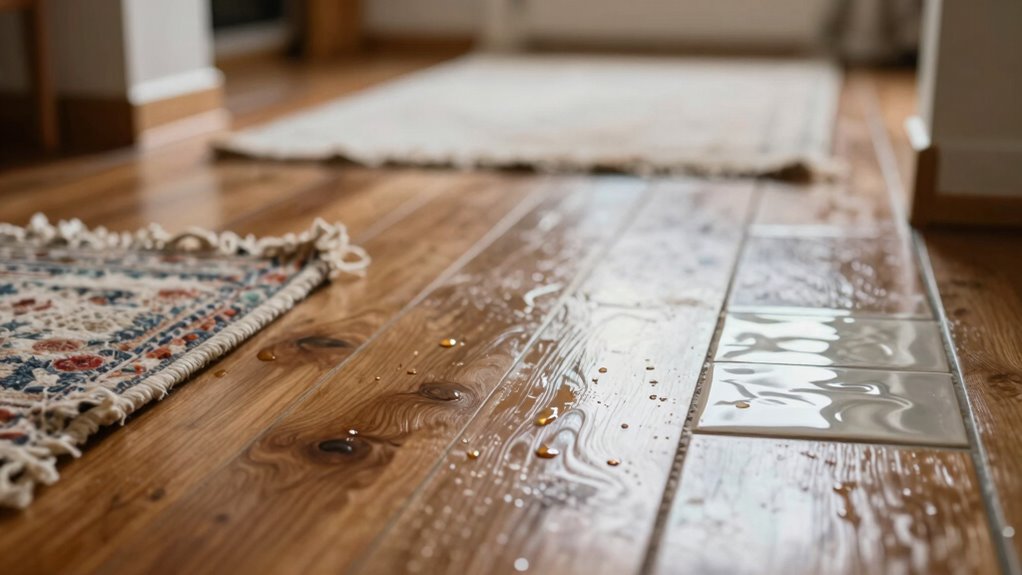
Slippery floors and uneven surfaces can quickly cause you to lose your footing. You might not realize how small changes, like a wet spill or loose rug, increase trip risks. Wearing proper footwear and staying alert can help prevent those dangerous slips and falls. Being aware of home safety practices can further reduce the likelihood of accidents. Additionally, understanding how floating on water safety measures can help you recognize hazards in different environments. Incorporating hazard identification techniques into your routine can make your home safer and help prevent trips before they happen. Recognizing the influence of personal traits on risk awareness can also empower you to take proactive safety measures. Moreover, paying attention to floor surface conditions can significantly improve your safety at home.
Slippery Surface Hazards
Floors that are slick or uneven can quickly cause seniors to lose their footing and fall. To reduce this risk, consider placing non-slip mats in areas prone to spills or moisture, like kitchens and bathrooms. These mats provide extra traction and help prevent slips. Additionally, paying attention to footwear traction is essential—choose shoes with rubber soles that grip surfaces well. Avoid worn-out slippers or shoes with smooth soles, which can increase slipping hazards. Regularly clean floors to remove water, oil, or debris that make surfaces slick. Incorporating natural materials in flooring choices can also improve grip and safety. Using anti-slip coatings on existing floors is another effective way to enhance traction. By taking these simple precautions, you help create a safer environment, reducing the chance of slips and falls. Remember, maintaining good traction on floors is a key step in preventing home trip hazards for seniors.
Uneven Floor Risks
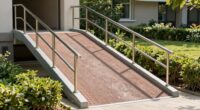
Uneven surfaces can pose significant trip hazards for seniors, especially when combined with slippery conditions. Uneven flooring and surface irregularities create unpredictable footing, increasing the risk of losing balance. Cracks, loose tiles, or warped floorboards can catch your foot unexpectedly, causing a stumble. Even slight height differences or warped areas can be dangerous if not noticed. These surface irregularities are especially hazardous when floor surfaces are wet or slick, making it harder to regain stability. Regularly inspecting your flooring for cracks or uneven spots and addressing these issues promptly can reduce trip risks. Installing ramps or leveling uneven areas also helps create a safer walking environment. Being aware of and maintaining smooth, even floors is essential to prevent trips and falls at home.
Proper Footwear Importance
Wearing the right footwear is essential because it directly affects your balance and stability when walking on surfaces that are slippery or uneven. Your footwear selection should prioritize shoes with non-slip soles and good support to prevent falls. Avoid shoes with worn-out soles or smooth bottoms that can increase your risk of slipping. Proper shoe maintenance is equally important; regularly check your shoes for damage, and replace worn shoes promptly. Well-maintained shoes ensure better grip and stability, especially on tricky surfaces like slick floors or uneven patches. Choosing the right footwear and keeping it in good condition helps you maintain your footing, reducing the chance of trips and falls around your home. Regularly inspecting your footwear using simple safety checks can help identify potential hazards before they cause accidents. Paying attention to surface conditions and how your shoes interact with different flooring types also plays a crucial role in trip prevention. Additionally, understanding age-related physical changes can help you select footwear that accommodates reduced mobility or balance issues, further enhancing safety.
What Bathroom and Kitchen Hazards Put Seniors at Risk
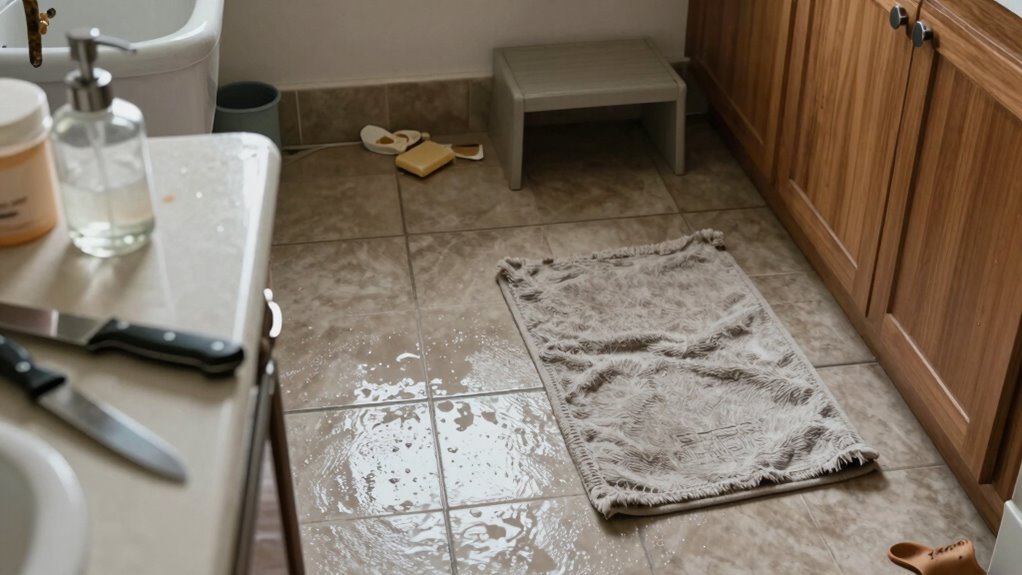
Bathrooms and kitchens are common areas where seniors face considerable hazards that can lead to falls and injuries. Bathroom hazards like slippery floors, loose rugs, and ungrabbed bars increase your risk of slipping or falling when you’re showering or getting ready. In addition, poor lighting can make it harder to see hazards and navigate safely. In the kitchen, dangers such as wet floors, cluttered countertops, and unsecured rugs can cause you to trip or slip. Hot water burns or sharp objects also pose serious risks if not handled carefully. To stay safe, ensure rugs have non-slip backing, install grab bars, and keep walkways clear of clutter. Using non-slip mats and organizing your space can greatly reduce these hazards, helping you maintain independence and avoid preventable accidents. Being aware of everyday safety tips can further help you identify and mitigate potential risks in these areas, especially considering water quality that can impact slip safety and skin health. Additionally, maintaining proper wave and wind conditions can prevent hazardous situations such as water splashes or spills that increase slip risks.
How Obstructed Pathways Can Cause Falls and Injuries
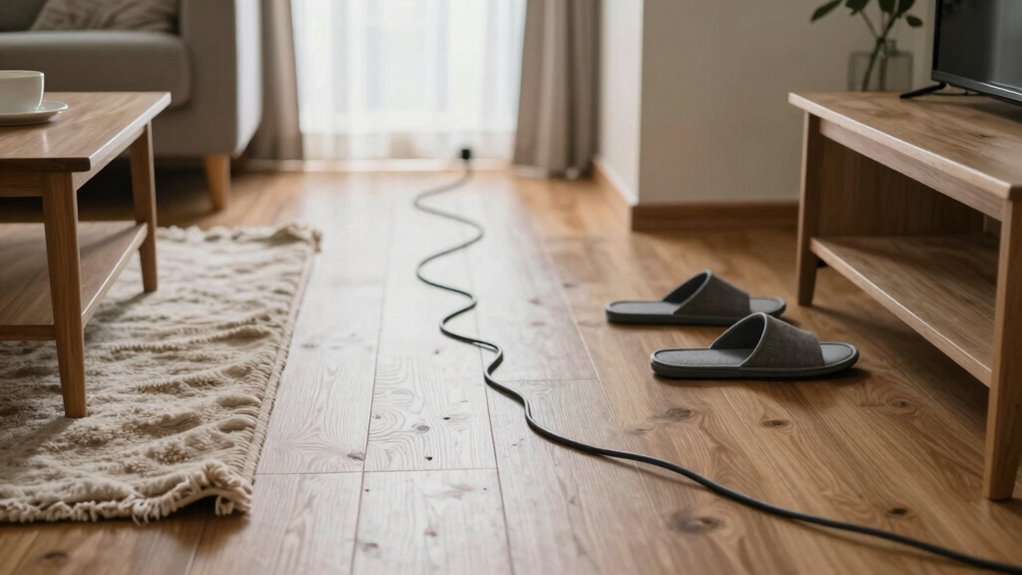
Obstructed pathways considerably increase the risk of falls and injuries for seniors, especially when clutter blocks walkways or furniture is placed in high-traffic areas. Poor staircase safety, like loose handrails or cluttered stairs, can lead to dangerous slips or trips. Proper furniture placement is essential; furniture positioned too close together or in the middle of walkways forces you to navigate around obstacles, increasing the chance of losing your balance. Even small objects left on the floor can cause a trip hazard. Clear, wide pathways allow for safer movement and reduce the likelihood of accidents. Regularly inspecting and rearranging furniture, especially near stairs, helps maintain safe pathways, lowering your risk of falls and injuries at home.
Simple Home Modifications to Keep Seniors Safe From Trips
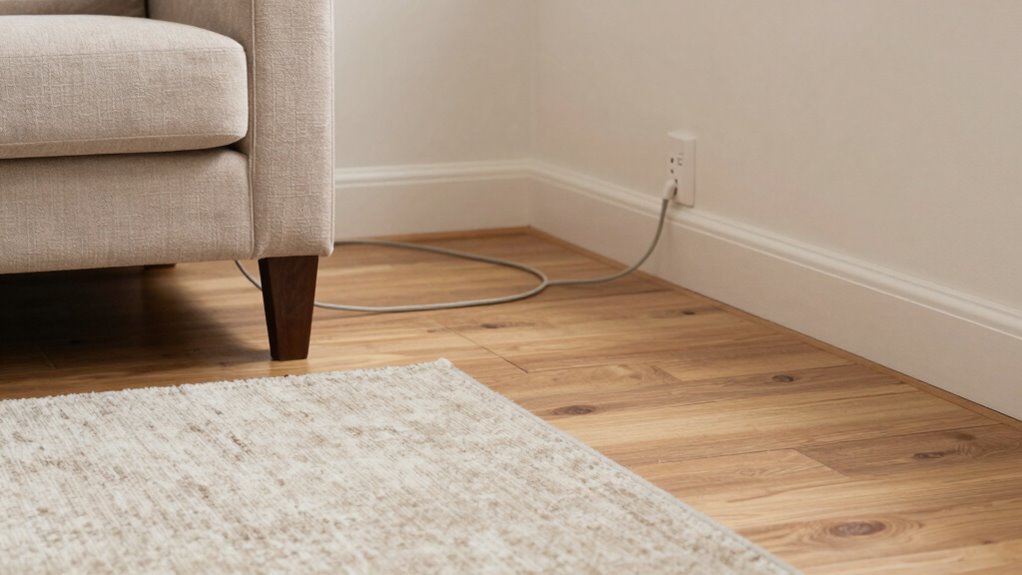
Simple home modifications can substantially reduce the risk of trips and falls for seniors. Guarantee emergency exits are clear, well-lit, and easily accessible, so you can evacuate quickly if needed. Install grab bars in bathrooms and along hallways to provide stable support. Use assistive devices like handrails and non-slip mats to improve safety, especially in high-risk areas. Remove loose rugs, clutter, and cords that could cause tripping. Consider adding nightlights in hallways and stairs to improve visibility during nighttime. Keep pathways wide and unobstructed, making it easier to navigate safely. These simple adjustments not only prevent accidents but also promote independence and peace of mind in your home. Small changes can make a significant difference in keeping you safe from trips.
Creating a Safety Checklist for Ongoing Home Risk Prevention
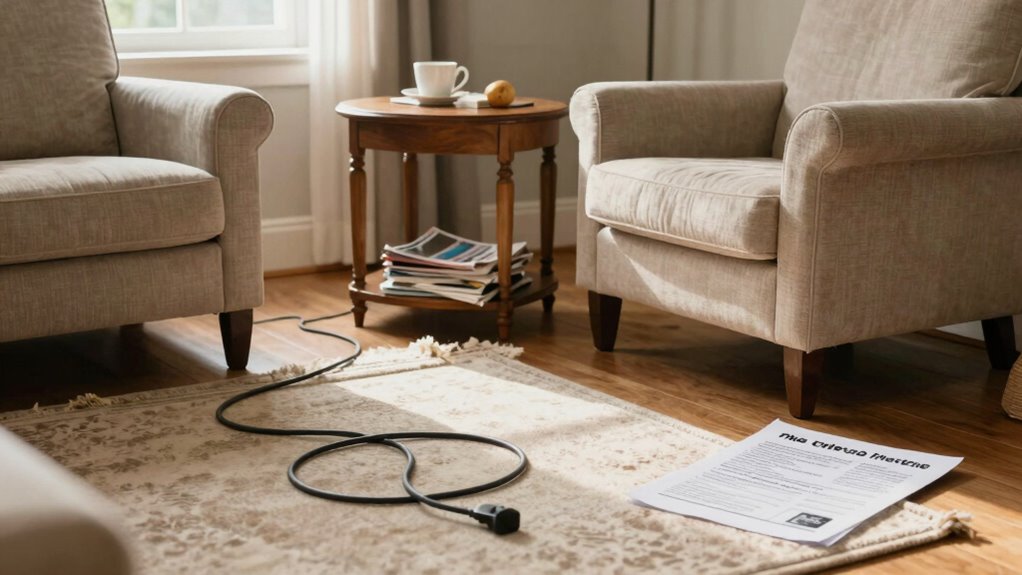
You need a safety checklist to keep your home secure over time. Regular safety inspections help you spot hazards before they cause problems. Having an emergency preparedness plan guarantees you’re ready if something unexpected happens.
Regular Safety Inspections
Regular safety inspections are essential for maintaining a hazard-free home environment, especially for seniors. By routinely checking your space, you can identify potential risks before they cause injury. Focus on medication management to ensure bottles are stored securely and labels are clear, reducing accidental overdoses or mix-ups. Keep pathways clear to support social engagement, so you don’t trip over clutter while visiting friends or family. Check rugs, cords, and furniture for stability, and verify that lighting is adequate in all areas. Regularly inspecting these elements allows you to address hazards promptly, creating a safer, more comfortable environment. Staying proactive with safety checks helps prevent trips, falls, and other accidents, ensuring you can enjoy your home with confidence.
Emergency Preparedness Plans
Creating an emergency preparedness plan is a vital step in ongoing home risk prevention. It guarantees you’re ready for any unexpected events, especially for falls or medical emergencies. Start by establishing clear procedures and keeping essential contacts handy. Invest in a medical alert system to notify help quickly, and reinforce your home security measures to prevent intruders. Here’s a simple checklist:
| Safety Measure | Details |
|---|---|
| Medical Alert System | Wear at all times, test regularly |
| Emergency Contacts | List of family, neighbors, emergency services |
| Home Security Checks | Lock doors/windows, security alarms |
| Fire Safety | Smoke detectors, fire extinguisher |
| Risk Areas | Identify and fix hazards like loose rugs |
This plan helps you stay prepared, confident, and safe at home.
Frequently Asked Questions
How Often Should I Inspect My Home for Hidden Hazards?
You should conduct a hazard assessment at least once a month to keep your home safe. Incorporate this into your regular safety routine, checking for loose rugs, clutter, or uneven flooring. Regular inspections help you spot hidden hazards before they cause accidents. Staying vigilant allows you to address issues promptly, reducing trip risks and ensuring your home remains a secure environment for you. Consistency is key to preventing falls and injuries.
Are There Specific Colors That Improve Visibility for Seniors?
Like a lighthouse guiding ships, high visibility colors help seniors navigate safely. You should choose colors with strong contrast, such as bright yellow or orange against darker backgrounds, to enhance color contrast and improve visibility. These colors make hazards stand out, reducing the risk of trips and falls. Incorporate them in handrails, stair edges, and safety markings to create a safer environment for your loved ones.
What Affordable Safety Devices Can Prevent Trips at Home?
You can prevent trips at home by using affordable safety devices like non-slip mats in bathrooms and kitchens to reduce slipping hazards. Installing motion sensor lights ensures you always have proper lighting, especially at night, preventing missteps. These simple, cost-effective solutions make your home safer, giving you peace of mind and reducing the risk of falls. Regularly check and maintain these devices for maximum safety.
How Can I Involve Seniors in Identifying Potential Hazards?
You can involve seniors in identifying hazards by encouraging senior engagement through conversations about their daily routines and concerns. Invite them to participate in home modification assessments, making them feel empowered and valued. Walk through their living space together, asking for their input on potential dangers, and note any issues they mention. This collaborative approach helps them recognize hazards, promotes safety awareness, and guarantees modifications meet their specific needs.
What Signs Indicate a High Risk of Falling Indoors?
You notice fall indicators like scattered rugs, cluttered walkways, or loose cords lurking in familiar spaces, signaling danger. Hazard cues such as uneven flooring, poor lighting, or slippery surfaces heighten the risk. These subtle signs whisper warnings of potential trips. Stay alert, because spotting these cues early helps you act before a fall happens, protecting your loved ones from harm and ensuring safer, more secure indoor environments.
Conclusion
So, after all this, it’s funny how the biggest trip hazards are often right under your nose—cluttered hallways, slippery floors, or a poorly lit bathroom. You’d think we’d notice these dangers, but somehow, we trip over the obvious. By taking simple steps, you can turn your home into a safe haven. Ironically, the key to preventing falls is just paying attention—and maybe doing a little less trip and a little more tiptoe.