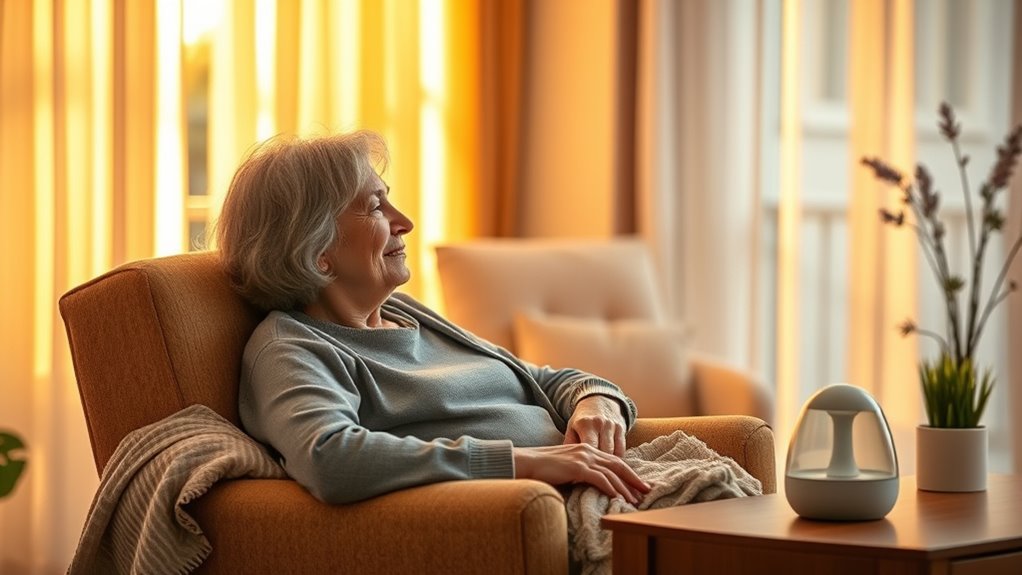

To soothe seniors at home, combine calming scents like lavender or chamomile with gentle sounds such as ocean waves or soft music. Use diffusers or scented sachets to create a relaxing atmosphere and sound machines to drown out noise. Consistent scent and sound cues help reinforce feelings of safety and familiarity, reducing agitation and stress. Creating this multi-sensory environment can greatly enhance comfort and emotional well-being—continuing this approach opens the door to more calming strategies.
Key Takeaways
- Use essential oils like lavender in diffusers or sachets to create calming scents throughout the home.
- Incorporate gentle sounds such as ocean waves or rain to promote relaxation and drown out background noise.
- Combine scent and sound, like lavender with soft music, for a multi-sensory calming environment.
- Maintain consistency in chosen scents and sounds to reinforce feelings of safety and familiarity.
- Regularly expose seniors to pleasant scents and sounds through simple devices for sustained emotional comfort.
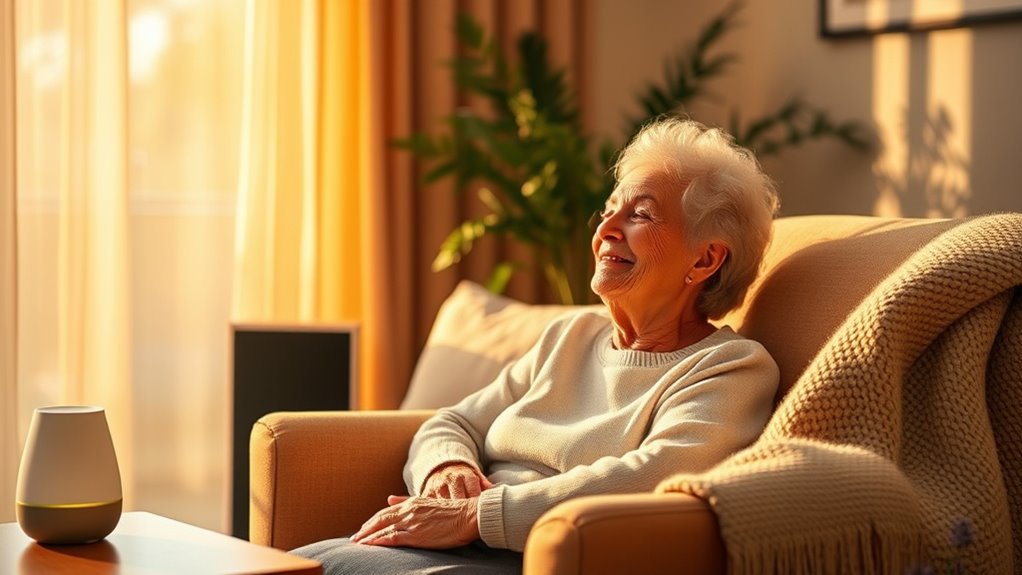
As we age, our senses often become less sharp, which can affect daily comfort and overall well-being. You might notice that certain smells no longer evoke the same feelings of relaxation, or that sounds once soothing now seem distant or muffled. To improve your quality of life at home, incorporating scent and sound can make a notable difference. Aromatherapy benefits are well-known for their ability to promote relaxation, reduce stress, and enhance mood. Using essential oils like lavender, chamomile, or eucalyptus can create a calming environment that helps ease anxiety and encourages restful sleep. You can add a few drops of these oils to a diffuser, or simply place scented sachets around your living space. These subtle scents can help anchor your mind, providing comfort during quiet moments or times of change. AI’s role in enhancing personalized environments through smart technology is also an emerging approach to creating calming spaces.
Alongside scent, calming soundscapes serve as another powerful tool to soothe your senses. Soft, gentle music or nature sounds like rain, ocean waves, or rustling leaves can drown out background noise and create a peaceful atmosphere. These sounds can help reduce feelings of agitation or restlessness, making it easier to relax or focus. Playing calming soundtracks through a speaker or sound machine allows you to customize your environment, tailoring the auditory experience to what feels most comforting. It’s important to choose sounds that are not abrupt or overly stimulating, as these can have the opposite effect and increase stress. Instead, opt for consistent, mellow sounds that promote tranquility.
When you combine aromatherapy benefits with calming soundscapes, you create an environment that nurtures your senses and supports your emotional health. For example, diffusing lavender oil while listening to gentle ocean sounds can deepen your sense of calm, making it easier to unwind after a busy day. These sensory cues can also serve as anchors during moments of confusion or memory lapses, providing familiar and soothing stimuli that ground you in the present. Incorporating these simple practices into your daily routine doesn’t require much effort but can markedly enhance your comfort and overall well-being. Remember, the key is consistency—regular exposure to pleasant scents and sounds helps reinforce feelings of safety and relaxation, making your home a sanctuary where you can feel more at ease.
Frequently Asked Questions
Can Scent and Sound Therapy Replace Medication for Seniors?
Scent and sound therapy, like essential oils and music therapy, can complement medication but shouldn’t replace it entirely. You might find these therapies help reduce anxiety and improve mood, yet they aren’t a substitute for prescribed treatments. Always discuss with a healthcare professional before making changes. Combining essential oils and music therapy can enhance well-being, but they work best alongside, not instead of, medical care.
How Do I Choose the Right Scents for My Elderly Loved One?
Imagine opening a secret to comfort for your loved one. Start with a scent preference assessment, gently asking about aromas they love or dislike. Always prioritize aromatherapy safety, avoiding strong or irritating scents. Observe their reactions carefully, refining your choices. Your attentive approach guarantees you select the perfect calming scents, creating a soothing environment that feels personal and safe—turning everyday moments into comforting rituals.
Are There Any Risks Associated With Scent and Sound Therapies?
Yes, there are some risks with scent and sound therapies. You should watch for allergic reactions or sensitivities to certain scents, which can cause discomfort or health issues. Additionally, loud or sudden sounds might lead to sensory overload or agitation. Always start with mild scents and gentle sounds, and monitor your loved one closely to make certain they aren’t overwhelmed or experiencing adverse reactions.
How Often Should I Introduce New Scents or Sounds to Seniors?
Introducing new scents or sounds is like tuning an instrument; do it gradually to avoid sensory overload. You should change them during seasonal adjustments or when you notice the senior’s responses are positive. Typically, every few weeks works well, but always monitor their reactions closely. If they seem overwhelmed or uninterested, hold off and give them time to adjust. Consistency helps create a calming environment without causing confusion.
Can Scent and Sound Therapy Improve Sleep Quality in Seniors?
Yes, scent and sound therapy can improve sleep quality in seniors. Aromatherapy benefits include promoting relaxation and reducing anxiety, making it easier to fall asleep. Customizing soundscapes with calming music or nature sounds enhances this effect, creating a soothing environment. By integrating these therapies, you help seniors unwind, leading to more restful sleep and better overall well-being.
Conclusion
By incorporating calming scents and gentle sounds, you can substantially reduce stress for your senior loved ones. Studies show that sensory therapies can improve mood and cognitive function in seniors, with up to 70% experiencing reduced anxiety. Small changes, like diffusing lavender or playing soft music, make a big difference. Remember, creating a soothing environment shows your care and helps seniors feel more relaxed, safe, and valued in their own homes.