To set up an energy-efficient home theater, start by using LED or CFL bulbs and install motion sensors or timers to cut unnecessary lighting. Maximize natural light during the day with controlled window coverings and choose ENERGY STAR-rated electronics like projectors and TVs. Arrange seating to minimize extra lighting needs and use smart controls for lights and devices to automate energy savings. For more eco-friendly tips, keep exploring ways to optimize your space while reducing energy use.
Key Takeaways
- Use LED or CFL bulbs with dimmable and motion sensor features to reduce energy use and optimize lighting.
- Maximize natural daylight and control sunlight with blackout curtains to decrease dependence on artificial lighting.
- Select ENERGY STAR-rated electronics and position them near outlets to minimize energy waste and enhance efficiency.
- Arrange multi-purpose, space-efficient seating to reduce additional lighting needs and promote comfort.
- Integrate smart controls like automated lighting, plugs, and thermostats for efficient energy management.

Are you looking to enjoy a premium home theater experience without skyrocketing your energy bills? The good news is that creating an energy-efficient setup doesn’t mean sacrificing comfort or quality. It all starts with thoughtful planning, especially when it comes to lighting design and seating arrangements. These elements are vital in optimizing your space for both energy savings and an immersive viewing experience.
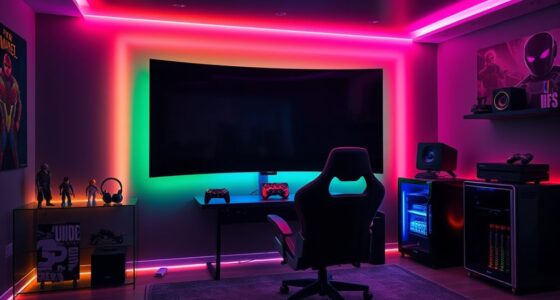
When it comes to lighting design, the goal is to minimize electricity use while maintaining the right ambiance for movie nights. Switch out traditional incandescent bulbs for LED or CFL bulbs, which consume considerably less energy and last longer. Consider installing dimmable lighting options, such as LED strip lights or smart bulbs, that allow you to adjust brightness based on your needs. Position lights strategically to avoid glare on the screen, and use indirect lighting to create a cozy atmosphere without over-illuminating the room. Motion sensors or timers can also help guarantee lights turn off automatically when not in use, preventing energy waste. Incorporating natural light during the day can further reduce reliance on artificial lighting, so if your room has windows, use blackout curtains or shades to control sunlight and maintain darkness when watching movies. Moreover, choosing energy-efficient electronics, such as LED projectors or ENERGY STAR-rated TVs, complements your seating and lighting choices, creating a cohesive, eco-friendly setup.
Use LED bulbs, dimmable lighting, and natural light control to create an eco-friendly, cozy home theater ambiance.
Seating arrangements play a surprisingly important role in energy efficiency as well. Opt for comfortable, multi-purpose furniture that encourages a relaxed viewing environment without the need for additional lighting or accessories. For example, built-in or modular seating can be arranged to maximize space and comfort, reducing the need for extra lamps or side lighting. Position your seats and screens carefully to minimize the need for extra lighting or screen glare, which can cause you to turn up the brightness — ultimately consuming more power. Additionally, choosing energy-efficient electronics, such as LED projectors or energy-star-rated TVs, complements your seating and lighting choices, creating a cohesive, eco-friendly setup. When arranging your seating, consider proximity to power outlets to avoid unnecessary use of extension cords or power strips that can increase energy consumption. Finally, understanding the impact of energy consumption in your home theater helps you make smarter choices that benefit both your wallet and the environment, ensuring a sustainable entertainment space.
Finally, integrating smart technology can make your home theater even more energy-conscious. Smart plugs, thermostats, and lighting controls allow you to automate and monitor energy use, ensuring you’re not wasting power when the system is idle. Combining efficient lighting design with well-thought-out seating arrangements creates a space that’s both sustainable and luxurious. You get to enjoy your favorite movies in style, knowing you’re doing your part to conserve energy while still experiencing top-quality entertainment. With some planning and smart choices, you can have a home theater that’s as eco-friendly as it is enjoyable.
Frequently Asked Questions
What Are the Best Eco-Friendly Materials for Home Theater Furniture?
When choosing eco-friendly home theater furniture, you should look for options made from recycled fabrics and sustainable woods. These materials help reduce environmental impact while providing durability and style. Recycled fabrics are perfect for upholstery, and sustainable woods like bamboo or reclaimed wood offer a natural, responsible choice. By selecting these materials, you create a stylish, energy-efficient space that’s good for the planet and your home.
How Can I Reduce Soundproofing Energy Loss?
To reduce soundproofing energy loss, you should focus on improving soundproofing insulation and door sealing techniques. Start by adding high-quality insulation materials to walls and ceilings to prevent sound leakage. Then, guarantee your doors are properly sealed with weatherstripping or door sweeps to block gaps. These steps help contain sound inside your home theater while minimizing energy waste, making your setup more efficient and eco-friendly.
Are Solar-Powered Home Theater Systems Available?
Yes, solar-powered systems for home theaters are available, offering a sustainable way to enjoy your entertainment. These systems harness renewable energy options, reducing your reliance on traditional power sources. You can find solar-powered projectors, speakers, and even complete setups designed to integrate seamlessly into your home. By choosing solar-powered home theater components, you’re making an eco-friendly choice that helps lower your energy consumption and supports renewable energy initiatives.
What Smart Controls Optimize Energy Use in Home Theaters?
To optimize energy use in your home theater, you should consider smart controls like smart thermostats and automated blinds. Smart thermostats help maintain ideal temperatures efficiently, reducing energy waste. Automated blinds can block heat from sunlight during the day or open for natural light, saving on lighting and cooling costs. These smart controls work together to create an energy-efficient environment, lowering your overall energy consumption while enhancing your home theater experience.
How Do I Choose Energy-Efficient Lighting for My Theater?
Did you know lighting accounts for about 15% of home energy use? To choose energy-efficient lighting for your theater, opt for LED bulbs—they use up to 85% less energy than incandescent bulbs. Pair them with dimmer switches to adjust brightness and save even more energy during movie nights. This combo provides excellent control, reduces waste, and creates the perfect ambiance while keeping your energy bills low.
Conclusion
By choosing energy-efficient equipment and smart habits, you can enjoy your home theater guilt-free. Imagine reducing your electricity bill by switching to LED projectors and using timers to power down devices after movies. For example, Sarah saved 30% on her energy costs after upgrading her system and implementing simple habits. With a few mindful changes, you’ll create an eco-friendly entertainment space that’s great for your wallet and the planet.