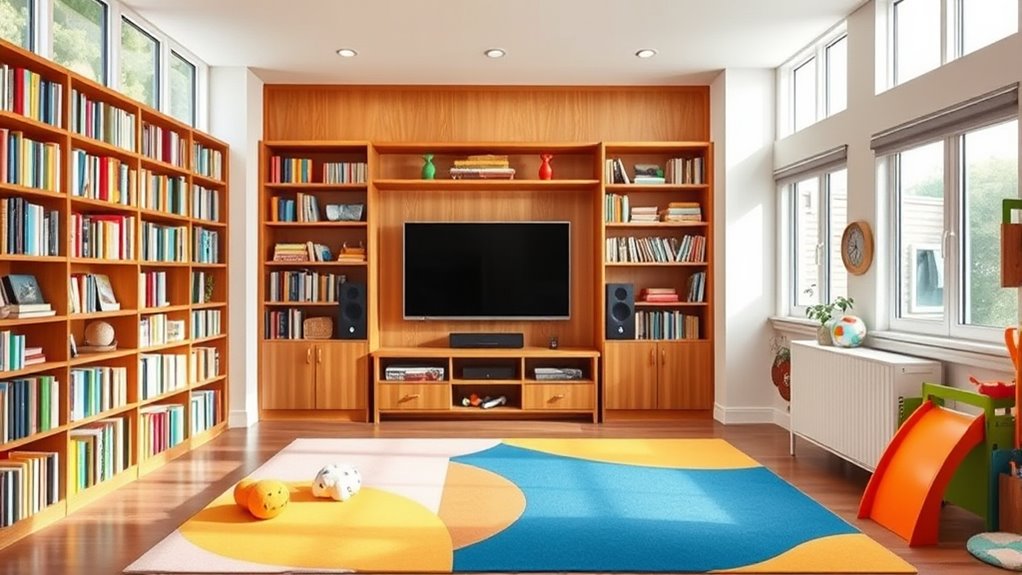

Transforming one room into a multifunctional space lets you create a cozy library, media zone, and play area all in one. Use creative organization and sensory elements like textured materials, colorful visuals, and sound resources to keep children engaged and stimulated. Incorporate interactive storytelling with props and digital tools to boost imagination and communication. By combining these features thoughtfully, you’ll craft a versatile environment that sparks joy and learning—continue exploring to discover more inspiring ideas.
Key Takeaways
- Combine library, media, and play areas with creative organization to maximize space and functionality.
- Incorporate interactive storytelling with props, sound effects, and digital tools to boost engagement.
- Add sensory play zones with textured materials, sound elements, and aromatic experiences for multisensory stimulation.
- Design multi-layered environments that promote learning, motor skills, creativity, and emotional development.
- Use intentional layout and sensory corners to create an inviting, versatile space adaptable to various activities and moods.
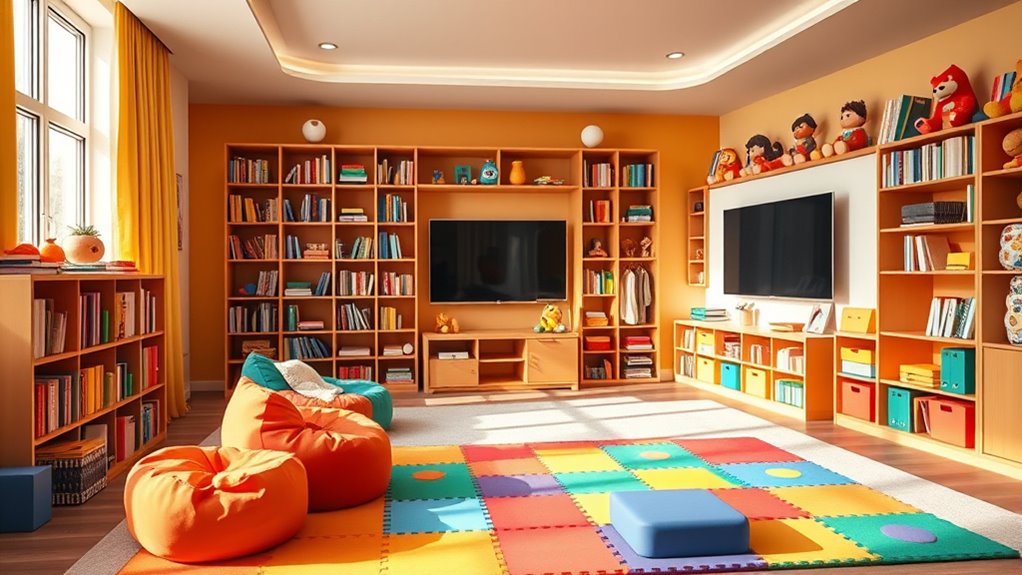
Have you ever wondered how a single room can turn into a hub of endless fun? With a little creativity, your space can transform into an exciting environment that combines a library, media area, and playroom all in one. Imagine a cozy corner filled with colorful cushions and inviting shelves stocked with books, where kids can plunge into stories that come alive through interactive storytelling. This approach not only captivates their imagination but also encourages active participation. When children aren’t just passive listeners, they become storytellers themselves, infusing their own ideas into the narrative. Using props, sound effects, or even digital tools, you can make stories interactive, turning quiet reading time into lively adventures. This method sparks curiosity, promotes language development, and keeps children engaged for hours. Additionally, fostering emotional intelligence through storytelling and play helps children understand and express their feelings more effectively.
Next, think about how sensory play can further elevate this room’s versatility. Sensory activities stimulate children’s senses—touch, sight, sound, smell, and even taste—building essential cognitive and motor skills. You can incorporate various textures like soft blankets, textured mats, or sensory bins filled with rice, beans, or water beads. These materials invite tactile exploration, making playtime both fun and educational. Incorporate elements that produce sounds, like musical instruments or wind chimes, to develop auditory senses and rhythm. Bright, colorful visuals on walls or in toys can enhance visual perception, while scented playdough or aromatic plants introduce olfactory experiences. Setting up sensory corners within the room allows children to choose activities that suit their mood or developmental needs, providing a calm oasis or an energetic playground.
The beauty of combining interactive storytelling with sensory play is that it creates a dynamic, multi-layered environment where children can learn through doing. As they handle different textures or participate in story-driven role-playing, they develop fine motor skills and emotional intelligence. Plus, this setup encourages creativity and problem-solving, as kids are prompted to imagine scenarios, navigate challenges, or invent new stories. All of this can happen within a single, well-organized space that adapts to various activities throughout the day. Whether they’re flipping through picture books, engaging with multimedia elements, or exploring sensory stations, children experience a seamless blend of education and entertainment. With intentional design and a focus on sensory-rich, interactive experiences, your room becomes a vibrant sanctuary where every moment is an opportunity for discovery and joy.
Frequently Asked Questions
How Can I Maximize Space in a Combined Play and Study Area?
To maximize space in your combined play and study area, use vertical storage to keep toys, books, and supplies organized without clutter. Opt for modular furniture that can be easily reconfigured for different needs, creating flexible zones for work and play. Incorporate multi-functional pieces like desks with built-in shelves, and keep the floor clear to make the room feel open and inviting. This approach guarantees efficient use of space while maintaining a fun, functional environment.
What Safety Measures Are Essential for a Multifunctional Children’s Room?
You should prioritize childproofing essentials like outlet covers, safety locks, and corner protectors to keep your child safe. Guarantee furniture safety by anchoring heavy items to the wall and choosing rounded edges to prevent injuries. Keep cords out of reach, install safety gates if needed, and regularly check for hazards. These measures create a secure environment where your child can explore and learn confidently and safely.
How Do I Choose Durable Materials for a Busy Family Room?
Choosing durable materials for your busy family room starts with smart material selection. Opt for stain-resistant fabrics, sturdy hardwoods, and scratch-proof finishes that can handle daily wear. Keep maintenance tips in mind by regularly cleaning surfaces and addressing spills promptly. This way, your space stays inviting and resilient, making family life smoother and more enjoyable. Embrace practical choices that stand up to the lively moments your family shares.
What Are Budget-Friendly Ideas for Decorating a Multi-Use Room?
You can save money by creating DIY decor that adds personality without spending a lot. Choose a cohesive color scheme with versatile hues like neutrals or bold accents to unify the space. Repurpose furniture or craft your own art pieces to personalize the room. Using DIY projects and thoughtful color choices, you’ll make your multi-use room stylish and functional without stretching your budget.
How Can I Organize Different Zones Within One Shared Space?
To organize different zones within one shared space, start with clear color coordination for each area, using paint or rugs to define boundaries. Strategically place furniture to create distinct zones, like a cozy reading nook or a media corner, while maintaining an open flow. Use storage solutions to keep clutter at bay, ensuring each zone feels separate yet connected. This approach keeps your multi-use room functional and visually appealing.
Conclusion
Creating a multi-purpose space like this not only maximizes your home’s potential but also boosts your family’s happiness. Did you know that children who have access to versatile play areas tend to develop better social and cognitive skills? By combining a library, media, and playroom in one, you’re fostering creativity, learning, and bonding—all in a single room. So, immerse yourself in designing your own fun-filled, multifunctional space and watch your family thrive!