

To embrace sustainable style, choose furniture made from recycled plastics and bamboo. Recycled plastics help reduce waste and pollution, transforming waste into durable, lightweight components that resist moisture. Bamboo is a fast-growing, responsible resource that offers strong, modern designs without harming forests. By selecting eco-friendly materials, you support waste reduction, renewable resources, and market innovation. Keep exploring to discover how these choices can enhance your home’s style and sustainability.
Key Takeaways
- Opt for recycled plastics to create durable, versatile furniture that reduces plastic waste and environmental pollution.
- Choose bamboo, a fast-growing, renewable material that offers strength and modern aesthetics without harming ecosystems.
- Prioritize furniture made from eco-friendly materials to support waste reduction, recycling, and responsible harvesting practices.
- Look for transparency in manufacturing processes to ensure sustainable sourcing and environmentally conscious production.
- Incorporate eco-friendly materials into your decor to promote sustainable living and inspire others toward greener choices.
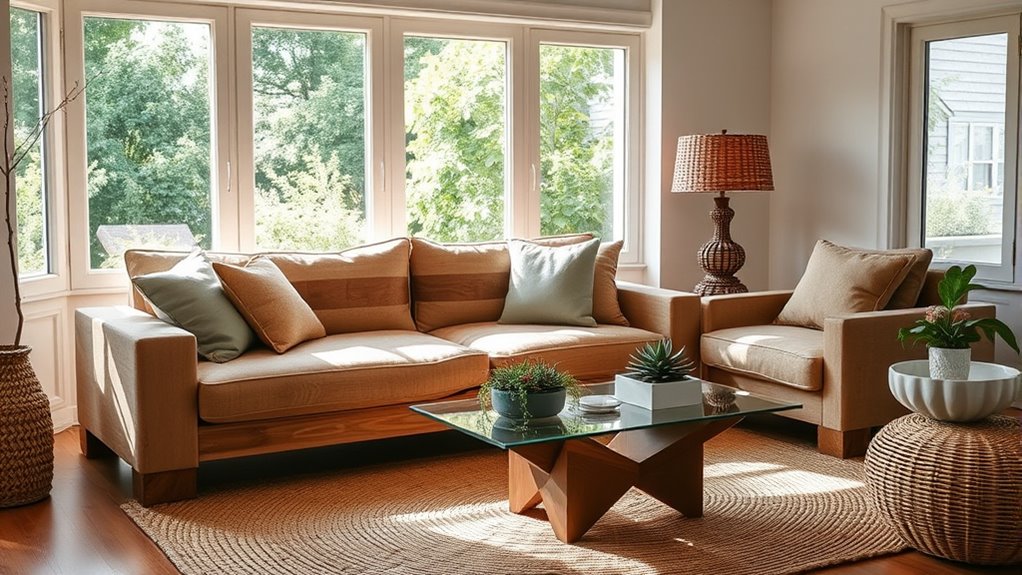
Have you ever wondered how your furniture choices impact the environment? Every piece you select has a story—one that can either harm or help the planet. Opting for eco-friendly materials is more than just a trend; it’s a way to make a meaningful difference. Recycled plastics, for instance, are transforming waste into beautiful, functional furniture. Instead of letting bottles, containers, or discarded plastics end up in landfills or oceans, manufacturers repurpose these materials into durable furniture components. This process reduces pollution and conserves natural resources. When you choose furniture made from recycled plastics, you’re supporting a cycle of reuse that minimizes environmental impact and promotes sustainability. These materials are often versatile, lightweight, and resistant to moisture, making them perfect for outdoor furniture or modern indoor designs. By selecting pieces crafted from recycled plastics, you’re actively contributing to waste reduction and helping combat plastic pollution. Additionally, understanding the properties of recycled plastics can help you make more informed eco-friendly choices. Bamboo essentials are another fantastic choice when it comes to eco-friendly furniture. Bamboo is a fast-growing grass that regenerates quickly without the need for replanting or chemical treatments. Its rapid growth cycle means it’s a highly renewable resource, making it a sustainable alternative to traditional hardwoods. When you incorporate bamboo essentials into your home, you’re choosing a material that’s both strong and lightweight. It’s naturally resistant to pests and moisture, which allows for long-lasting furniture without relying on chemical finishes. Bamboo furniture also boasts a beautiful, modern aesthetic that can seamlessly blend into a variety of décor styles. Its versatility extends beyond furniture, encompassing flooring, wall panels, and accessories, making it an adaptable choice for eco-conscious homeowners. By opting for bamboo essentials, you’re supporting responsible harvesting practices and encouraging the use of renewable resources. Both recycled plastics and bamboo essentials exemplify how sustainable materials can be stylish, durable, and environmentally friendly. When you prioritize these choices, you’re not just decorating your space—you’re making a statement about your values. It shows a commitment to reducing waste, conserving natural resources, and promoting eco-conscious manufacturing. Choosing furniture made from recycled plastics helps keep plastics out of our oceans and landfills, while investing in bamboo essentials supports regenerative agriculture and reduces deforestation. These choices also inspire others to think differently about furniture, shifting the focus toward sustainability rather than just aesthetics. Ultimately, your decisions can influence the market, encouraging more manufacturers to innovate with eco-friendly materials and creating a ripple effect of positive change for our planet.
Frequently Asked Questions
How Do Eco-Friendly Materials Compare in Durability to Traditional Options?
Eco-friendly materials often match traditional options in durability, thanks to rigorous durability testing and advances in material longevity. You’ll find that sustainably sourced wood, recycled metals, and natural fibers withstand daily use just as well as conventional materials. While some eco-friendly options may initially seem less durable, ongoing innovations ensure they’re reliable over time. So, you can choose eco-friendly furniture without compromising quality or longevity.
Are Eco-Friendly Furniture Materials More Expensive Than Conventional Ones?
You might find eco-friendly furniture materials slightly more expensive upfront, like bamboo, which costs more than traditional hardwoods due to limited material availability. For example, a recent case study shows that sustainable cork chairs are priced higher initially but save money long-term because of durability. While the cost comparison varies, eco-friendly options often require a bit more investment, but their benefits—like environmental impact—make it worthwhile.
Can Sustainable Materials Be Recycled or Repurposed Easily?
Yes, sustainable materials can often be recycled or repurposed easily. Many undergo recycling processes that reduce waste and conserve resources. For example, reclaimed wood and recycled metal have high repurposing potential, allowing you to give furniture a second life. By choosing materials with good recycling processes and repurposing potential, you contribute to environmental conservation while creating unique, eco-friendly pieces that fit your style.
What Certifications Guarantee a Furniture Material’s Eco-Friendliness?
You should look for certifications like FSC, PEFC, and Greenguard to guarantee a furniture material’s eco-friendliness. These certifications verify that the materials follow responsible recycling practices and minimize environmental impact. They certify that the wood, textiles, or finishes used are sourced sustainably and produced with eco-conscious methods. By choosing certified furniture, you’re actively supporting recycling practices and reducing your carbon footprint.
How Do I Identify Genuinely Eco-Friendly Furniture Brands?
Ever wondered how to spot genuinely eco-friendly furniture brands? Look for certification labels like FSC or GREENGUARD, which confirm sustainable practices. Check if the brand emphasizes transparency in their sourcing and manufacturing processes—do they openly share their supply chain info? By paying attention to certification labels and brand transparency, you guarantee your choices support truly eco-conscious companies, helping the environment while creating beautiful, sustainable spaces.
Conclusion
By prioritizing eco-friendly furniture materials, you promote a planet-friendly practice that benefits both your home and the environment. Making mindful choices means more than just material; it’s a movement toward a sustainable, stylish lifestyle. So, select sustainable, sturdy, and stylish solutions to support a cleaner, greener world. Embrace eco-consciousness, and let your furniture reflect your commitment to conservation, creating a compelling, conscientious space that champions change through careful, conscious choices.