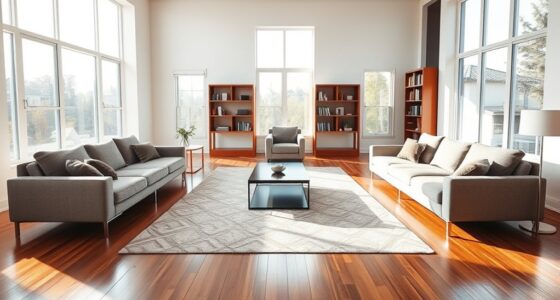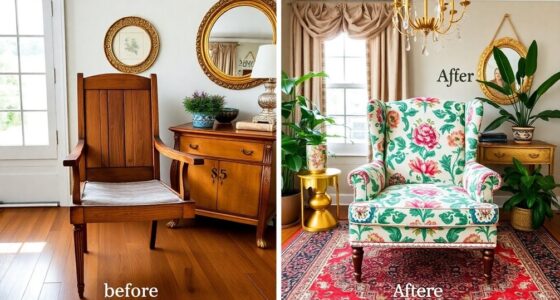
Poor furniture placement can make your space feel cramped, unbalanced, and less functional. Common mistakes include blocking windows, creating narrow pathways, and pushing furniture too close together. To fix this, keep pathways clear, focus on balanced arrangements around a focal point, and use mirrors or rugs to define zones. Simple tweaks can have a big impact. If you continue exploring, you’ll discover more tips to turn your room into a harmonious, comfortable space.
Key Takeaways
- Avoid blocking pathways and windows to maintain natural light and easy navigation.
- Keep furniture proportionate and symmetrically arranged for visual balance.
- Ensure furniture doesn’t obstruct focal points or views to enhance room harmony.
- Use clear, unobstructed routes to improve safety and functionality.
- Incorporate mirrors, rugs, and proper lighting to reflect space and define zones effectively.
Common Mistakes in Furniture Placement
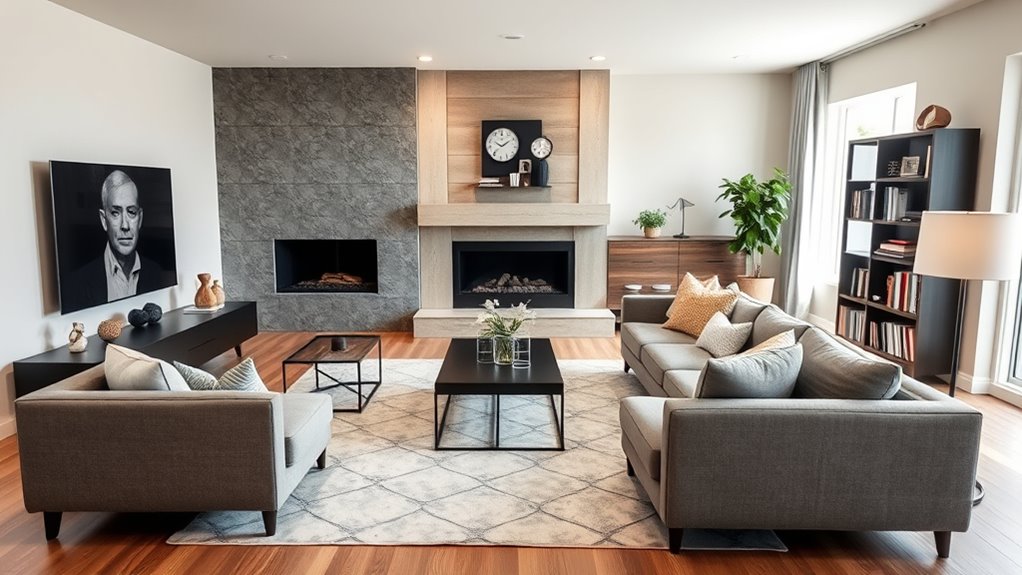
One of the most frequent mistakes in furniture placement is blocking natural pathways and windows, which can make a space feel cramped and hinder movement. Narrow pathways often result when furniture is pushed too close together, creating obstacles that make navigation difficult. You might also create uneven focal points by arranging furniture asymmetrically, causing visual imbalance that distracts from the room’s overall harmony. This not only limits your ability to move freely but also reduces the room’s functionality. When furniture blocks windows, you miss out on natural light, making the space feel darker and more confined. Additionally, improper furniture arrangement in furniture design can lead to overlooked safety issues, such as unstable furniture arrangements that pose hazards. Improper room layout can also diminish the room’s aesthetic appeal and overall comfort. Proper space planning involves considering airflow and sightlines, which can greatly enhance the space’s usability and visual appeal. To avoid these issues, keep pathways clear and ensure furniture placement highlights a balanced focal point for a more inviting and functional room.
Simple Solutions to Enhance Your Space

To instantly improve your space, focus on simple, strategic changes that make a big difference. Start by refining your decorating themes to create a cohesive look that reflects your style. Consistent colors, textures, and accessories can unify the room. Next, implement effective lighting strategies—combine ambient, task, and accent lighting to add warmth and functionality. Well-placed lamps, dimmer switches, and natural light can transform the atmosphere. Rearranging furniture to highlight focal points and improve flow also enhances the space without major overhaul. Small adjustments like adding mirrors to reflect light or using area rugs to define zones can make your room feel larger and more inviting. Additionally, incorporating furniture arrangement techniques can optimize your space for better comfort and style. Proper space planning is essential for creating a balanced and functional environment. Understanding offensive security measures can also help you better appreciate how ethical hacking identifies vulnerabilities and improves safety. Being mindful of privacy policies and cookie management can also contribute to a smoother online experience while shopping for home essentials. Considering safe sleep environments can also help create a more comfortable and secure setting, especially in bedrooms. These simple fixes are quick, affordable ways to elevate your space dramatically.
Frequently Asked Questions
How Can I Optimize Small Room Furniture Layouts?
To optimize your small room furniture layout, start by decluttering and choosing multi-functional pieces. Arrange furniture to maximize open space, leaving pathways clear. Use decorative accents to add personality without overcrowding. Incorporate color coordination to create a cohesive look that feels larger. Position larger items against walls, and keep the center open to enhance flow. This approach makes your small room feel more spacious and inviting.
What Are the Best Tips for Balancing Furniture Sizes?
To balance furniture sizes, focus on scale proportionality, ensuring each piece fits well within the space. You want items that complement each other without overwhelming or underwhelming. Mix larger, statement pieces with smaller accessories for visual harmony. Keep pathways clear and avoid clutter, which helps maintain balance. By paying attention to proportion and scale, you create a cohesive, inviting environment that feels thoughtfully designed and comfortable.
How Do I Choose the Right Focal Point?
Choosing a focal point is like spotlighting the star of a show; it guides your eye and creates balance. The importance of a focal point lies in anchoring your space and setting the tone. To choose focal points, look for natural features like a fireplace or large window, or create one with artwork or a statement piece. This helps you arrange furniture around it, making your room feel cohesive and inviting.
What Are Space-Saving Furniture Arrangement Ideas?
When looking for space-saving furniture arrangement ideas, focus on multi-functional furniture that serves dual purposes, like sofas with storage or fold-out beds. Use vertical storage options such as tall shelves and wall-mounted units to maximize floor space. Keep pathways clear and arrange furniture close to walls, creating an open feel. These tips help you optimize small areas, making them feel spacious and organized without sacrificing style or comfort.
How Can I Improve Flow in Open-Plan Spaces?
Ever notice how open-plan spaces sometimes feel like a maze? To improve flow, you’d think less furniture would help, but strategic placement actually guides movement. Add decorative accents to create visual pathways and use lighting solutions to define zones without clutter. Keep furniture angled or grouped to encourage natural flow. Ironically, a little clutter can be the secret to a smooth, inviting space—just enough to lead the eye and footsteps effortlessly.
Conclusion
By avoiding common furniture placement mistakes, you can turn your space into a harmonious sanctuary. Think of your room as a canvas—you’re the artist, and each piece is a brushstroke. With simple fixes, you’ll create a flow that invites conversation and comfort. Remember, a well-arranged room isn’t just furniture; it’s a reflection of your personality. So, take these tips to heart and watch your space transform from chaos to cozy masterpiece.