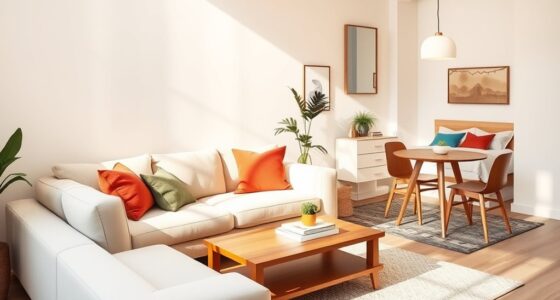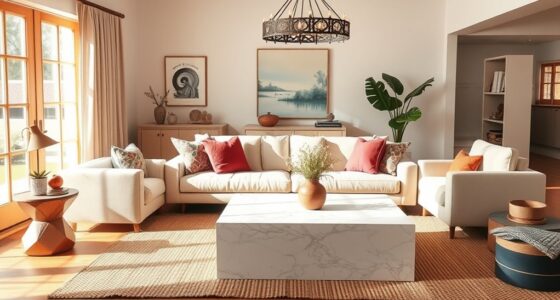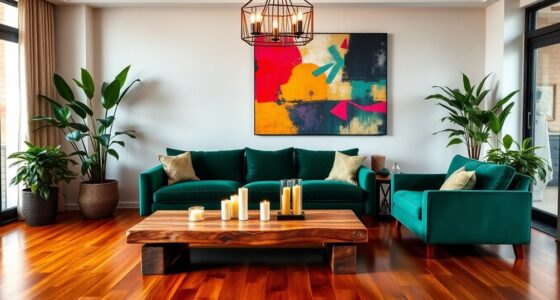
To improve traffic flow in your space, place furniture against walls or in corners to keep pathways clear. Guarantee main walkways are at least 24 to 36 inches wide, and avoid blocking doorways or creating narrow corridors. Use rugs and lighting to define zones without physical barriers. Arranging furniture thoughtfully enhances accessibility and makes your space feel open and inviting. Keep these tips in mind as you optimize your layout to make movement seamless and comfortable.
Key Takeaways
- Place large furniture against walls or in corners to keep central pathways open and unobstructed.
- Ensure pathways are at least 24-36 inches wide for comfortable movement.
- Avoid blocking doorways and walkways with furniture to prevent congestion.
- Use rugs and lighting to define zones without creating physical barriers.
- Arrange furniture based on natural traffic routes to facilitate smooth navigation.
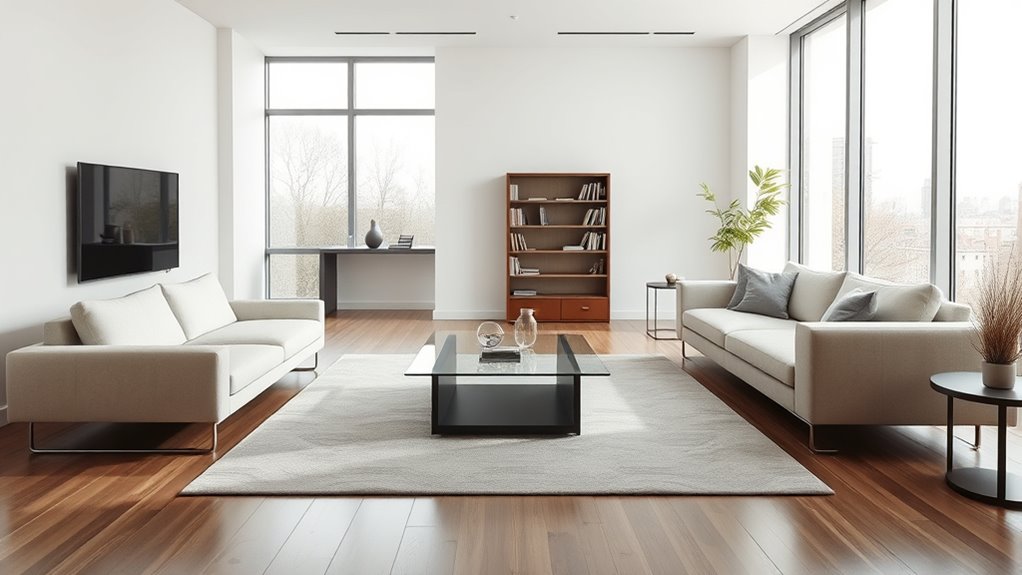
Have you ever felt frustrated trying to navigate through a cluttered room? It’s a common experience, and it usually stems from poor furniture placement. To improve traffic flow, you need to focus on core design principles that prioritize functionality and ease of movement. When you apply these principles, you’ll notice an immediate difference in how spacious and accessible your space feels. The key is space optimization—arranging furniture so that pathways remain clear and traffic can move naturally without obstacles.
Start by visualizing the main pathways within the room. These should be wide enough for comfortable movement—ideally at least 24 to 36 inches—so that you and others can pass through easily. When placing furniture, keep these routes free from obstructions. Large pieces like sofas and beds should be positioned against walls or in corners, leaving the central area open for movement. This not only creates a sense of openness but also aligns with fundamental design principles that emphasize balance and flow. Avoid crowding furniture in the middle of the room, which can turn walkways into narrow, hard-to-navigate corridors.
Another aspect of space optimization involves considering how different furniture pieces relate to each other. For example, when arranging seating areas, leave enough space between chairs and tables so you don’t have to squeeze through tight spots. Cluttering a room with furniture in a way that blocks doorways or walkways causes congestion and hampers traffic flow. Instead, think about the natural pathways people will take—do they lead smoothly from one area to another? If not, adjust your furniture placement accordingly. Keep these pathways clear, and use rugs or lighting to subtly define zones without creating physical barriers. Incorporating furniture arrangement principles can further enhance the functionality and flow of your space.
Design principles also suggest that open spaces promote better traffic flow and a more inviting atmosphere. Incorporate multi-functional furniture that can serve dual purposes, reducing the number of pieces needed. This approach maximizes space and minimizes clutter, further enhancing space optimization. Remember, less is often more when it comes to furniture in a room intended for good traffic flow. You want to create a layout where movement feels intuitive, not hindered by overstuffed arrangements.
In the end, good furniture placement isn’t just about aesthetics; it’s about creating a functional environment. By applying key design principles and prioritizing space optimization, you enable smooth, effortless traffic flow. Your room will feel more open, accessible, and comfortable—making everyday navigation simpler and more enjoyable.
Frequently Asked Questions
How Can I Optimize Small Spaces for Better Traffic Flow?
To optimize small spaces for better traffic flow, you should prioritize space-saving solutions and multi-functional furniture. Choose pieces that serve multiple purposes, like a sofa bed or storage ottoman, to maximize utility without cluttering. Arrange furniture along the walls to open up walkways and avoid blocking pathways. Keep the center of the room clear, and use vertical storage options to free up floor space, making your small area feel more open and accessible.
What Furniture Materials Are Best for Easy Movement?
Think of furniture materials as the backbone of mobility in your space. Opt for lightweight, durable options like aluminum or certain plastics, which make furniture easy to move and clean. These materials withstand furniture cleaning and daily wear while remaining flexible for rearranging. Choosing such materials guarantees your space stays functional and inviting, with effortless movement that keeps traffic flowing smoothly.
How Often Should I Rearrange Furniture for Traffic Efficiency?
You should consider rearranging your furniture every 6 to 12 months to maintain ideal traffic flow. When you do, think about the wall color and lighting placement, as these can influence how spacious your space feels. Updating furniture placements allows you to adapt to changing needs or new decor, ensuring pathways stay clear and inviting. Regular adjustments keep your home functional and visually appealing, making everyday movement smoother and more comfortable.
Can Rugs Impact Traffic Flow in a Room?
Rugs can considerably impact traffic flow in a room by defining pathways and creating visual cues for furniture and layout. When you place rugs strategically, they help guide movement smoothly and prevent congestion. Avoid positioning rugs where they block doorways or main walkways, as this can disrupt traffic. Use rugs to anchor furniture and create clear, open routes, making your space more functional and inviting.
What Are Common Mistakes to Avoid in Furniture Placement?
You should avoid navigation clutter by keeping pathways clear and spacious. Don’t place oversized furniture in tight areas, as it blocks movement and creates congestion. Be mindful of furniture placement, ensuring it doesn’t obstruct doorways or windows. Refrain from crowding a room with too many pieces, which hampers traffic flow. Instead, arrange furniture to promote easy navigation and a comfortable, open atmosphere that invites movement.
Conclusion
By arranging your furniture thoughtfully, you create clear pathways, promote easy movement, and enhance your space’s flow. Keep walkways unobstructed, prioritize open areas, and consider your daily routines to make navigation seamless. When you optimize your furniture placement, you improve accessibility, increase comfort, and foster a more inviting environment. So, clear the way, maximize your space, and enjoy the benefits of a well-structured, traffic-friendly home. Your improved flow starts with your thoughtful furniture choices.