
To blend different wood finishes effectively, focus on balancing colors, grain patterns, and textures. Pair contrasting hues like dark walnut with light oak for striking contrast, or select similar shades like maple and birch for a subtle harmony. Match grains that flow well together, and mix finishes like matte and glossy to add depth. Start with a dominant wood and layer in accents that complement or contrast. Keep exploring these tips to craft customized, stylish wood combinations.
Key Takeaways
- Choose a dominant wood as the base to establish visual consistency and set the overall tone.
- Incorporate secondary woods with contrasting or complementary hues to create visual interest and depth.
- Mix finishes like matte and glossy intentionally to add texture and prevent a flat appearance.
- Match grain patterns that flow well together, balancing complex and simple textures for harmony.
- Consider lighting and environment to ensure different finishes and woods blend cohesively in the space.

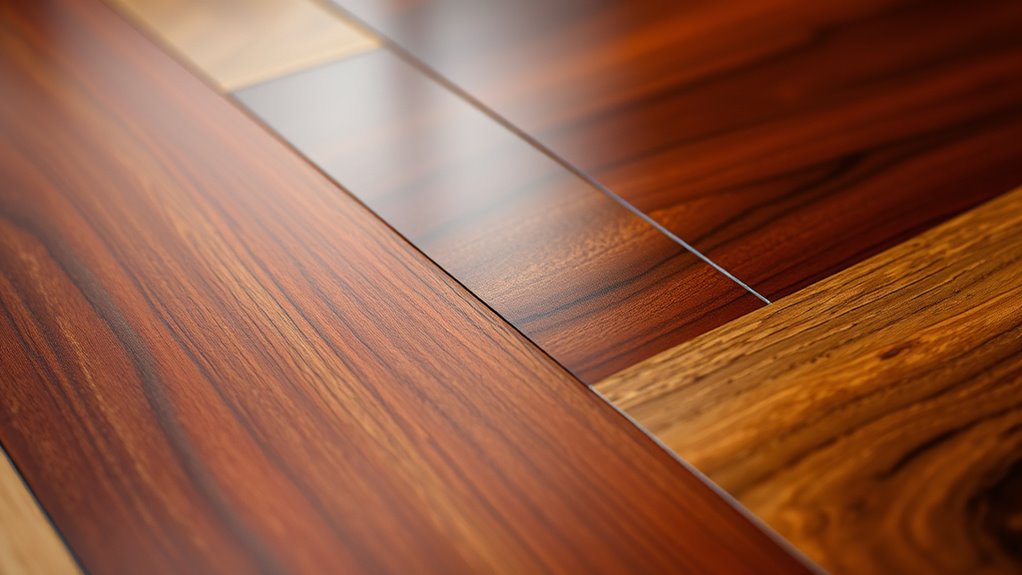
Mixing and matching different types of wood can instantly elevate the style of your furniture and decor. When done thoughtfully, it creates a layered, sophisticated look that adds depth and personality to any space. One of the first things to regard is color coordination. Combining woods with complementary or contrasting hues can make your pieces stand out or seamlessly blend. For example, pairing a rich, dark walnut with a lighter oak can produce a striking visual contrast that remains cohesive if you keep the color palette balanced. Conversely, choosing woods with similar tones, like maple and birch, assures a harmonious, subtle blend that lends a calm, unified feel to your room. The key is to decide whether you want a bold, eclectic mix or a more subdued, elegant harmony.
Thoughtfully mixing wood tones and grains creates sophisticated, personalized furniture with depth and harmony.
Grain matching is equally important in achieving an appealing mix of woods. The grain pattern of each wood adds texture and visual interest, but mismatched grains can sometimes clash and disrupt the overall flow. To avoid this, look for grains that either complement each other or are consistent in direction and style. For example, straight, uniform grains work well together, creating a seamless transition from one piece to another. If you’re mixing woods with different grain patterns—like a highly figured burl with a straight-grain wood—try to balance the visual weight by placing the more complex grain as an accent rather than a dominant element. This approach guarantees the textures enhance rather than compete with each other. Additionally, understanding the properties of different woods can help you select the best combinations for durability and aesthetic appeal.
Another helpful tip is to think about the finish and sheen of each wood. Mixing matte and glossy finishes can add depth, but it’s best to keep these variations intentional to prevent a chaotic look. When selecting different woods, consider how their finishes will interact under lighting conditions to maintain a cohesive appearance.
Ultimately, successful wood mixing relies on careful planning of color coordination and grain matching. Start by choosing a dominant wood that sets the tone, then introduce secondary woods that either contrast or complement in hue and grain. Pay attention to how the grains flow and how the finishes reflect light. With patience and attention to detail, you’ll create a unique, stylish environment that showcases your personal taste and design sensibility. Whether you aim for a rustic charm or modern elegance, blending woods thoughtfully can transform your space into something truly exceptional.
Frequently Asked Questions
How Do I Prevent Wood Finishes From Clashing Visually?
To prevent wood finishes from clashing visually, you should consider color contrast and grain pattern. Choose finishes with complementary or harmonious tones to keep the look cohesive. Pay attention to grain patterns; mixing similar grains creates a unified appearance, while contrasting patterns add interest without clashing if balanced properly. Test your finishes together first, and aim for a consistent style that enhances rather than overwhelms the overall design.
Which Woods Are Easiest to Blend for Beginners?
Did you know that softwoods like pine and cedar are among the easiest to blend for beginners? They often have consistent grain patterns and natural color variations that make matching finishes simpler. With their forgiving grain and versatile color matching, you can experiment without worry. These woods are great for learning how to mix and match finishes, helping you develop your skills while creating visually appealing projects.
Can Mixing Finishes Affect Furniture Durability?
Mixing finishes can affect furniture durability if you’re not careful. Different finishes may have varying levels of finish durability and wood protection, which can lead to uneven wear or damage over time. To keep your furniture protected, choose finishes compatible with each other and guarantee proper application. This way, you enhance wood protection and maintain the piece’s strength, ensuring it stays durable and beautiful for years to come.
What Tools Are Best for Applying Mixed Finishes?
You should use high-quality brushes for applying mixed finishes, as they help attain smooth, even stain application. Opt for angled brushes for detailed areas and flat brushes for larger surfaces. Master brush techniques like light, consistent strokes to prevent streaks. These tools and techniques ensure your stain application looks professional and blends well, enhancing the visual appeal of your furniture without compromising durability.
How Do I Choose Complementary Wood Tones?
To choose complementary wood tones, look for grain patterns that contrast or align to create visual interest. You want color harmony, so pick shades that enhance each other without clashing. Test small samples together to see how the tones interact under your lighting. Consider the overall style and mood you want—warm and cozy or sleek and modern—and select woods that support that vibe for a balanced, cohesive look.
Conclusion
By confidently mixing and matching different woods, you can create stunning, personalized furniture that reflects your unique style. Remember, about 60% of professional designers favor combining contrasting finishes for visual interest, so don’t shy away from experimenting. With the right approach, blending woods becomes an art rather than a challenge, allowing you to craft spaces that are both cohesive and mesmerizing. Embrace the process, and let your creativity shine through every piece you create.