
To make your furniture last longer, clean it regularly using gentle methods suitable for each material—like soft cloths for wood and vacuuming for upholstery. Protect surfaces with coasters, placemats, or slipcovers, and avoid direct sunlight to prevent fading. Maintain consistent humidity, inspect for early damage, and address issues promptly. Applying protective finishes periodically helps resist wear. Keep up these habits, and you’ll discover more tips to preserve your furniture’s beauty over time.
Key Takeaways
- Regularly clean furniture using appropriate methods based on material to prevent dirt buildup and damage.
- Apply protective finishes and use coasters, placemats, and slipcovers to shield surfaces from scratches and stains.
- Control environmental factors like humidity and temperature to avoid warping, cracking, or fading.
- Inspect furniture frequently for early signs of damage and address issues promptly with proper repairs.
- Use furniture protectors, felt pads, and positioning strategies to prevent floor scratches and sun-related fading.
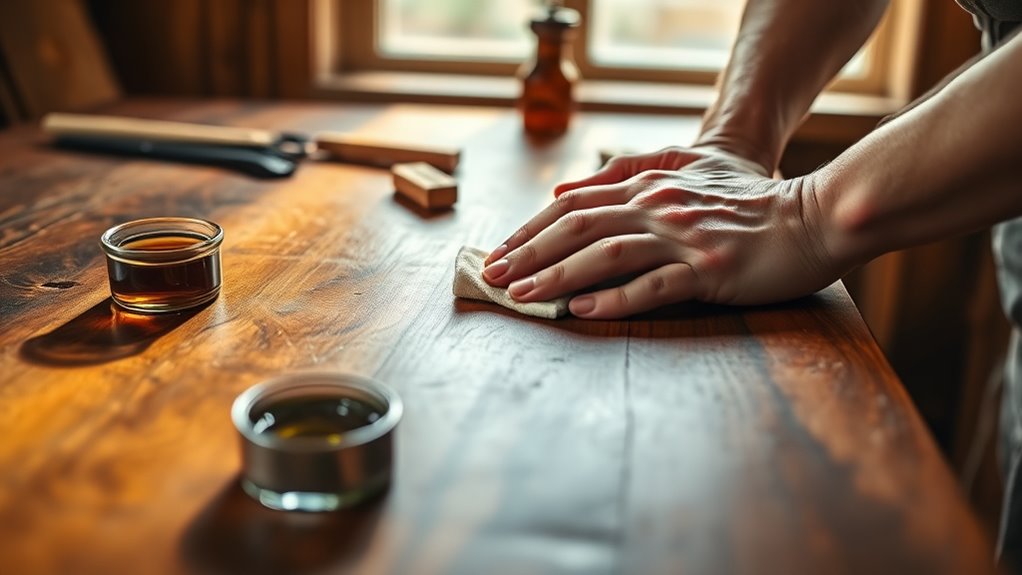
Keeping your furniture in top shape requires regular maintenance and care. One of the most effective ways to do this is by mastering proper cleaning techniques and applying protective measures. Regular cleaning not only makes your furniture look fresh but also extends its lifespan by preventing dirt, dust, and grime from causing damage over time. You should start by identifying the material of your furniture so you can choose the right cleaning methods. For wooden pieces, use a soft cloth or microfiber duster to remove dust daily. Occasionally, dampen the cloth slightly with a gentle cleaner suitable for wood, avoiding excess moisture that could warp or stain the surface. For upholstered furniture, vacuum regularly with the upholstery attachment to lift dirt and prevent buildup. Spot clean spills immediately using a mild soap solution or fabric cleaner, but steer clear of harsh chemicals that could damage delicate fibers. To ensure your furniture remains resistant to everyday wear, consider applying protective finishes like a clear wax or sealant, which create a barrier against damage.
In addition to proper cleaning techniques, protective measures play a vital role in maintaining the integrity of your furniture. Applying protective finishes, like a clear wax or sealant, can create a barrier against everyday wear and tear. For wooden surfaces, using coasters, placemats, and tablecloths helps prevent scratches, heat marks, and water rings. For fabric upholstery, consider using slipcovers or throws that can be easily washed to shield the fabric from stains and spills. Investing in furniture protectors or felt pads for the legs can stop scratches on hardwood floors and prevent damage when moving furniture around. Keep in mind that sunlight can fade finishes and fabrics over time, so positioning your furniture away from direct sunlight or using curtains and UV-protective films can considerably prolong its appearance.
Another protective measure is to control the environment where your furniture is kept. Maintaining consistent humidity levels prevents wood from expanding or contracting, which can cause warping or cracking. Use humidifiers or dehumidifiers as needed, especially in areas prone to extreme moisture changes. Regularly inspecting your furniture for early signs of damage allows you to address issues before they worsen. If you notice loose joints or small cracks, fix them promptly with appropriate glue or professional repair services. By combining diligent cleaning techniques with thoughtful protective measures, you guarantee that your furniture remains durable and attractive for years to come. Consistent care is a small effort with big rewards, making sure your furniture continues to serve its purpose beautifully without needing frequent replacements.
Frequently Asked Questions
How Often Should I Clean My Furniture to Maintain Its Appearance?
You should clean your furniture at least once a week to maintain its appearance, adjusting based on use and exposure. Establish a maintenance schedule that includes dusting, vacuuming, and wiping with appropriate cleaners. Regular cleaning prevents dirt buildup and damage, helping your furniture stay in great condition longer. If you notice spills or stains, clean them immediately to avoid permanent damage. Consistent care keeps your furniture looking fresh and prolongs its lifespan.
Can I Use Regular Household Cleaners on All Furniture Types?
You shouldn’t use regular household cleaners on all furniture types because cleaning agents vary in surface compatibility. Some cleaners can damage delicate finishes or fabrics, so always check manufacturer instructions. For wooden furniture, use gentle, non-abrasive products. For upholstery, select cleaners designed for fabrics. Testing a small, hidden area first guarantees the cleaning agent is safe. Properly matching cleaning agents to your furniture’s surface helps preserve its appearance and longevity.
What’s the Best Way to Remove Stains From Wooden Surfaces?
Think of stain removal techniques as a gentle rain washing away dirt on a wooden surface. To remove stains effectively, start by blotting the spill immediately, then mix a mild soap solution with water. Use a soft cloth to clean the area, avoiding excess moisture. For stubborn stains, consider a mixture of baking soda and water. Consistent wooden surface care keeps your furniture looking fresh and vibrant over time.
How Do I Prevent Furniture From Fading in Sunlight?
To prevent your furniture from fading in sunlight, you should use UV protection on the surface or apply a protective finish. Additionally, installing window coverings like curtains or blinds reduces direct sunlight exposure, preventing UV damage. Keep furniture away from direct sunlight whenever possible, and rotate items periodically. These steps help preserve your furniture’s color and finish, extending its lifespan and maintaining its appearance over time.
When Should I Consider Professional Furniture Restoration?
You should consider professional furniture restoration when your piece shows significant damage, such as deep scratches, water stains, or structural issues. During the restoration process, a skilled expert can carefully repair and revive your furniture’s appearance. When choosing a professional, look for experience, good reviews, and specialization in the type of furniture you own. This guarantees you get quality work that preserves your piece’s character and extends its lifespan.
Conclusion
With a little care, your furniture can become a cherished part of your home’s story. Imagine gentle hands brushing away dust like soft breezes, or a cozy cloth wrapping your pieces in warmth when not in use. By keeping up with simple maintenance, you’ll see your furniture age gracefully, like a fine wine. So, embrace these tips and watch your beloved pieces stand strong, ready to share many more moments of comfort and beauty with you.