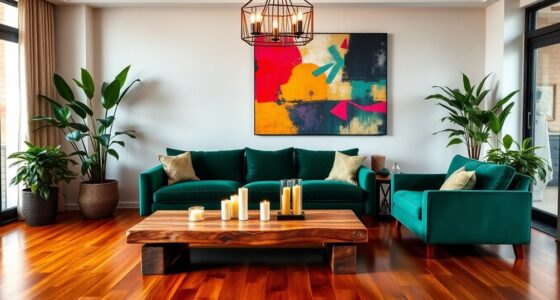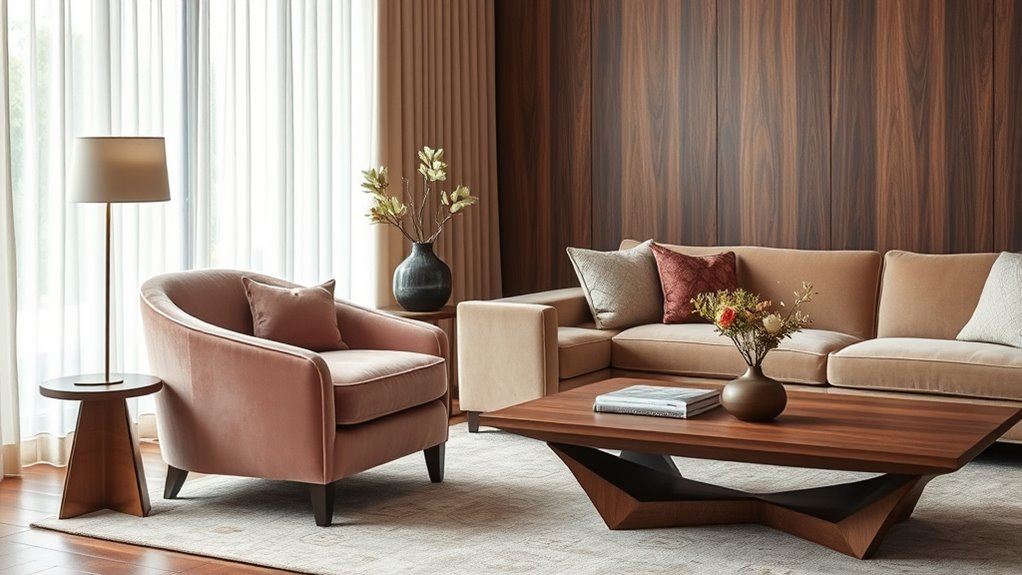

To blend upholstered and wooden furniture cohesively, focus on balance and texture. Choose fabrics in colors that complement your wood tones—warm hues for honey or oak, cool shades for ash or gray finishes. Mix textures like plush cushions with sleek wooden surfaces to add visual interest. Scale pieces carefully to keep the space feeling harmonious, and consider your overall style—modern, rustic, or classic—for a polished look. Continue to explore how different fabric textures and color schemes can elevate your design.
Key Takeaways
- Balance furniture sizes and proportions to create visual harmony between wooden and upholstered pieces.
- Use complementary color schemes and fabric textures to unify the overall aesthetic cohesively.
- Mix different fabric textures (smooth, chunky, linen) to add interest and prevent monotony.
- Align furniture styles—modern, rustic, or traditional—for a curated, cohesive look.
- Consider practical aspects like scale and material contrast to enhance both functionality and visual appeal.

Are you torn between the timeless appeal of wooden furniture and the cozy comfort of upholstered pieces? Finding a way to blend these styles seamlessly can seem challenging, but it’s entirely doable with a little planning. The key lies in understanding how fabric textures and color coordination can tie your space together. When you choose upholstered furniture, pay attention to the fabric textures. Smooth, sleek fabrics like velvet or silk bring a touch of elegance, while chunky knits or linen give a more relaxed, inviting vibe. Mixing different textures creates visual interest and prevents your room from feeling monotonous. For example, pairing a polished wooden coffee table with a plush, textured armchair can elevate your space by contrasting sleek surfaces with tactile comfort.
Blend smooth velvet with chunky linen for a cozy, elegant furniture mix.
Color coordination is equally important. You want your furniture pieces to complement each other without competing for attention. If your wooden furniture has warm tones—like honey or oak—consider upholstery in warm hues such as rust, terracotta, or deep browns. These shades enhance the warmth of the wood and create a cozy, inviting atmosphere. Conversely, if your wood has cooler undertones—like grayish or ash finishes—softer or cooler upholstery colors like muted blues, grays, or pastel shades work well. These combinations foster harmony and balance, making your space feel cohesive. Don’t be afraid to introduce pops of color through accent pillows or throws; just ensure they tie into your overall palette.
Another way to blend wooden and upholstered furniture successfully is to think about scale and proportion. A large, sturdy wooden sideboard can be balanced with a set of upholstered dining chairs that have slim, elegant legs. Similarly, a hefty wooden sofa can be softened with cushions in varied fabric textures and colors that echo other accent pieces in your room. When you layer different materials, you add depth and personality, making the space feel curated rather than mismatched. Additionally, understanding cybersecurity vulnerabilities, like those exposed during the recent Hack’n Jill incident, highlights the importance of safeguarding your digital spaces, much like how mixing textures and colors protects and enhances your interior design.
Finally, consider the overall style you’re aiming for—whether rustic, modern, or traditional—and let that guide your choices. For a modern look, sleek wooden pieces paired with minimalist upholstery in neutral tones work beautifully. For a more rustic or farmhouse feel, distressed wood combined with cozy, textured fabrics in warm earthy colors creates a welcoming vibe. The secret is to create a balanced mix where each piece enhances the other, resulting in a harmonious, stylish space that feels both timeless and personal. With thoughtful fabric textures, smart color coordination, and attention to proportion, you can master the art of blending upholstered and wooden furniture effortlessly.
Frequently Asked Questions
How Can I Ensure Color Harmony Between Upholstered and Wooden Pieces?
To guarantee color harmony between upholstered and wooden pieces, focus on color coordination by choosing shades that complement each other. Use fabric matching to tie the colors together, selecting upholstery fabrics that pick up tones from the wood or vice versa. Consider a neutral palette to create a seamless flow, or add accents in similar hues for visual cohesion. This approach helps your furniture blend beautifully and feels balanced.
What Are Some Common Mistakes to Avoid When Mixing These Materials?
When mixing upholstered and wooden furniture, avoid clashing patterns and mismatched textures that can create visual chaos. Don’t choose pieces that compete rather than complement each other; instead, opt for subtle patterns and textures that blend well. Be cautious with bold contrasts in color or finish, and make sure your materials work harmoniously. This keeps your space balanced and inviting, preventing your furniture from looking disjointed or overwhelming.
Which Styles of Furniture Blend Best With Both Materials?
Think of your space as a canvas where Eclectic styles and Transitional designs are your paintbrushes, blending effortlessly. These styles work best because they balance traditional wooden pieces with plush upholstered furniture, creating harmony. Eclectic styles bring energy and personality, while Transitional designs offer a seamless flow. By combining these, you evoke comfort and sophistication, turning your room into a visual story that feels both timeless and inviting.
How Do I Maintain the Longevity of Mixed-Material Furniture?
To keep your mixed-material furniture looking its best, regularly care for the fabric using appropriate fabric care products and gentle cleaning. For wooden parts, avoid harsh chemicals and focus on maintaining the wood finishing by polishing and protecting it from moisture. Keep furniture away from direct sunlight and extreme temperatures, and address spills promptly to prevent damage, ensuring your furniture stays beautiful and durable for years to come.
Are There Specific Room Types That Suit This Furniture Combination Best?
You’ll find that living rooms and bedrooms suit this furniture combination best, as they naturally complement various decor styles. In your living room, blend upholstered sofas with wooden coffee tables to create a warm, inviting atmosphere. For bedroom decor ideas, combine upholstered headboards with wooden nightstands for a cozy, balanced look. This mix enhances aesthetics, adds texture, and keeps your space versatile, making it ideal for a variety of room types.
Conclusion
Blending upholstered and wooden furniture creates a harmonious dance of textures and styles in your space. With thoughtful mixing, you turn a room into a symphony where each piece complements the next, much like a well-composed melody. Embrace the contrast, and let your unique personality shine through. When done right, this fusion isn’t just furniture—it’s a living, breathing reflection of your taste, weaving comfort and elegance into a seamless tapestry that invites both admiration and coziness.