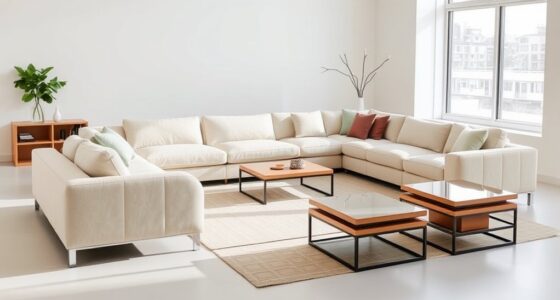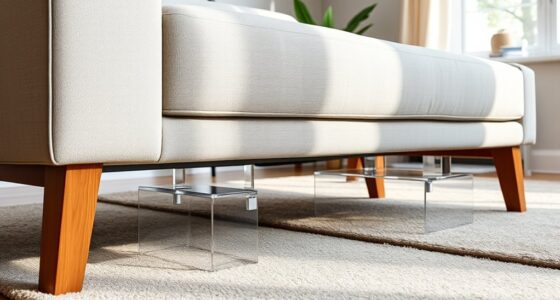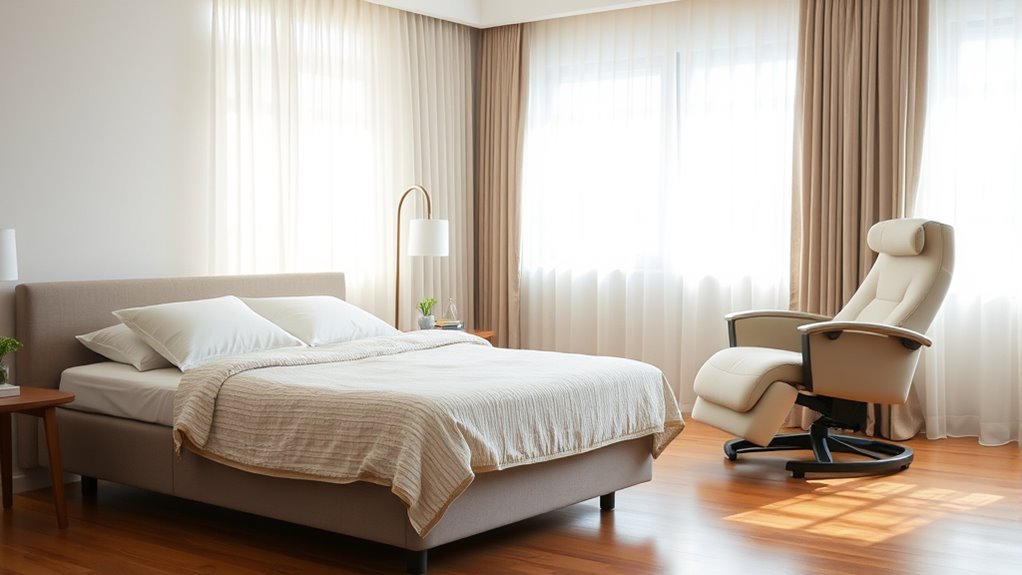

To make standing easier, consider ergonomic beds and chairs designed for support. Look for beds with adjustable heights and chairs with higher seats and angled backs that reduce effort. Add grab bars and transfer aids nearby to boost stability and confidence. Simple modifications like step stools or supportive cushions can make a big difference. Keep exploring these options, and you’ll discover practical solutions to make your get-ups safer and more comfortable.
Key Takeaways
- Use beds and chairs with adjustable heights to reduce effort when standing.
- Incorporate ergonomic features like angled backs and firm cushions for easier transitions.
- Install grab bars and transfer aids to provide stable support during sit-to-stand movements.
- Add step stools or higher seating to minimize strain on knees and back.
- Choose supportive furniture and assistive devices that promote independence and safety during standing.

Ever find yourself struggling to get up quickly or comfortably from a seated or lying position? You’re not alone. As we age or deal with certain health conditions, standing up can become a challenge. That’s where thoughtful design and assistive devices come into play, transforming everyday furniture into tools that support your mobility and independence. Ergonomic designs are vital—they’re created specifically to reduce strain and make movements smoother. For instance, chairs with higher seats, firm cushions, or angled backs help you push off more easily, decreasing the effort needed to stand. Similarly, beds with adjustable heights or integrated lift mechanisms lessen the strain on your back and knees when you’re getting out of bed. These ergonomic improvements aren’t just about comfort—they’re about safety and confidence, helping you avoid falls or injuries during those critical moments of standing. Incorporating automation in business and assistive technology can further enhance safety and ease during these movements. Devices like grab bars, transfer poles, and sturdy stools provide extra support where you need it most. Placing grab bars near your bed or chair gives you a reliable grip point, allowing you to leverage your strength rather than relying solely on your muscles. Transfer poles, which can be placed between your chair and a walker or wheelchair, serve as a stable bridge, giving you a secure hold and guiding you smoothly into a standing position. Many assistive devices are designed to be intuitive and easy to use, fitting seamlessly into your daily routine without feeling cumbersome. They’re built to complement your natural movements, giving you added confidence and independence. Choosing furniture with ergonomic designs and adding assistive devices doesn’t mean you have to overhaul your entire space. Small changes can make a big difference. For instance, selecting a chair with a higher seat height or adding a simple, sturdy step stool can make standing less strenuous. Installing grab bars or using a transfer aid can be simple upgrades that markedly improve safety. The goal is to create a supportive environment that encourages you to stand up comfortably and confidently, reducing the risk of slips or falls. These solutions empower you to maintain your independence longer, making everyday activities less taxing and more secure. With a few thoughtful modifications and the right assistive devices, getting up from a seated or lying position becomes easier, safer, and less of a chore.
Frequently Asked Questions
Are There Budget-Friendly Options for Easy Get-Up Furniture?
Yes, there are budget-friendly options for easy get-up furniture. You can find affordable chairs and beds with supportive cushion materials that make standing easier, often featuring simple designs. Look for pieces with multiple color options to match your decor without breaking the bank. These options are practical, comfortable, and won’t strain your budget, helping you stay independent and comfortable at home.
How Do I Choose the Right Height for My Needs?
Imagine your furniture as a tailored suit—perfect fit guarantees comfort. To choose the right height, focus on ergonomic adjustment and height customization, matching the seat or bed level to your knees or hips. Test different heights, ensuring your feet rest flat and your back stays straight. This way, you’ll find a setup that supports easy get-ups, reducing strain and making daily movements smoother.
Can These Furniture Pieces Support Heavy Weights?
Yes, these furniture pieces can sustain heavy weights if you check their weight capacity and material durability. Look for models with a high weight capacity to ensure safety and stability. Durable materials like reinforced steel or quality hardwood enhance support and longevity. Always verify the manufacturer’s specifications to match your needs, and opt for sturdy construction to comfortably support heavier weights without risking damage or instability.
Are There Stylish Designs That Blend With Modern Decor?
Yes, you’ll find stylish designs that blend seamlessly with modern aesthetics. These furniture pieces feature sleek lines, minimalist forms, and contemporary finishes, making them perfect for your modern decor. They’re designed for easy integration, so you won’t have to compromise style for functionality. Whether you prefer a neutral palette or bold accents, these get-up solutions complement your space while providing the support you need to stand easily and confidently.
Do These Get-Up Solutions Require Professional Installation?
Think of these get-up solutions like a well-choreographed dance—smooth and simple. You won’t need to worry about installation concerns because most models feature easy, do-it-yourself setup. However, for complex or customized designs, professional setup can guarantee everything’s secure and functions perfectly. Overall, these solutions are designed for user-friendly installation, so you can enjoy their benefits immediately without the need for expert help.
Conclusion
Now that you know how beds and chairs can make standing easier, aren’t you tempted to try them out? These simple adjustments can boost your confidence and independence daily. Why struggle with unnecessary discomfort when a small change can make a big difference? Embrace these easy get-ups, and you might just find yourself moving through your day with less effort and more comfort. After all, isn’t feeling good and staying active what truly matters?