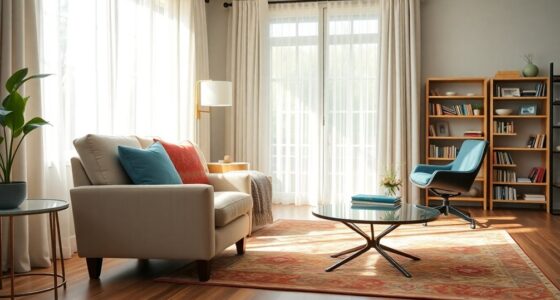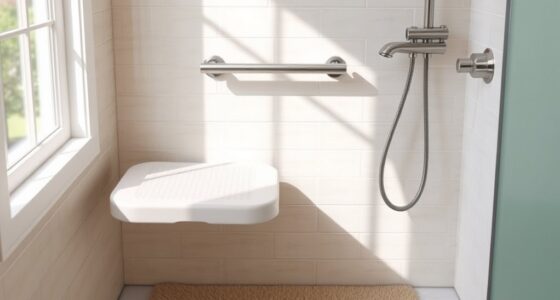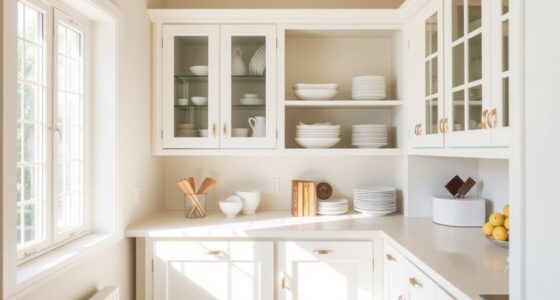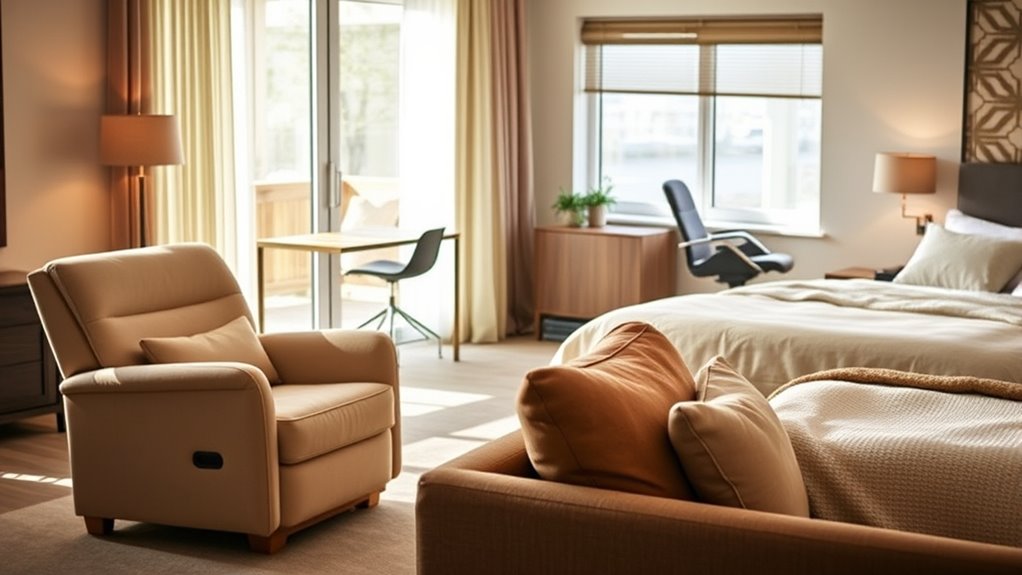

To make daily life easier as you age, choose furniture that promotes comfort, safety, and support. Opt for adjustable beds and chairs with ergonomic features, such as lumbar support and firm cushions, to reduce strain. Use multi-functional, space-saving pieces that keep walkways clear and minimize clutter. Incorporate safety features like non-slip bottoms, rounded edges, and easy-to-grasp handles. Prioritizing thoughtfully selected furniture helps maintain independence and well-being—keep exploring to discover more ways to create an age-friendly living space.
Key Takeaways
- Select adjustable-height beds and chairs to ease sitting, standing, and getting in or out of bed comfortably.
- Incorporate ergonomic features like lumbar support and firm cushions to reduce strain during sitting and sleeping.
- Use furniture with non-slip bases, rounded edges, and easy-to-grasp handles to enhance safety and stability.
- Opt for space-efficient, multi-functional pieces that maximize utility and maintain open pathways for safe movement.
- Prioritize furniture that adapts to changing needs, promotes independence, and ensures comfort and safety throughout aging.
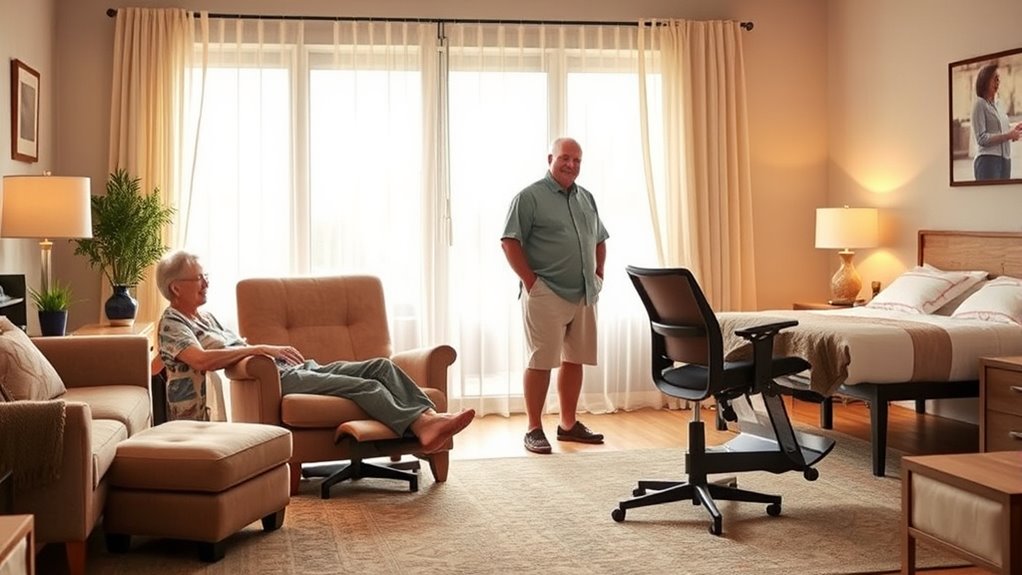
As you plan for aging, selecting the right furniture becomes crucial to guarantee safety, comfort, and independence. When choosing pieces, focus on ergonomic design to support your body’s natural movements and reduce strain. Ergonomic furniture adapts to your needs, offering proper support for your back, neck, and joints. For example, opting for chairs with adjustable heights and lumbar support ensures you can sit comfortably without risking poor posture or discomfort. When you’re seated, ergonomic design minimizes pressure points and encourages healthy alignment, which is critical as you age and become more susceptible to aches or injuries. Incorporating ergonomic principles into your furniture choices can further enhance comfort and safety. Space optimization is equally essential in your decision-making process. You want furniture that fits well within your living space without creating clutter or obstacles. Pieces that serve multiple functions—like a sofa bed or an ottoman with storage—maximize the utility of each square foot, making your environment safer and more manageable. Avoid bulky furniture that might obstruct pathways or make it difficult to move around freely. Instead, choose sleek, streamlined designs that enhance open space and reduce the risk of tripping or falling. Proper space planning also means placing furniture where it’s easily accessible, keeping frequently used items within arm’s reach, and maintaining clear walking areas. When selecting a bed, look for a height that’s easy to get in and out of—neither too high nor too low. An adjustable bed with ergonomic features can help you change positions comfortably and reduce pressure on your joints. For sitting, chairs with firm cushions and armrests provide stability and leverage for standing up, especially if you have mobility concerns. When it comes to sleep, ergonomic mattresses that contour to your body support restful nights and prevent discomfort. In addition to comfort, safety features should influence your choices. Non-slip legs or pads on furniture add stability, while rounded edges reduce injury risk if you accidentally bump into them. Incorporate furniture with easy-to-grasp handles or levers to aid in mobility and independence. You should also consider the overall layout to ensure it promotes ease of movement, reduces fatigue, and minimizes hazards. Ultimately, the right furniture isn’t just about style; it’s about creating a living environment that adapts to your changing needs. By prioritizing ergonomic design and space optimization, you can make your home safer and more comfortable, helping you maintain independence and quality of life well into your later years.
Frequently Asked Questions
How Do I Prevent Falls When Using New Furniture?
To prevent falls when using new furniture, you should start by ensuring stability. Place non-slip mats under rugs and on slippery floors to reduce slipping risks. Install sturdy handrails in key areas like bathrooms and hallways for support. Make sure furniture is solid and stable, and keep walkways clear of clutter. Regularly check that all fixtures are secure, and always take your time moving around. These steps help you stay safe and confident.
Are There Eco-Friendly Furniture Options Suitable for Aging Individuals?
Imagine your grandma’s vintage rocking chair, now think eco-friendly. You can find furniture made from sustainable materials like bamboo, reclaimed wood, and biodegradable options that suit aging individuals. These choices reduce environmental impact and provide comfort and safety. Look for certifications like FSC or Green Guard. Eco-friendly furniture isn’t just good for the planet; it makes your home a healthier, more sustainable haven for years to come.
How Can Furniture Be Adapted for Limited Mobility?
You can adapt furniture for limited mobility by choosing pieces with adjustable heights and ergonomic design. These features make it easier to sit and stand without strain, offering better support and comfort. Look for furniture that allows customization to your needs, reducing the risk of falls or discomfort. By selecting adaptable, ergonomic options, you’ll improve your daily living experience and maintain independence more easily.
What Safety Features Should I Look for in Aging Furniture?
Did you know that falls are the leading cause of injury among seniors? When choosing furniture, look for safety features like ergonomic design and adjustable features. These help minimize risks and improve comfort by providing stable support and customizable height or firmness. Non-slip grips, rounded edges, and sturdy frames are essential. Prioritizing these safety elements guarantees your furniture promotes independence and reduces the chance of accidents as you age.
How Do I Choose Furniture That Accommodates Changing Health Needs?
When choosing furniture that accommodates changing health needs, prioritize ergonomic design to support your comfort and mobility. Look for pieces with adjustable features and supportive structures that adapt to your evolving requirements. Don’t forget aesthetic appeal—select furniture that complements your style, making your space inviting. By balancing functionality with visual appeal, you ensure your furniture remains practical and enjoyable as your needs shift over time.
Conclusion
As you select seats and sleep spots, savor the simple yet significant steps that support your strength. Prioritize pieces that promote ease, encourage independence, and guarantee comfort. With thoughtful choices, you’ll foster a future filled with freedom and flexibility. Remember, smart selections set the stage for a safer, smoother, and more satisfying life as you age. So, seize the opportunities to sit, stand, and sleep with confidence—your comfort, your control, your calm.