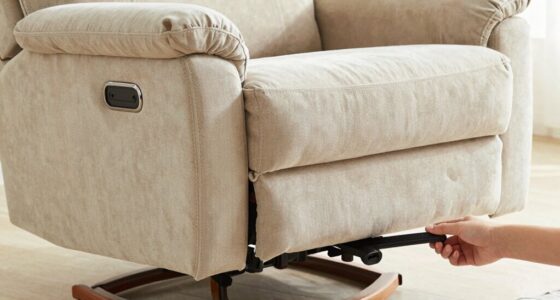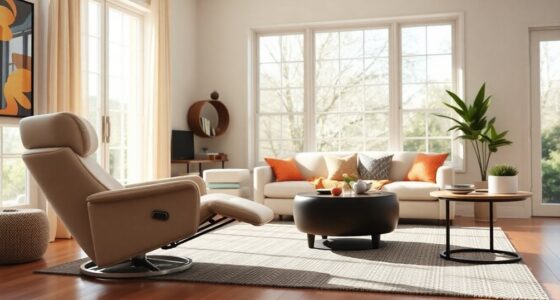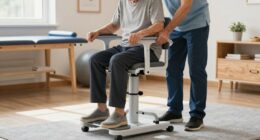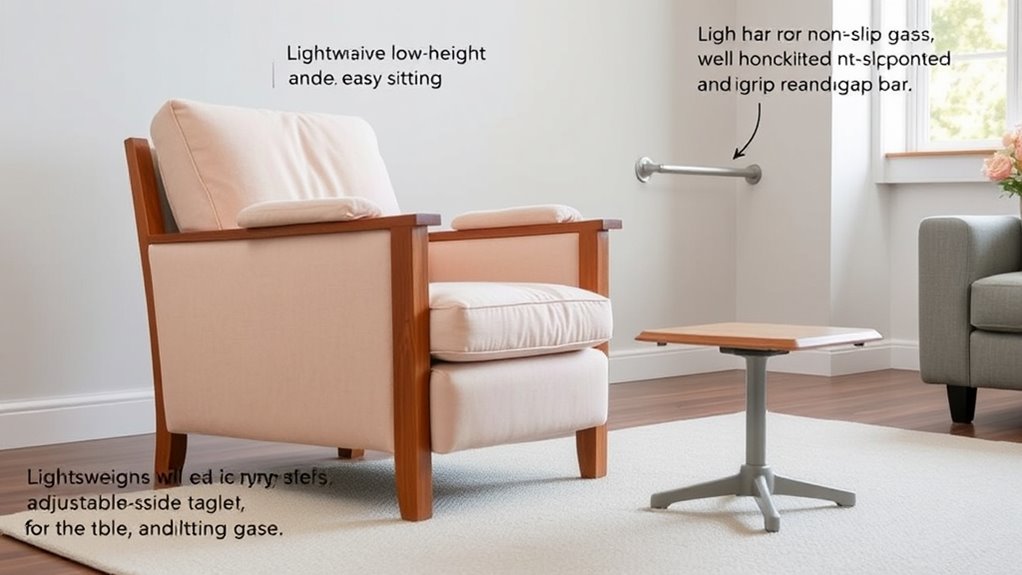

To make furniture more senior-friendly, focus on simple DIY modifications like adding ergonomic handles to doors and drawers, attaching non-slip pads to furniture and flooring, and raising chairs or beds with risers or cushions. Improving lighting around walkways and stairs also boosts safety. These easy changes enhance accessibility, reduce fall risks, and promote independence at home. Keep exploring for more practical tips to create a safer, more comfortable living space tailored to seniors.
Key Takeaways
- Replace standard knobs with large, ergonomic handles to improve grip and ease of use.
- Add non-slip pads or strips to furniture and flooring to prevent slips and falls.
- Use furniture risers or cushions to elevate beds and chairs for easier sitting and standing.
- Install brighter or motion-sensor lighting in walkways and staircases for enhanced safety.
- Combine small modifications to create a safer, more accessible home environment for seniors.

Are you looking for simple ways to help seniors stay safe and comfortable at home? Making small modifications to existing furniture can make a big difference in daily safety and ease of use. One effective way is to add ergonomic handles to doors, cabinets, and drawers. These handles are designed to be easy to grip, reducing the effort needed to open or close things. They’re especially helpful for seniors with arthritis or limited hand strength. Installing these handles is straightforward—you can replace existing knobs with larger, more ergonomic ones or attach handle extensions if needed. This simple upgrade not only improves safety but also boosts independence, allowing seniors to perform tasks without unnecessary strain. Understanding ergonomic design can help you choose the most effective handles for your needs.
Another key safety feature is making sure all walking areas and furniture surfaces have non-slip surfaces. You can add non-slip pads or adhesive strips to the bottoms of chairs, beds, and even rugs. These non-slip surfaces prevent accidental slips and falls, which are common hazards for seniors. When applying non-slip strips to floors or stairs, make sure they cover the entire surface area and are securely attached. For furniture, non-slip pads under chairs or on the feet of tables can keep items steady, reducing the chance of tipping or shifting that might cause falls. These small modifications are cost-effective and easy to implement, but they considerably enhance safety and confidence for seniors moving around their home.
In addition to handles and non-slip surfaces, consider adjusting furniture height for better accessibility. Raising the height of chairs or beds can make sitting down and standing up easier, especially for those with mobility issues. You can use simple risers or add cushions designed for this purpose. When modifying furniture, always prioritize stability and make sure that changes don’t compromise the piece’s safety. If you’re comfortable with basic DIY tasks, these upgrades can be completed quickly, saving money compared to buying new furniture.
Lighting is another essential aspect. Brighten up walkways and staircases with additional or brighter lighting to prevent trips and falls. Motion-sensor lights are an excellent option—they turn on automatically when someone enters a room or approaches a staircase, providing immediate illumination. Making these small adjustments to your home can dramatically improve safety for seniors, allowing them to navigate their space more confidently.
Frequently Asked Questions
Are There Any Safety Risks With DIY Furniture Modifications for Seniors?
When you modify furniture yourself, safety risks like fall hazards and choking hazards can arise if you’re not careful. Loose parts or sharp edges might cause falls, and small pieces could be choking hazards for seniors. Always verify your modifications are sturdy and smooth, and avoid small removable parts. Double-check your work and consider consulting a professional if you’re unsure, to keep your loved ones safe and secure.
How Can I Ensure Modifications Are Durable Over Time?
Think of your furniture as a trusted friend—you want it to last through life’s storms. To guarantee your modifications are durable over time, choose materials with excellent longevity and wear resistance. Regularly inspect and tighten any fixtures, and opt for high-quality hardware. These simple steps act like a shield, protecting your upgrades from daily wear and tear, so your furniture stays strong and safe for years to come.
What Tools Are Essential for Safe DIY Senior-Friendly Upgrades?
To guarantee safe and effective upgrades, you’ll need essential tools like screwdrivers, a drill, and measuring tape. Focus on ergonomic handles and non-slip pads to improve safety and comfort. These tools help you securely attach modifications, making furniture easier to use and reducing fall risks. With the right tools, you can confidently create elder-friendly furniture that’s durable, stable, and tailored to their needs.
Can These Upgrades Be Reversed if Needed?
Like flipping through a vintage photo album, your reversibility concerns matter. These upgrades are usually designed as temporary modifications, so you can often undo them if needed. You should carefully attach or modify furniture with removable or non-permanent fixtures, making sure they’re easy to reverse without damage. Always double-check instructions and use reversible materials to ensure you can restore the furniture’s original state if circumstances change.
Are There Specific Materials Best Suited for Elderly-Friendly Furniture?
When choosing materials for elderly-friendly furniture, you want to prioritize safety and comfort. Opt for non-slip materials on floors and surfaces to prevent falls, and select lightweight fabrics for easy handling and cleaning. These materials make furniture safer and more accessible for seniors. You also want to make sure they’re durable and easy to maintain, so your upgrades remain functional and safe over time.
Conclusion
By making simple DIY upgrades, you can substantially improve a senior’s safety and comfort at home. For example, installing grab bars or non-slip mats can reduce fall risks by up to 50%. These small modifications not only promote independence but also give peace of mind to both seniors and their loved ones. Remember, even minor changes can create a safer, more accessible environment—empowering seniors to enjoy their space confidently and comfortably.