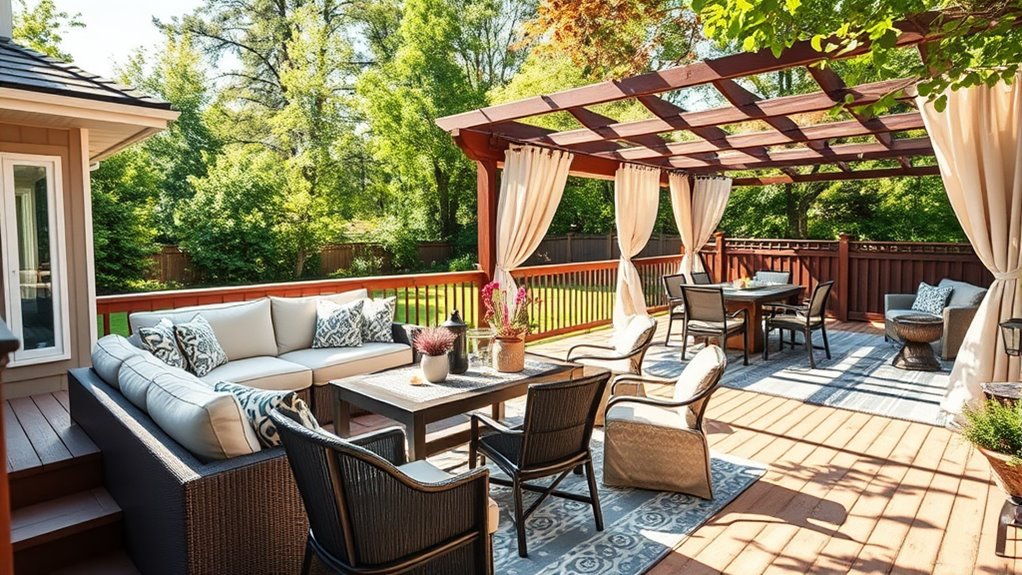

To create a senior-friendly backyard, upgrade your outdoor furniture by choosing sturdy chairs with support arms and cushions, and opt for accessible tables at appropriate heights. Incorporate durable, weather-resistant materials like teak or resin for longevity. Arrange seating to keep pathways clear and comfortable. Use solar-powered lighting to brighten walkways and create a safe environment. Focus on simple, practical improvements that boost safety and comfort—discover more tips to transform your outdoor space.
Key Takeaways
- Select furniture with sturdy arms, cushions, and weather-resistant materials for enhanced support and durability.
- Incorporate adjustable or swivel chairs to improve comfort and ease of access.
- Use tables at accessible heights to accommodate wheelchair users and seated seniors.
- Arrange furniture to keep pathways clear, promoting safe and unobstructed movement.
- Opt for lightweight, easy-to-move pieces to facilitate rearrangement and cleaning.
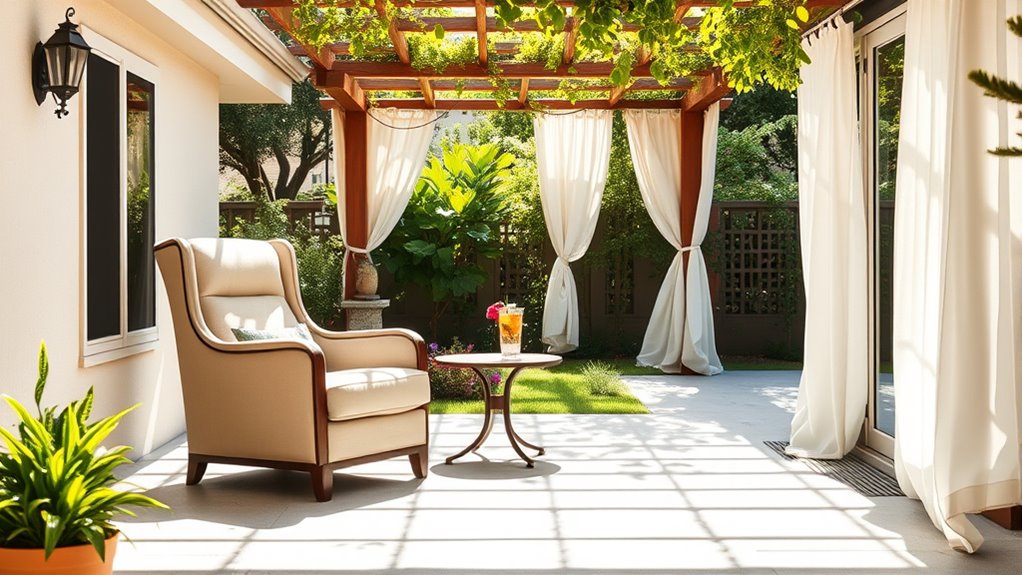
Upgrading your outdoor furniture can transform your backyard into a stylish and comfortable retreat. As you focus on creating a senior-friendly space, consider how small enhancements can make a big difference. Incorporating solar-powered lighting not only adds a warm, inviting glow but also makes evening gatherings safer and more enjoyable. These lights are easy to install, eco-friendly, and require minimal maintenance, making them an excellent choice for outdoor spaces that prioritize safety and convenience. Place them along pathways, around seating areas, or near garden beds to ensure you have sufficient illumination after sunset. This way, you can relax outdoors without worrying about dark spots or tripping hazards.
Enhance safety and ambiance with solar lighting for a more accessible outdoor space.
Ensuring your outdoor space is accessible involves thoughtful planning, such as designing accessible pathways that are wide enough and smooth enough for mobility aids. Equally important is ensuring your backyard is accessible. Wheelchair accessible pathways are essential for making your outdoor space welcoming and functional. These paths should be wide enough—ideally at least three feet—to comfortably accommodate mobility aids. Use smooth, firm surfaces like poured concrete, pavers, or compacted gravel to prevent uneven spots that could cause falls or difficulty walking. When designing these pathways, aim for gentle slopes and avoid steep inclines, making navigation effortless for those with limited mobility. Clear, unobstructed routes lead from the house to key areas such as seating zones, gardens, or the mailbox, helping everyone move around freely.
In addition to pathways, select outdoor furniture that’s easy to get in and out of. Opt for chairs with sturdy arms and cushions to provide extra support and comfort. Consider tables at a height that’s accessible from a wheelchair or mobility device, allowing for effortless dining or conversation. Durable, weather-resistant materials like aluminum, teak, or high-quality resin ensure your furniture lasts through seasons and requires minimal upkeep. Placement matters too—spread seating areas out to avoid congestion and create a sense of openness. Adding a few adjustable or swivel chairs can also enhance comfort and ease of use.
Finally, think about the overall layout to promote safety and ease of movement. Keep walkways clear of clutter, and ensure furniture doesn’t block pathways or exits. By integrating solar-powered lighting along pathways and around seating areas, you create a safer environment that extends your outdoor enjoyment into the evening hours. These thoughtful upgrades can make your backyard not just beautiful but truly accessible and senior-friendly, allowing you and your loved ones to spend more quality time outdoors comfortably and confidently.
Frequently Asked Questions
What Safety Features Should I Look for in Outdoor Furniture?
When choosing outdoor furniture, you want to prioritize safety. Look for slip-resistant surfaces to prevent falls, especially in wet conditions. Make certain the furniture has a sturdy frame construction to support weight reliably and resist tipping. Comfort and ease of getting on and off are also important. These features help create a safe, enjoyable outdoor space, reducing risk and making it easier for everyone to relax comfortably.
How Can I Prevent Outdoor Furniture From Fading or Weather Damage?
Oh, the eternal struggle against the sun’s sneaky schemes! To prevent outdoor furniture from fading or weather damage, you should opt for fabrics resistant to UV rays and moisture. Apply protective coatings regularly, like a shield for your furniture’s dignity. Cover pieces during storms or when unused, and consider moving delicate items to shaded areas. With these tricks, your outdoor furniture stays vibrant and resilient, ready for many seasons of leisure.
Are There Eco-Friendly Options for Senior-Friendly Outdoor Furniture?
You’re wondering if eco-friendly options exist for senior-friendly outdoor furniture. Yes, you can choose furniture made from recycled materials, which reduces waste and environmental impact. Biodegradable options are also available, breaking down naturally over time. These choices guarantee safety and comfort for seniors while supporting sustainability. Look for furniture crafted from sustainably sourced, recycled, or biodegradable materials to create an eco-conscious, accessible outdoor space perfect for all ages.
What Maintenance Is Required for Outdoor Furniture Used by Seniors?
Did you know that regular maintenance can extend outdoor furniture lifespan by up to 50%? For senior-friendly furniture, you should stick to simple cleaning routines like gentle soap and water, avoiding harsh chemicals. Use protective covers when not in use to shield from weather damage, and check for loose screws or stability issues periodically. These steps keep your furniture safe, comfortable, and long-lasting for your loved ones.
How Do I Choose Furniture That Accommodates Mobility Aids?
When choosing furniture that accommodates mobility aids, prioritize mobility aid compatibility and accessible seating options. Look for pieces with wide, stable frames and enough space to maneuver a wheelchair or walker comfortably. Opt for chairs with armrests and sturdy, non-slip surfaces to provide support and safety. Consider adjustable or lightweight furniture for easy transfer and repositioning. Ensuring these features helps create a safe, welcoming outdoor space tailored to seniors’ needs.
Conclusion
Just as a well-tended garden blooms with care, your backyard becomes a sanctuary with these furniture upgrades. By choosing senior-friendly options, you’re creating a space where relaxation, connection, and joy flourish—much like the timeless serenity of a peaceful oasis. Embrace these changes and transform your outdoor area into a haven that welcomes you home each day, echoing the wisdom of those who’ve cherished comfort and beauty through the ages. Your perfect outdoor retreat awaits.