
To keep seniors cozy and safe, choose furniture with ergonomic designs that support natural body curves and promote good posture. Look for pieces with supportive backrests, armrests, and easy-to-operate features like recliners or lifts. Opt for attractive styles that blend with your decor and materials that offer plush comfort. Prioritize accessibility with low surfaces and built-in supports to reduce effort and prevent falls. For more tips on creating a safe, stylish space, keep exploring your options.
Key Takeaways
- Prioritize ergonomic furniture with supportive backrests and armrests to promote proper posture and reduce strain.
- Choose easy-to-operate features like recliners and lift mechanisms for enhanced comfort and independence.
- Opt for soft, breathable fabrics and plush padding to ensure all-day comfort and skin health.
- Select furniture with accessible heights and built-in support handles to simplify movement and reduce fall risk.
- Ensure the furniture complements your home’s style while providing safety features for a cozy, supportive environment.
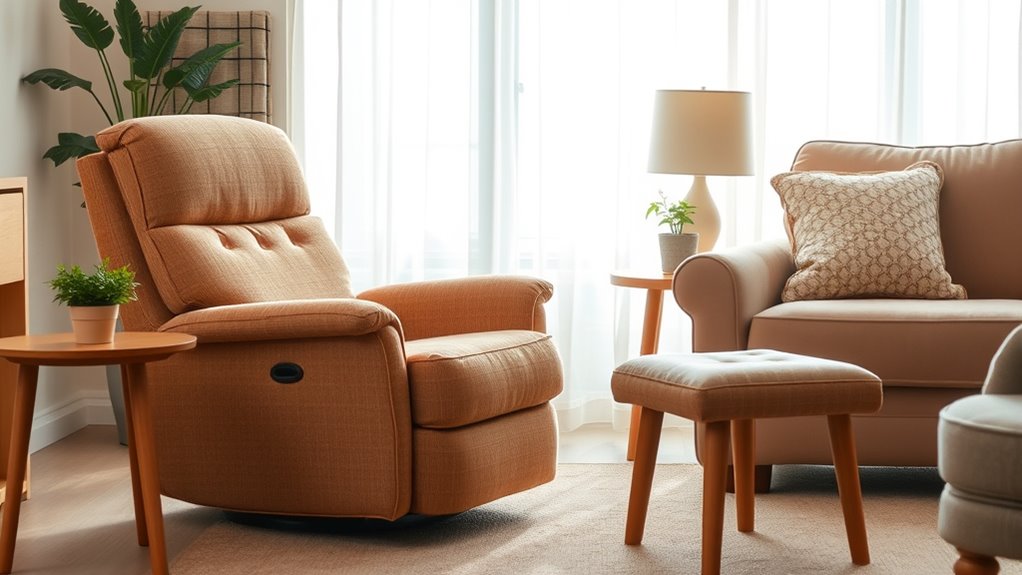
Choosing furniture for seniors requires careful consideration to guarantee safety, comfort, and ease of use. When selecting pieces, it’s essential to focus on ergonomic design, which ensures that furniture supports the natural curves of the body and reduces strain during daily activities. An ergonomic design minimizes discomfort and helps prevent injuries by promoting proper posture. For example, chairs with supportive backrests, armrests, and appropriate seat heights make sitting and standing easier, especially for those with limited mobility or joint issues. These thoughtful features can considerably boost a senior’s independence and overall quality of life.
Ergonomic furniture supports natural body curves, reducing strain and enhancing safety for seniors.
While prioritizing safety and functionality, you also want furniture to enhance the aesthetic appeal of the space. A well-designed, attractive piece can blend seamlessly into your home decor, making the environment feel warm and inviting. Modern furniture options now combine style with practicality, allowing you to choose pieces that are both beautiful and supportive. You might opt for a sleek recliner with a contemporary look that offers comfort and ease of use, or a stylish sofa that provides ample cushioning without sacrificing elegance. Balancing aesthetic appeal with ergonomic features ensures that your space remains attractive while serving the needs of seniors.
When considering comfort, look for furniture with plush padding and supportive cushions that adapt to the body’s contours. Soft, breathable fabrics can also help prevent overheating and skin irritation. Additionally, features like armrests with a gentle incline can assist in getting up from a seated position, reducing the risk of falls. You should also evaluate the furniture’s stability—wide bases and sturdy frames provide a solid foundation, giving confidence that the piece won’t wobble or tip over easily. Easy-to-operate mechanisms, such as simple recline or lift functions, further enhance usability without complicating the experience.
Accessibility is another vital factor. Opt for furniture with low, easily reachable surfaces that don’t require excessive effort to get in and out. If mobility is limited, consider pieces with built-in support handles or armrests designed for leverage. When selecting furniture, think about how it fits into the overall layout of the room, ensuring there’s enough space to move around comfortably. Proper spacing minimizes the risk of accidents and makes everyday tasks more manageable.
Frequently Asked Questions
How Can I Prevent Falls With Senior Furniture Choices?
To prevent falls, you should prioritize stairs safety by installing sturdy handrails and adding non-slip treads. When choosing furniture, opt for slip-resistant fabrics on cushions and upholstery to reduce slipping risks. Keep walkways clear of clutter, ensure furniture height is accessible, and use rugs with non-slip backing. These steps help create a safer environment, minimizing fall hazards and boosting senior confidence at home.
What Materials Are Best for Senior-Friendly Furniture?
Think of choosing materials as finding the perfect puzzle piece. For senior-friendly furniture, opt for ergonomic design and hypoallergenic fabrics. These materials provide comfort, reduce allergy risks, and support mobility. Look for sturdy woods or metal frames with non-slip feet to prevent accidents. Avoid slick surfaces and sharp edges. By selecting the right materials, you’re ensuring safety and coziness, making every sit-down as inviting as a warm hug.
How Do I Adjust Furniture for Different Mobility Levels?
To modify furniture for different mobility levels, you should focus on mobility adaptations and ergonomic design. You can add features like adjustable height, armrests, or supportive cushions to make it easier for seniors to sit and stand. Guarantee pathways are clear and furniture is stable. Regularly assess their needs and modify furniture accordingly, helping them stay safe and comfortable while maintaining independence and ease of movement.
Are There Eco-Friendly Options for Senior Furniture?
You’ll find plenty of eco-friendly options for senior furniture that prioritize sustainability and comfort. Look for pieces made from sustainable materials like bamboo, reclaimed wood, or recycled fabrics. Many manufacturers focus on eco conscious manufacturing processes, reducing environmental impact. By choosing these options, you support a healthier planet while providing your loved ones with safe, cozy furniture. It’s a smart way to combine sustainability with practical needs for seniors.
How Often Should Senior Furniture Be Inspected or Replaced?
You might think your furniture could last forever, but for seniors, it’s essential to check regularly. Inspect your furniture at least every six months to catch wear and tear before it becomes dangerous. Focus on furniture durability—look for loose joints, worn padding, or unstable legs. Replace items immediately if safety is compromised, because even the sturdiest furniture can weaken over time, risking falls or injuries.
Conclusion
When choosing furniture for seniors, prioritize comfort and safety. For example, imagine an elderly woman named Mary who recently switched to a recliner with firm support and easy-to-reach controls. She now spends her evenings comfortably without fear of falls or discomfort. By selecting supportive, user-friendly furniture, you can help your loved ones enjoy a cozy, secure environment where they feel relaxed and cared for every day.