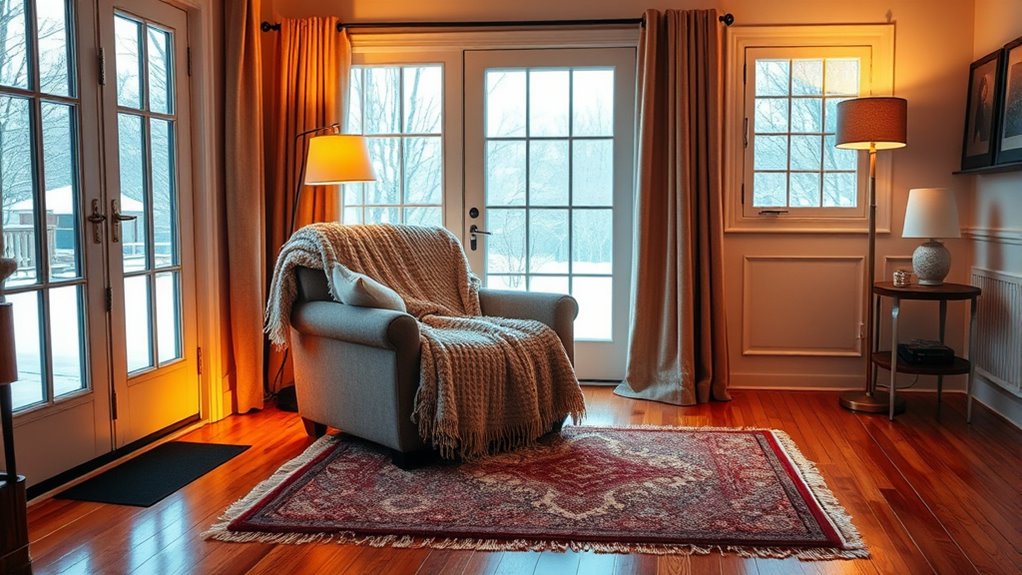

To winter-proof your home and keep seniors warm and comfortable, focus on simple upgrades like improving insulation in the attic, walls, and floors, and sealing drafts around doors and windows. Regularly maintain your heating system and use weather stripping and heavy curtains for added warmth. Adding rugs and space heaters safely can also help. These small improvements make a big difference—stay with us to discover more easy tips that guarantee a cozy, secure winter home.
Key Takeaways
- Improve insulation in attic, walls, floors, and basement to reduce heat loss and maintain consistent indoor warmth.
- Schedule regular heating system maintenance and replace filters to ensure efficient, reliable operation during winter.
- Seal drafts around doors and windows with weather stripping and use heavy curtains or thermal drapes for added insulation.
- Use rugs, thermal curtains, and space heaters safely to target chilly areas and enhance overall comfort.
- Keep vents unobstructed, wear layered clothing indoors, and utilize electric blankets for extra warmth and safety.

Are you prepared to keep your home warm and protected during the coldest months? Ensuring your space stays cozy isn’t just about turning up the thermostat; it’s about making smart upgrades that improve energy efficiency and comfort. One of the most effective ways to do this is by investing in insulation upgrades. Proper insulation traps heat inside your home, preventing drafts and reducing heat loss. Focus on areas like the attic, walls, floors, and basement, where warmth often escapes. Adding or enhancing insulation can considerably lower heating bills and create a more consistent indoor temperature, which is especially important for seniors who are more sensitive to cold.
Invest in attic, wall, and floor insulation to boost home warmth and energy efficiency during winter.
Along with insulation, regular heating system maintenance is vital. A well-maintained heater runs more efficiently and is less likely to break down during peak winter months. Schedule a professional inspection before the cold sets in to guarantee your furnace or heat pump is operating at ideal levels. Replace filters regularly, as clogged filters restrict airflow and diminish heating effectiveness. Consider having your technician check for leaks, worn parts, and proper thermostat calibration. These small steps can make a big difference in keeping your home warm without overworking your system, saving you money and preventing unexpected breakdowns that could leave you in the cold.
Beyond insulation upgrades and heating maintenance, there are other simple improvements you can make to enhance warmth and comfort. Installing weather stripping around doors and windows seals drafts, preventing cold air from sneaking in and warm air from escaping. Adding heavy curtains or thermal drapes can also help insulate your windows, especially during the night. Rugs or carpets on bare floors help retain heat and add a layer of insulation, making rooms feel warmer underfoot. You might also consider using space heaters in frequently used rooms, ensuring they’re safe and properly maintained, to provide targeted warmth where it’s needed most.
Don’t forget to check your vents and registers to make sure they’re open and unobstructed. Proper airflow ensures that heat circulates evenly throughout your space. Wearing layered clothing indoors and using electric blankets or heated throws can provide additional comfort without overtaxing your heating system. Regularly reviewing your home’s insulation and heating system helps you catch small issues before they become costly problems. Additionally, understanding your heating system’s efficiency can guide you in making informed upgrades that optimize warmth and energy savings. By taking these proactive steps, you create a warm, inviting environment for yourself and your loved ones, especially seniors who benefit greatly from a consistently cozy and safe home during winter.
Frequently Asked Questions
How Can I Prevent Ice Dams on My Roof?
To prevent ice dams on your roof, make certain proper roof ventilation so warm air doesn’t melt snow unevenly. Keep your gutters clear of debris and remove excess snow promptly, especially near the eaves. Proper ventilation maintains a cold roof surface, reducing ice dam formation. Regular snow removal prevents buildup, and combining these steps helps protect your home from costly damage caused by ice dams during winter.
What Are the Best Non-Slip Solutions for Icy Walkways?
To guarantee winter safety on icy walkways, you should focus on effective ice removal and non-slip solutions. Spread sand, kitty litter, or salt to improve traction and melt ice naturally. Install non-slip mats or adhesive tread strips on steps and walkways for added grip. Regularly clear snow and ice, especially during storms, to prevent slips and falls. These simple steps make your walkways safer and help keep seniors comfortable during winter.
How Do I Maintain Indoor Air Quality During Winter?
Think of your home as a cozy forest, where fresh air flows like gentle breezes. To maintain indoor air quality during winter, use air purifiers to filter out pollutants and allergens. Keep humidity levels balanced with a humidifier or dehumidifier, preventing dryness or dampness. Regularly open windows for short periods, and change filters often. These simple steps help create a healthy, comfortable environment that’s as invigorating as a walk in spring.
What Emergency Supplies Should I Keep for Seniors?
You should prepare an emergency kit with essential medical supplies like prescription medications, pain relievers, and any necessary medical devices. Include basic items such as bottled water, non-perishable snacks, a flashlight, batteries, and a first-aid kit. Make sure to also have warm blankets and extra clothing. Keeping these supplies on hand guarantees you’re ready for any unexpected situation, helping seniors stay safe and comfortable during emergencies.
How Can I Improve Home Insulation Cost-Effectively?
To improve home insulation cost-effectively, start by sealing drafts with draft stoppers on doors and windows. Add window coverings like heavy curtains or thermal blinds to retain heat. These simple steps reduce heat loss, save energy, and are budget-friendly. You don’t need expensive renovations—just focus on blocking drafts and insulating windows to keep your home warmer during the winter months.
Conclusion
Don’t let winter’s chill catch you off guard. With these simple improvements, you can keep your home warm and your loved ones comfortable all season long. Some might think it’s too costly or complicated, but many updates are affordable and easy to do yourself. Staying proactive now means fewer worries later. So, take action today—your seniors will thank you for a cozy, safe home that’s ready for winter’s worst.