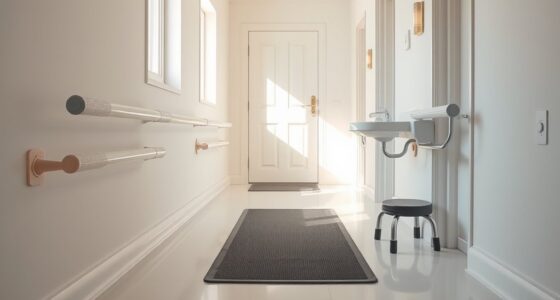
To make your kitchen safer and easier to use as you age, consider installing easy-access cabinets with pull-out shelves or lazy Susans to avoid reaching high or low. Use ergonomic countertops, better lighting, and anti-slip flooring to reduce falls and strain. Smart appliances can help with daily tasks and safety. These thoughtful upgrades promote independence and confidence. Keep exploring to discover more ways to create a kitchen suited for aging in place.
Key Takeaways
- Install easy-access cabinets with pull-out shelves, lazy Susans, or pull-down mechanisms for effortless storage retrieval.
- Incorporate ergonomic design features like adjustable countertops and deep sinks with lever handles for better accessibility.
- Enhance safety with improved lighting, including under-cabinet, motion-activated, and adjustable options to reduce hazards.
- Use smart appliances that enable remote control and voice commands to simplify daily kitchen tasks.
- Opt for anti-slip flooring and strategically placed items at waist level to minimize physical strain and prevent accidents.
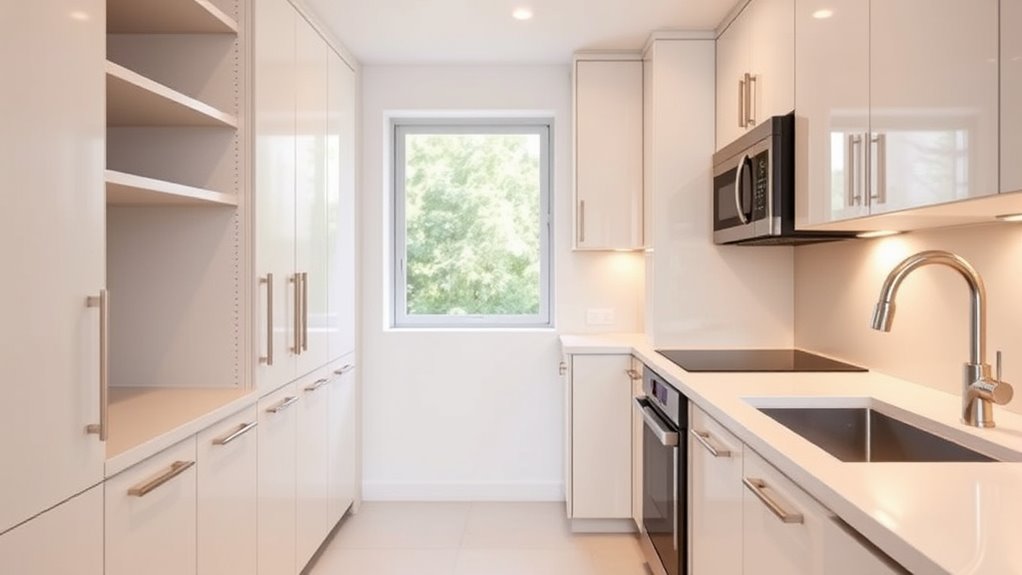
As you plan to stay comfortably in your home as you age, making strategic upgrades to your kitchen can greatly enhance safety and accessibility. One effective approach is to incorporate smart appliances that simplify daily tasks and improve safety. These devices, such as smart ovens, refrigerators, and voice-activated lighting, allow you to control functions hands-free or remotely, reducing the need to bend, stretch, or reach awkwardly. For example, you can preheat your oven with a voice command or check your refrigerator’s contents via your smartphone. This technology minimizes physical strain and helps you stay independent longer.
Another key upgrade is adopting an ergonomic design. You want your kitchen to be easy to navigate and work in without risking slips, falls, or strain. This means installing countertops at comfortable heights, which prevents you from hunching or overreaching. Deep sink basins with lever handles can be more accessible, and placing frequently used items within easy reach reduces unnecessary bending or stretching. Opt for pull-out shelves and lazy Susans in cabinets to make storage more accessible and eliminate the need to crawl on your knees or reach into tight spaces. Additionally, consider installing anti-slip flooring to provide a safer surface, especially if you experience balance issues or joint discomfort.
Adopt ergonomic design with accessible countertops, pull-out shelves, and anti-slip flooring for safer, easier kitchen use.
Easy-access cabinets are another essential upgrade that complements ergonomic design. Instead of traditional high cabinets, opt for lower, open-shelf configurations or cabinets with pull-down or pull-out mechanisms. These features allow you to access everything easily without the struggle of reaching or climbing on a stool. Lazy Susans or sliding shelves inside cabinets make it simple to find what you need without rummaging. Keep everyday essentials at waist level so you don’t have to bend down or stretch up to reach items. These adjustments not only promote safety but also boost your confidence in handling kitchen tasks independently.
Lighting plays a fundamental role in creating a safe environment. Bright, adjustable lighting reduces shadows and highlights potential hazards. Under-cabinet lighting, especially near work areas, ensures you can see clearly when preparing food or cleaning. Motion-activated lights are another smart addition that turn on as you enter or move around, eliminating the need to fumble with switches. Additionally, understanding the importance of color contrast in your kitchen design can help you distinguish between different surfaces and objects more easily, reducing the risk of accidents.
Frequently Asked Questions
How Much Do Easy-Access Cabinet Installations Typically Cost?
Easy-access cabinet installations usually cost between $1,500 and $4,000, depending on your material options and the size of your kitchen. The cost estimates vary based on whether you choose custom or pre-made cabinets, with options like pull-out shelves or open shelves affecting the price. You can save by selecting cost-effective materials, but investing in ergonomic designs enhances safety and convenience for aging in place.
Are There Specific Safety Standards for Aging-In-Place Kitchen Upgrades?
Yes, there are specific safety regulations and compliance standards you should follow for aging-in-place kitchen upgrades. These include ensuring adequate lighting, slip-resistant flooring, and accessible storage solutions. You need to meet local building codes and ADA (Americans with Disabilities Act) guidelines, which promote safety and accessibility. Staying compliant helps prevent accidents and guarantees your kitchen remains safe and functional as you age, giving you peace of mind.
Can I Retrofit Existing Cabinets to Be More Accessible?
Absolutely, you can retrofit your existing cabinets with some clever accessibility modifications. It’s ironic how a simple cabinet renovation can turn your kitchen into a haven for easier access—no need for a full overhaul. You might add pull-out shelves, install lever handles, or lower cabinet heights. These tweaks make your kitchen safer and more functional, proving that aging-in-place upgrades don’t have to be complicated or costly.
What Are the Best Lighting Options for an Accessible Kitchen?
You should install under cabinet lighting with LED fixtures to create bright, even illumination in your accessible kitchen. LED options are energy-efficient, long-lasting, and provide excellent task lighting. Position them underneath cabinets to eliminate shadows on counters, making it easier to prepare meals safely. This upgrade enhances visibility and safety, ensuring you can move around confidently and comfortably while cooking or cleaning.
How Long Does Installation of These Upgrades Usually Take?
Think of your kitchen upgrade as planting a seed—you’ll see growth over time. Typically, installation takes about one to two days for easy-access cabinets and related upgrades. However, the exact installation timeline depends on project scheduling and the complexity of your modifications. Planning ahead helps make certain a smooth process, so coordinate with your contractor to set realistic expectations and keep your project on track for a timely completion.
Conclusion
With these simple, smart kitchen upgrades, you’ll create a safe, seamless space that supports your independence. Easy-access cabinets, ergonomic designs, and thoughtful tweaks transform your kitchen into a haven of harmony. Embrace these enhancements to guarantee comfort, convenience, and confidence every time you cook or clean. By blending beauty with practicality, you’ll build a better, brighter kitchen that truly caters to your changing needs—making aging in place not just possible, but pleasurable.