
Widening your doorways to at least 32 inches and installing ramps with a gentle 1:12 slope greatly improve wheelchair access, safety, and independence in your home. These modifications make it easier to maneuver and eliminate struggles with tight spaces or stairs. Pairing these features with accessible flooring like low-pile carpet or vinyl creates smooth, secure surfaces. Exploring how these adjustments can transform your space will reveal even more ways to enhance comfort and accessibility.
Key Takeaways
- Widening doorways to at least 32 inches ensures comfortable wheelchair passage and improves safety.
- Installing ramps with a 1:12 slope ratio provides safe, manageable access over stairs.
- Choosing smooth, level flooring like vinyl or low-pile carpet facilitates easy wheelchair movement.
- Incorporating smart home technology allows effortless control of locks, lighting, and climate, enhancing independence.
- Structural modifications combined with accessible features create safer, more functional homes supporting wheelchair users.

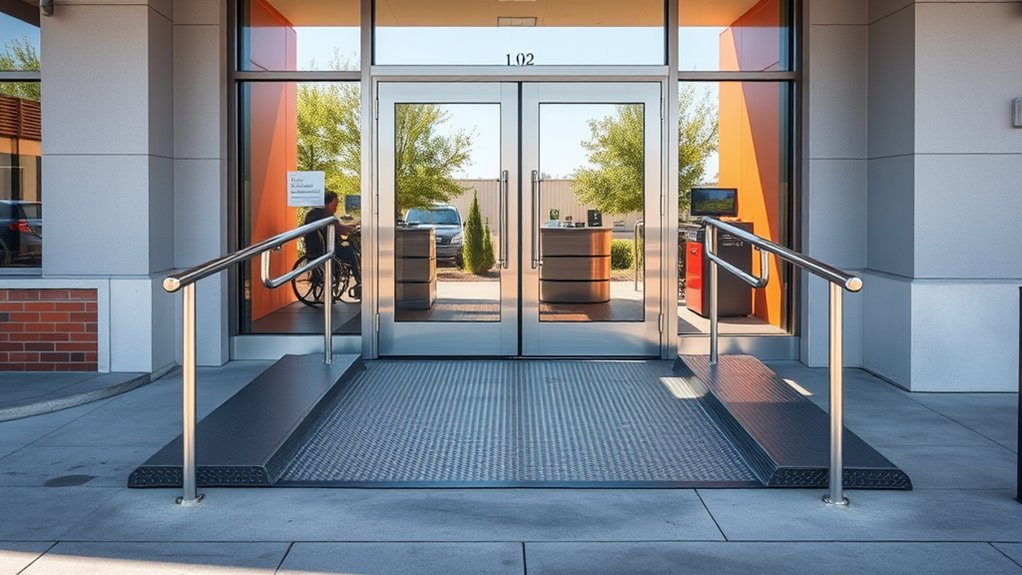
Making your home accessible for wheelchair users isn’t just about compliance; it’s about creating a space that promotes independence and comfort. When you’re remodeling with wheelchair access in mind, one of the most impactful changes you can make is widening doorways and adding ramps. Broader doors eliminate the struggle of maneuvering through tight spaces, making it easier to move freely from room to room. Ideally, doorways should be at least 32 inches wide to accommodate most wheelchairs comfortably. With wider openings, you won’t have to worry about squeezing through or accidental scrapes against door frames. Ramps are equally essential, replacing stairs with gentle inclines that allow smooth, safe entry and exit. When designing ramps, aim for a slope no steeper than 1:12 (for every inch of height, there should be at least one foot of ramp length). This ensures safe, manageable access without compromising your home’s aesthetic.
As you plan these structural alterations, don’t overlook the importance of accessible flooring. Smooth, level surfaces are vital for wheelchair mobility and can greatly enhance safety. Hardwood, vinyl, or low-pile carpet are excellent choices because they minimize resistance and reduce the risk of tripping. When integrating these flooring options, consider smart home integration to make daily routines more manageable. Smart technology can automate door locks, lights, and climate controls, which means you can operate essential features without needing to reach or exert effort. Voice-activated assistants or smartphone controls can be programmed to open doors or turn on lights when you approach, enhancing independence and convenience. Additionally, ensuring accessible flooring maintains consistency without thresholds can further improve mobility and safety.
Incorporating accessible features into your home isn’t just about physical modifications; it’s about creating an environment that adapts to your needs. By widening doors and adding ramps, you considerably improve mobility and safety. Pairing these changes with accessible flooring creates a seamless, functional space that’s easier to maneuver. Smart home integration further enhances this setup, allowing you to control various systems effortlessly. Together, these upgrades foster a home environment that’s not only compliant with accessibility standards but also truly supportive of your independence and comfort. Every change you make should prioritize ease of use, safety, and flexibility, so your home remains a space where you feel empowered and in control.
Frequently Asked Questions
What Permits Are Required for Installing Wider Doors and Ramps?
You need to obtain permits for installing wider doors and ramps, as it involves structural changes. Check your local building codes and permit requirements, which typically include submitting plans and inspections. Contact your city or county building department to guarantee compliance. Securing the necessary permits helps you avoid fines, ensures safety standards, and guarantees your upgrades meet all legal and code requirements before starting your remodeling project.
How Do I Choose the Best Materials for Durability?
You might think choosing materials for durability is easy, but don’t be fooled. Focus on material selection and durability testing to make sure your ramps and doors withstand daily use. Opt for sturdy options like aluminum or treated wood, and verify their strength through testing. By prioritizing quality and durability, you guarantee your remodel stands the test of time—and your patience. That’s the smart way to go.
What Is the Typical Timeline for Remodeling Projects?
Remodeling projects typically take anywhere from a few weeks to a few months, depending on scope and complexity. You should consider cost considerations when planning your timeline, as budget constraints can affect scheduling. Selecting a reliable contractor early on guarantees the project stays on track. Communicate your needs clearly, and ask for a timeline estimate upfront to avoid surprises and keep your remodeling on schedule.
Are There Financing Options or Grants Available?
You can find financial assistance and grant programs to help fund your remodeling project. Many local and federal organizations offer grants specifically for accessibility improvements, making it easier to cover costs. Additionally, some lenders provide specialized financing options that cater to home modifications. Exploring these avenues can ease your journey toward a more accessible space, ensuring you get the support needed to make your home more welcoming and functional.
How Can I Ensure the Design Complies With ADA Standards?
To guarantee your design complies with ADA standards, you should incorporate accessible fixtures like wider doors and ramps, and prioritize safety considerations. Check ADA guidelines for specific measurements and requirements, and consult with a professional architect or accessibility expert. They’ll help you verify that your plans meet all regulations, ensuring safety and accessibility for wheelchair users. Regularly review local codes, as they may have additional or updated standards.
Conclusion
By widening doors and adding ramps, you’re opening new pathways like a bridge connecting worlds. These simple changes transform your space into a welcoming haven, where accessibility flows effortlessly like a gentle stream. Every step you take to remodel isn’t just about compliance; it’s about creating an environment where everyone can move freely and comfortably. Think of your home as a welcoming garden—by making small adjustments, you invite all to step inside and feel truly at ease.