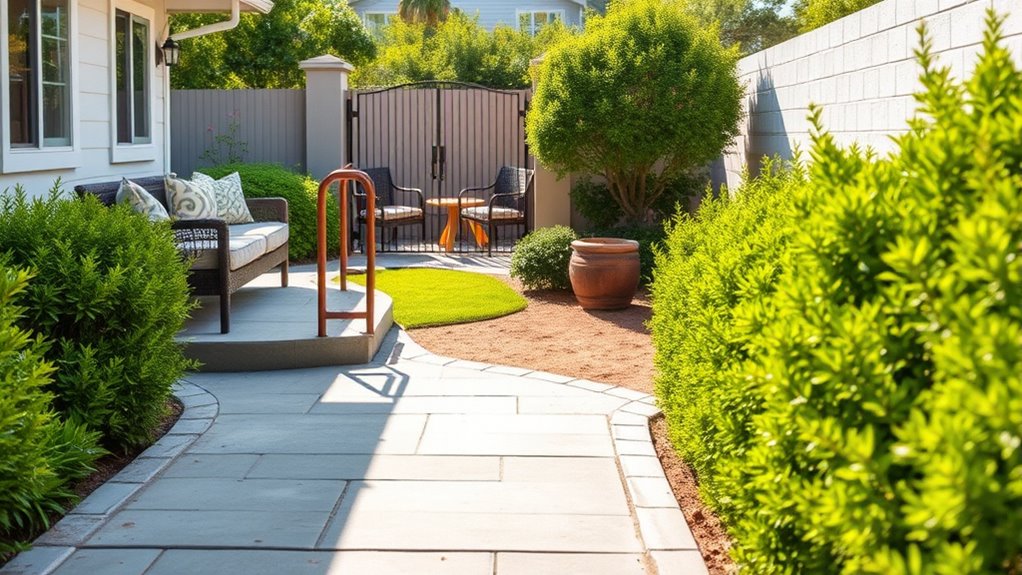

To create a senior-friendly yard, prioritize safety by removing trip hazards like uneven pavers and loose gravel, and keep pathways smooth, wide, and well-lit. Use soft ground coverings such as mulch or rubber mats, and install ramps instead of steep slopes. Organize tools to reduce clutter, maintain clear walkways, and add motion-activated lighting to improve visibility. Regularly inspect your outdoor space to address hazards promptly, ensuring your yard remains safe and accessible for years to come.
Key Takeaways
- Install smooth, level pathways with ramps and non-slip surfaces to ensure safe and easy navigation.
- Enhance outdoor lighting along walkways, stairs, and entry points to improve visibility and prevent trips.
- Remove trip hazards like uneven pavers, loose gravel, and protruding roots regularly.
- Use clutter-free vertical storage and organize tools to keep walkways clear and reduce tripping risks.
- Regularly inspect and maintain landscaping and lighting to address hazards promptly and ensure ongoing safety.
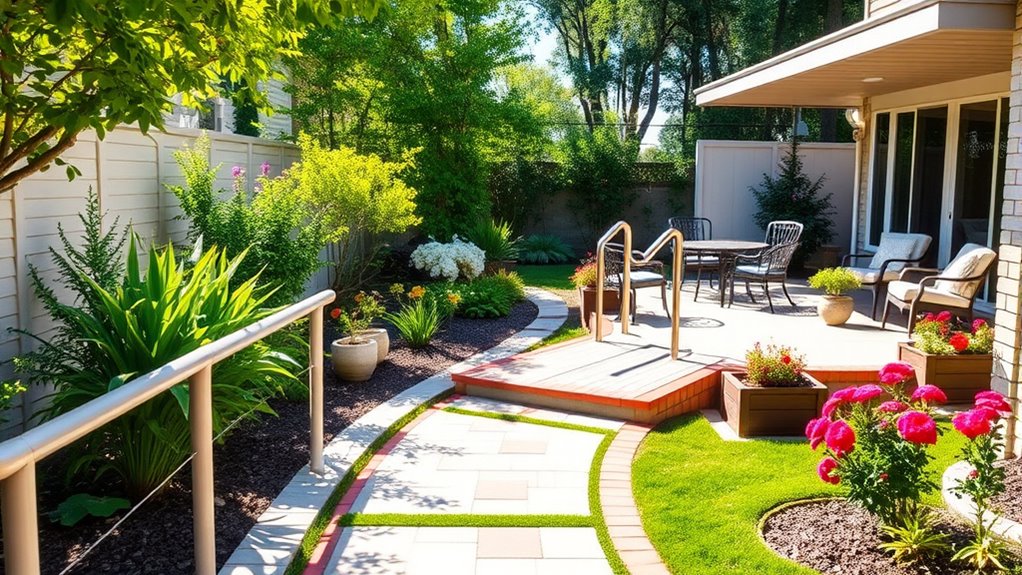
Creating a safe and accessible yard is essential for seniors to enjoy outdoor spaces confidently and independently. One of the most effective ways to achieve this is by focusing on landscaping safety. Start by removing any trip hazards, like uneven pavers, loose gravel, or protruding roots. Keep pathways smooth and level to prevent falls, and consider widening them if they feel cramped. Use soft, forgiving ground coverings such as mulch or rubber mats in high-traffic areas to cushion falls. Avoid steep slopes or, if unavoidable, install ramps with gentle inclines to ensure easy navigation. Regularly inspect your yard for hazards that may develop over time, like loose stones or damaged steps, and address them promptly. Proper landscaping safety not only minimizes risks but also makes your yard more inviting and functional. Utilizing vertical storage solutions can help keep clutter off pathways and reduce tripping hazards, further enhancing safety.
Another essential element is outdoor lighting. Well-planned lighting extends the usability of your yard into the evening hours, allowing you to move around safely after sunset. Install outdoor lights along pathways, stairs, and entry points to illuminate potential hazards clearly. Use a combination of solar-powered lights, LED fixtures, and motion sensors to enhance visibility while conserving energy. Position lighting at different heights and angles to eliminate shadows that can obscure uneven surfaces or obstacles. Consider installing lights on the underside of handrails or along the edges of steps for added safety. Good outdoor lighting also deters intruders and creates a warm, welcoming ambiance. When planning your lighting, think about accessibility—ensure switches are reachable from seated or standing positions, and opt for easy-to-operate fixtures.
Combining landscaping safety with strategic outdoor lighting transforms your yard into a secure haven that encourages outdoor activity without fear. Clear pathways with non-slip surfaces, free from clutter, and ensure all areas are well-lit. This attention to detail helps prevent accidents, especially for those with mobility challenges or diminished vision. Remember, the goal is to create an environment where you can comfortably enjoy gardening, relaxing outdoors, or simply taking in nature without worry. Regular maintenance of your landscaping and lighting ensures safety measures remain effective over time, keeping your yard a safe sanctuary. Making these thoughtful improvements not only boosts safety but also enhances your yard’s beauty and functionality, helping you enjoy outdoor living to the fullest while maintaining your independence.
Frequently Asked Questions
How Can I Ensure Yard Lighting Is Energy-Efficient?
To guarantee your yard lighting is energy-efficient, consider using solar lighting fixtures that harness sunlight during the day, reducing electricity use. Installing motion sensors can also help, as they turn lights on only when needed, saving energy and improving safety. These options are cost-effective and eco-friendly, making your yard safer and more sustainable. With solar lights and motion sensors, you get bright, efficient lighting without high energy bills.
What Plants Are Safest for Seniors With Allergies?
Imagine a senior with allergies who plants lavender in their garden. Lavender is a safe option because it’s hypoallergenic and resists common garden pests, reducing the need for harsh chemicals. It also requires minimal plant watering once established. When choosing plants, focus on those less likely to trigger allergies, and consider their resilience to garden pests. This approach guarantees a safe, beautiful yard that’s easy to maintain.
How Often Should Outdoor Safety Inspections Be Performed?
You should perform outdoor safety inspections at least once every three to six months. During these checks, examine your garden mulch for stability and make certain outdoor furniture is sturdy and free of rust or sharp edges. Regular inspections help spot hazards early, like loose pavers or overgrown plants, keeping your yard safe and accessible for seniors. Consistent attention ensures your outdoor space remains both beautiful and secure.
What Are Budget-Friendly Options for Yard Improvements?
Looking for budget-friendly yard improvements? You can explore simple landscaping ideas like planting easy-care shrubs or creating a cozy, mulched pathway. DIY garden projects are perfect for saving money and adding charm. With a little effort, you can transform your outdoor space into a safe, inviting area by repurposing old materials or adding low-cost accessories. These small changes boost safety and enjoyment without breaking the bank.
How Do I Maintain Wheelchair-Accessible Pathways?
To maintain wheelchair-accessible pathways, regularly check for and clear debris, and guarantee the surface remains smooth and even. Keep garden borders well-defined to guide navigation and prevent overgrowth. Add outdoor seating along the path for rests, and trim plants around the pathways to avoid obstructions. Consistent maintenance keeps the routes safe, accessible, and inviting, making outdoor spaces enjoyable and easy to navigate for everyone.
Conclusion
By making these five simple improvements, you create a yard that’s safe, accessible, and enjoyable for seniors. Remember, a well-prepared yard is like a well-tended garden—each careful step helps it flourish. When you prioritize safety and ease, you’re not just improving your outdoor space; you’re fostering independence and peace of mind. After all, an ounce of prevention is worth a pound of cure, so take these steps today for a safer tomorrow.