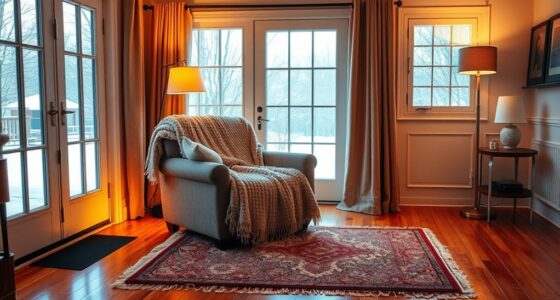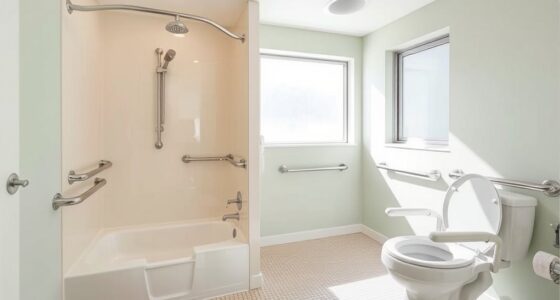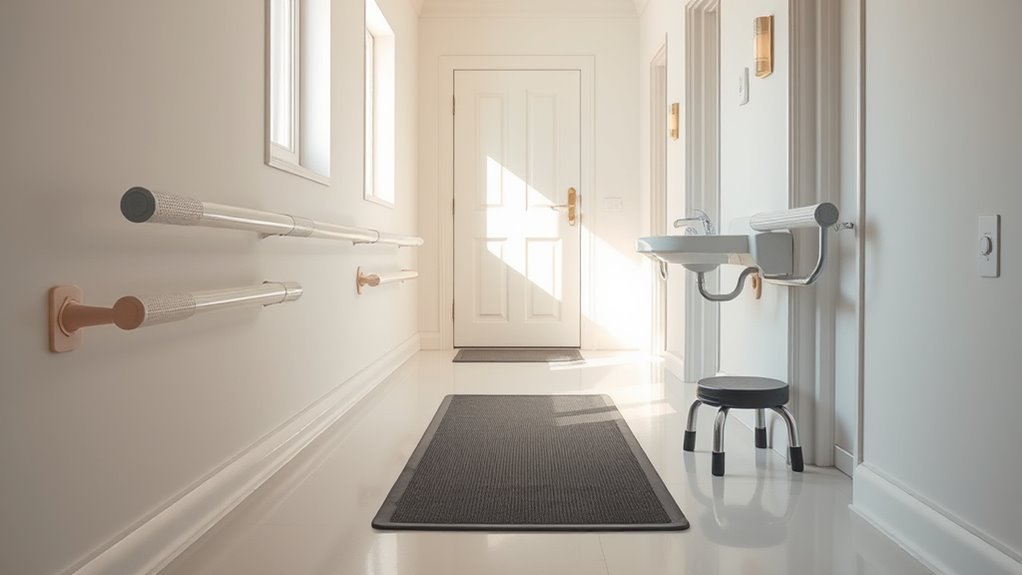

To make your home fall-proof, start by clearing clutter and securing loose rugs with non-slip backing. Install sturdy handrails on staircases and grab bars in bathrooms to add support. Keep walkways well-lit and free of cords or furniture to prevent trips. Use non-slip mats in wet areas and make certain furniture is easy to access without stretching. Small changes like these can boost your confidence at home—stay tuned for more helpful tips.
Key Takeaways
- Keep walkways clear of clutter, cords, and furniture to prevent tripping hazards.
- Install sturdy handrails on both sides of staircases for added support.
- Use non-slip mats in bathrooms and secure loose rugs with non-slip backing.
- Ensure all areas are well-lit, including hallways and entryways, with nightlights if needed.
- Arrange furniture at accessible heights and keep frequently used items within easy reach.
Falls are a leading cause of injury, especially among older adults, but many accidents can be prevented with simple precautions. When it comes to fall-proofing your home, focusing on home safety is essential. By making small adjustments, you can significantly reduce the risk of falls and support elderly mobility. Your goal should be to create an environment where every step you take feels secure and stable.
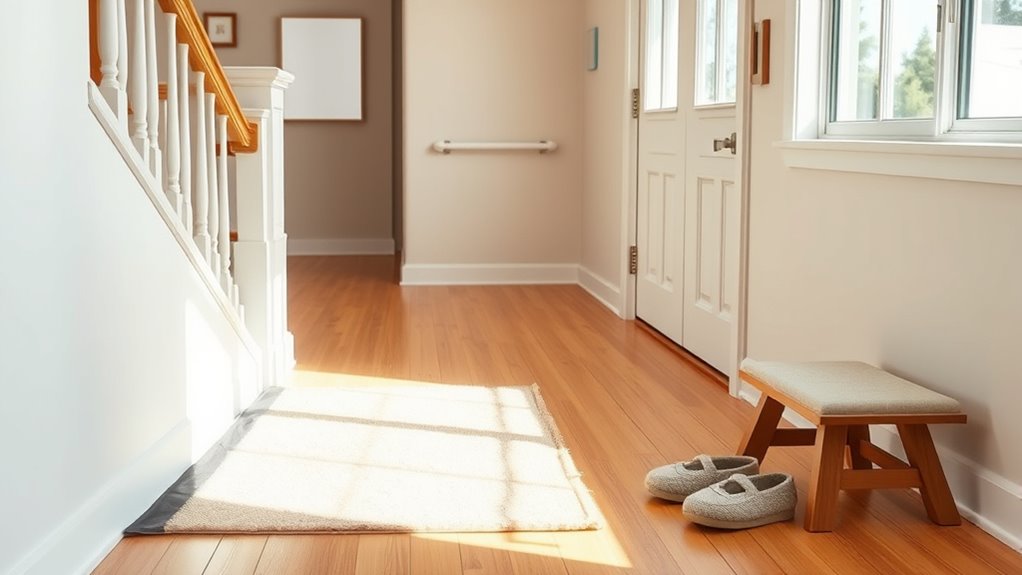
Start by evaluating your living space for hazards. Cluttered walkways, loose rugs, or uneven flooring can be trip hazards. Secure loose rugs with non-slip backing or remove them altogether. Keep pathways clear of furniture, cords, and other objects that can cause trips. Good lighting is also crucial; ensure that hallways, stairwells, and entryways are well-lit so you can see potential obstacles clearly. Installing nightlights can help navigate spaces safely during nighttime visits.
Another essential aspect of fall-proofing is improving stability support. Install sturdy handrails on both sides of staircases, and make sure they are securely anchored. In bathrooms, where slips are common, add grab bars near the toilet and inside the shower or bathtub. Using non-slip mats in these areas can further prevent slips. For elderly mobility, these modifications aren’t just about convenience—they’re about maintaining independence and confidence in daily activities.
Furniture arrangement plays a role as well. Position chairs and beds at a height that allows easy sitting and standing, reducing the effort needed to move around. Keep frequently used items within easy reach to avoid climbing or stretching, which can cause loss of balance. Keep shoes and slippers well-maintained and easy to put on; slipping out of footwear can lead to falls.
Physical activity and regular exercise are also essential in supporting balance and strength, especially for elderly mobility. Simple routines like walking, stretching, and balance exercises can enhance your stability. Consult with a healthcare professional to develop a safe fitness plan tailored to your needs.
Ultimately, fall-proofing your home involves paying attention to both your environment and your physical health. By implementing these home safety measures, you reduce hazards and boost confidence in your mobility. Remember, staying proactive about safety isn’t just about avoiding falls; it’s about empowering yourself to live independently and comfortably. With these small but impactful adjustments, you can create a safer home environment designed to support your mobility and well-being every day. Additionally, home modifications tailored for safety can further enhance fall prevention efforts.
Frequently Asked Questions
Are There Budget-Friendly Fall-Proofing Options Available?
Yes, there are budget-friendly options for fall-proofing your home. You can install affordable safety measures like grab bars in the bathroom, non-slip rugs, and nightlights to improve visibility. Reorganizing furniture for clearer pathways and securing loose cords also helps prevent falls. These simple, low-cost fixes make your home safer without breaking the bank, giving you peace of mind and reducing the risk of accidents effectively.
How Often Should I Reassess My Home for Fall Hazards?
You should reassess your home for fall hazards at least every six months, like tending to a garden that needs regular care. Regular hazard assessments keep your home safety premier, catching new risks before they become accidents. Seasonal changes, new furniture, or health issues can introduce hazards, so stay vigilant. Making these quick checks part of your routine ensures your home remains a safe haven for everyone.
Can Fall-Proofing Measures Be Effective for Children as Well?
Yes, fall-proofing measures can be very effective for children. You should implement child safety fall prevention strategies like securing furniture, using safety gates, and padding sharp edges. Regularly check for hazards and keep floors clutter-free. These steps help reduce the risk of falls and injuries, creating a safer environment for your kids. Staying proactive with fall prevention strategies guarantees your little ones are protected as they explore and grow.
What Are the Signs That My Home Needs Additional Safety Modifications?
You should consider safety assessments and hazard identification if you notice cluttered walkways, loose rugs, or uneven flooring. Also, look for poor lighting, exposed cords, or lack of grab bars around bathrooms and stairs. These signs indicate your home needs additional safety modifications. Addressing these hazards proactively helps prevent falls, especially for children, seniors, or anyone with mobility concerns. Regular assessments keep your home safe and fall-proof.
Do Fall-Proofing Products Require Professional Installation?
Many fall-proofing products don’t require professional installation, making DIY fall proofing an easy option if you’re comfortable with basic tools. However, some items like grab bars or stairlifts may need professional installation to guarantee safety and proper function. Always check product instructions and consider consulting a professional if you’re unsure, especially for complex or heavy equipment. Your safety is worth the extra effort or expense.
Conclusion
So, next time you’re dodging throw rugs or tiptoeing around spills, remember: your home isn’t a circus act. With a few simple fixes, you can turn it into a fall-free zone—no safety net required. Think of your house as a sleek, glide-proof skating rink, not a treacherous jungle gym. Stick to these tips, and you’ll be the star of your own safety show—minus the dramatic falls and bruises.