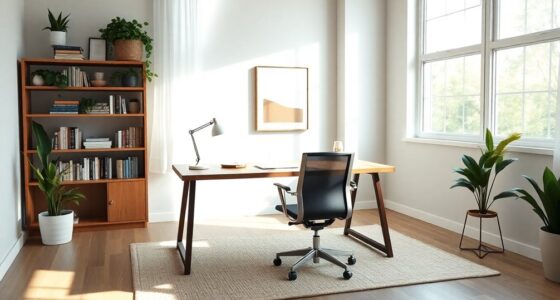
To create a cozy, focused study space at grandma’s house, pick a quiet, well-lit corner away from distractions. Use natural light and relaxing colors, and add comfy touches like cushions or rugs. Organize supplies with labeled bins and keep the area clutter-free. Personalize it with art or photos to inspire creativity. Make sure it’s fresh, ventilated, and maintained regularly. Keep exploring tips to turn any space into a perfect learning haven.
Key Takeaways
- Choose a quiet, well-lit corner away from distractions, using natural light and cozy decor for a welcoming atmosphere.
- Use ergonomic furniture and calming colors to create a comfortable, focused workspace for kids.
- Organize supplies with labeled storage and group similar items to keep the area tidy and accessible.
- Maximize natural ventilation and lighting, incorporating air purifiers and reflective surfaces for a healthy environment.
- Personalize the space with favorite decor, rotate learning materials, and maintain cleanliness to keep it engaging and inviting.
Choosing the Perfect Location for the Study Area

When selecting the best spot for your child’s study area at grandma’s house, it’s important to choose a quiet, well-lit space away from distractions. Noise control is vital, so pick a spot that minimizes sounds from household activities or outside noise. Consider privacy; your child needs a spot where they can focus without interruptions or feeling exposed. Avoid areas near busy entrances, kitchens, or shared living spaces. If possible, select a corner or enclosed nook that offers a sense of seclusion. Good lighting enhances concentration and reduces eye strain, so look for a space with ample natural light or add extra lighting if necessary. Additionally, incorporating unique and wicked planters can add a touch of personality and comfort to the study area, making it more inviting. Creating a dedicated study corner can also foster a routine and signal to your child that it’s time to learn. Being aware of privacy considerations ensures your child feels secure and undisturbed while studying. Ultimately, a quiet, private, and well-lit location helps your child stay focused and comfortable while studying at grandma’s house.
Designing a Comfortable and Inviting Workspace
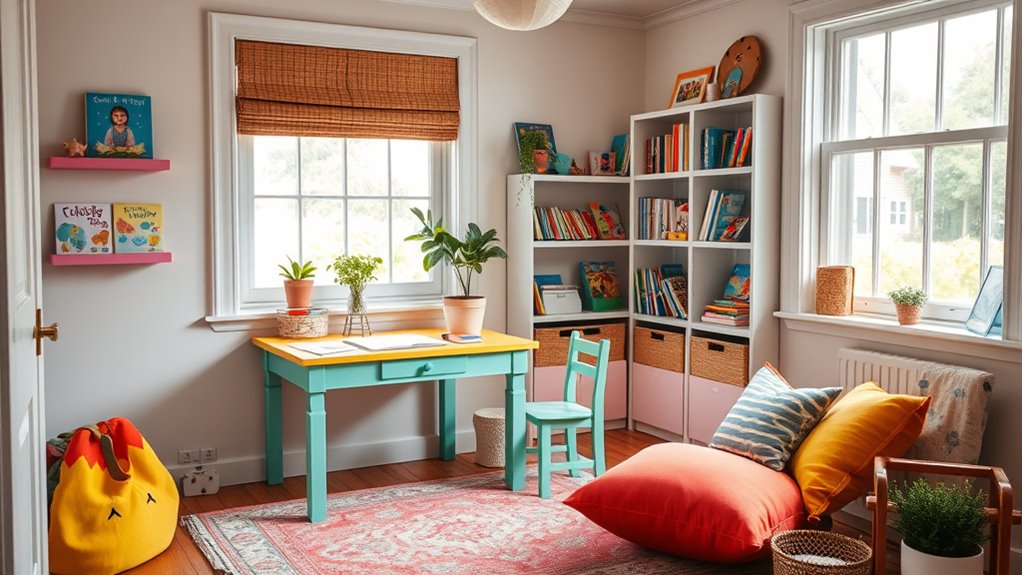
Creating a comfortable and inviting workspace encourages your child to focus and enjoy their study time. Start by choosing ergonomic furniture that supports good posture, like an adjustable chair and a desk at the right height. This helps prevent discomfort and keeps your child engaged longer. Opt for calming color schemes, such as soft blues, greens, or neutral tones, to create a soothing environment that minimizes distractions and promotes concentration. Keep the space uncluttered and well-lit, with natural light if possible, to boost alertness. Adding cozy touches like a small rug or cushions can make the area feel welcoming. When your child feels comfortable and relaxed, they’ll be more motivated to spend quality time studying and learning at Grandma’s house. Incorporating appropriate lighting and color temperature can further enhance the visual comfort and reduce eye strain, making it easier for your child to focus. Additionally, understanding playground operating hours and other local activity schedules can help plan breaks and outdoor activities for a well-rounded experience. Ensuring the space is safe and secure will also give you peace of mind while your child studies. Making sure the workspace is free from AI-generated distractions can help maintain your child’s focus and attention. Creating a dedicated learning environment can boost your child’s motivation and make study time more enjoyable.
Organizing Supplies and Learning Tools Effectively

To keep your child’s study area organized and efficient, start by designating specific spots for all supplies and learning tools. Use storage solutions like bins, shelves, and drawers to keep everything tidy and accessible. Label containers to help your child quickly find what they need, which encourages independence and responsibility. Group similar learning tools together—such as pencils, crayons, and markers—so they’re easy to locate. Consider a small caddy or container for frequently used items, reducing clutter on the desk. Regularly review and tidy up the space to prevent accumulation of unnecessary supplies. A well-organized environment not only makes study sessions smoother but also fosters good habits, helping your child develop a sense of order and focus at Grandma’s house. Incorporating effective storage solutions can further enhance the organization of the space, and utilizing organized storage techniques can make a significant difference in maintaining an efficient learning environment. Additionally, using storage containers designed for kids can make the process more engaging and fun for your child. Proper hydrocolloid material in storage areas can also help keep supplies dry and prevent damage, ensuring longevity and cleanliness. Implementing vertical storage solutions can maximize space, especially in smaller areas, making everything more accessible and reducing clutter.
Adding Personal Touches to Inspire Creativity
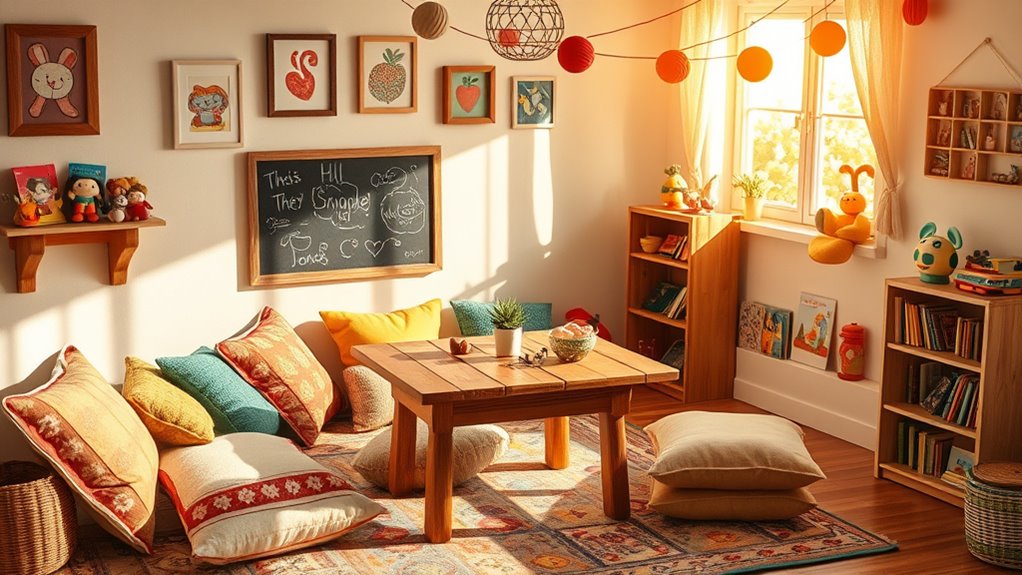
Adding personal touches to your child’s study space can spark their imagination and make the area feel more inviting. Incorporate decorative art, such as colorful posters or drawings, to create a lively atmosphere. These visuals can inspire creativity and make the space uniquely theirs. Motivational quotes displayed on the walls can boost confidence and encourage a positive attitude toward learning. Choose quotes that resonate with your child’s interests or goals, making them feel supported. Personal touches like their favorite photos or handmade crafts also add warmth and familiarity. When the space reflects their personality, your child will be more motivated to spend time there and engage in their studies. Incorporating personalized decor can further enhance the space’s appeal and foster a deeper emotional connection. Keep it fun and meaningful to nurture their creativity and love for learning.
Ensuring Proper Lighting and Ventilation

Make sure the study space gets plenty of natural light by opening windows or choosing a bright spot. Good airflow is key, so keep the area well-ventilated with fresh air or fans. Choose appropriate lighting fixtures that reduce glare and create a comfortable environment for your kid. Incorporating proper exfoliation techniques with gentle products can also help maintain healthy skin, which is beneficial during study time. Additionally, ensuring a safe and organized environment can reduce distractions and support better focus. Creating a space that fosters healthy habits can further enhance your child’s ability to concentrate and learn effectively. Using decorative elements like fabric decorating markers can personalize the space and make it more inviting.
Maximize Natural Light
Maximizing natural light in your grandma’s house creates a bright, inviting space for kids to learn and play. Proper window placement is key; position windows to catch sunlight during peak hours without glare. Use light-colored window treatments like sheer curtains or blinds to diffuse sunlight and reduce harsh shadows. Consider installing larger windows or adding skylights in areas where natural light is limited. Use reflective surfaces, such as mirrors, to bounce light around the room. Here’s a quick guide:
| Aspect | Tips | Benefits |
|---|---|---|
| Window Placement | Face windows south or east | Maximize daylight |
| Window Treatments | Use sheer curtains or blinds | Control light & glare |
| Window Size | Opt for larger windows | Increase natural light |
| Skylights | Install in low-light zones | Brighten darker corners |
Additionally, integrating AI security technologies can help protect the space’s digital devices, ensuring a safe learning environment online. Incorporating natural materials like wood or stone in decor can further enhance the cozy, farmhouse-inspired atmosphere, making the space more inviting for children to learn and grow. Leveraging proper lighting techniques, such as positioning windows thoughtfully, can further optimize the benefits of natural light, including improving mood and concentration. Implementing energy-efficient windows can also contribute to maintaining a comfortable indoor climate while reducing energy costs.
Ensure Good Airflow
Good airflow complements natural light by keeping the space fresh and comfortable for kids to learn and play. Proper air circulation improves air quality, reducing pollutants and allergens that can affect concentration and health. To achieve this, open windows regularly to allow fresh air in and encourage cross-ventilation. Use vents or exhaust fans in areas prone to humidity or odors. Keep furniture away from vents to promote even airflow. Maintaining good air quality prevents stuffiness and helps kids stay alert and focused. If outdoor air isn’t enough, consider air purifiers with HEPA filters. Regularly checking for dust and mold also ensures a healthier environment. Additionally, integrating SmartCR technology can optimize airflow systems for enhanced air quality and energy efficiency. Ensuring good airflow creates a lively, inviting space where kids can learn comfortably and safely.
Use Appropriate Fixtures
Choosing the right fixtures for your kids’ study space is essential to guarantee proper lighting and ventilation. Opt for adjustable lighting fixtures, like desk lamps or overhead lights with dimming options, to reduce eye strain. Incorporate decorative accessories that complement lighting without cluttering the area, keeping the space inviting. Ventilation can be improved with ceiling fans or well-placed vents, ensuring fresh air circulation. Use functional storage solutions like shelves and bins to keep the area organized, preventing clutter from blocking light or airflow. Proper fixtures create a comfortable environment where your kids can focus and learn. Remember, well-chosen lighting and ventilation fixtures, combined with thoughtful décor and storage, make the study space both practical and inviting.
Maintaining the Space for Continued Engagement

Ever wondered how to keep your child’s favorite study space at Grandma’s house inviting and functional over time? Regularly updating the space with fresh motivational prompts encourages continued interest. Routine updates, like changing decor or adding new learning tools, keep the environment stimulating. To help maintain engagement, consider this table:
| Action | Purpose | Example |
|---|---|---|
| Refresh motivational prompts | Inspire ongoing effort | New sticky notes with goals |
| Rearrange items | Prevent boredom and promote exploration | Move books or supplies around |
| Update learning tools | Keep resources relevant and exciting | Add new puzzles or stationery |
Consistent care ensures the space remains a lively, inspiring area for your child’s growth.
Frequently Asked Questions
How Can I Ensure the Study Space Is Safe for Kids?
To guarantee the study space is safe for kids, you should follow childproofing tips like securing furniture to walls, covering electrical outlets, and keeping cords out of reach. Use safety equipment such as corner protectors and socket covers to prevent accidents. Regularly check the area for hazards, and teach kids about safe behavior. This proactive approach helps create a secure environment where they can focus and learn confidently.
What Are Budget-Friendly Ways to Create a Study Area?
You might worry creating a study space is expensive, but it doesn’t have to be. Use affordable furniture like secondhand desks or repurposed items, and get creative with DIY organization solutions to keep everything tidy. You can transform a corner into a cozy learning area without breaking the bank. With a little effort, you’ll craft a functional, inviting space that encourages your kids’ learning and growth.
How Often Should the Study Space Be Updated or Refreshed?
You should refresh your kids’ study space organization every few months to keep it engaging and functional. Regular updates help maintain study routine consistency and prevent clutter from piling up. Observe how your kids use the space and make adjustments based on their needs—adding new supplies or changing the layout. This keeps their environment stimulating, encouraging focus, and fostering a positive attitude toward studying.
What Child-Friendly Decor Encourages Learning Enthusiasm?
To encourage learning enthusiasm, you should incorporate colorful accents and playful furniture into the space. Bright, vibrant colors stimulate creativity and focus, making the area inviting. Using furniture with fun shapes and patterns keeps kids engaged and comfortable. You can also add educational posters or themed decor that sparks curiosity. These elements create a lively, inspiring environment where kids feel motivated and enthusiastic to learn every time they step into the space.
How Do I Accommodate Multiple Children Sharing the Space?
Imagine a colorful garden where each flower has its own space to thrive. To accommodate multiple children sharing a study area, use group sharing tips like dividing the space with low partitions or arranging desks in a circle to foster collaboration. Implement space optimization strategies such as stacking shelves and multi-purpose furniture to maximize room. This approach creates a harmonious environment where everyone feels included and inspired to learn.
Conclusion
Creating a study space at grandma’s house is like planting a seed that blossoms into a love for learning. With the right location, cozy design, organized supplies, personal touches, and good lighting, you turn an ordinary corner into a magical place where your kids can thrive. Keep it inviting and fresh, like a bright sunbeam breaking through clouds. When you nurture this space, you’re giving your children a foundation that encourages curiosity and growth every day.