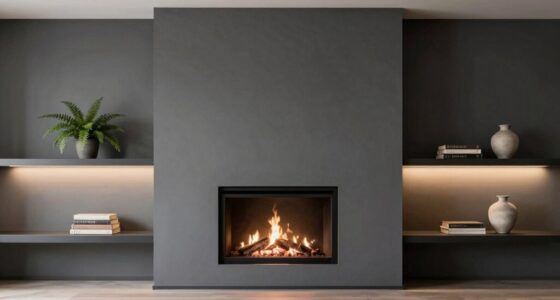
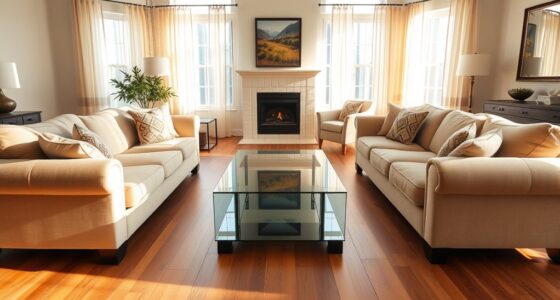
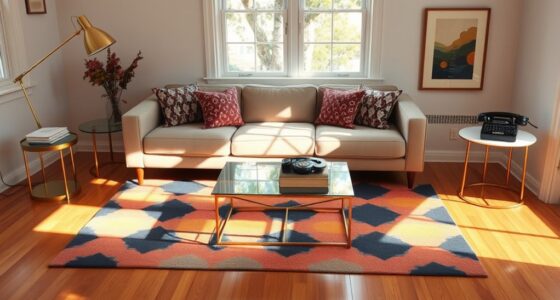
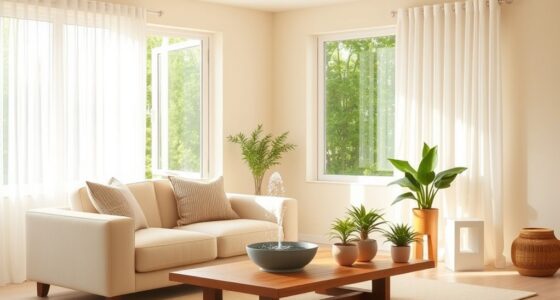
To craft the perfect ambiance, focus on balancing color temperatures to set the mood, mixing warm and cool lighting as needed. Use thoughtfully placed fixtures—like ceiling, task, and accent lights—to create layers that add depth and interest. Avoid glare and harsh shadows by positioning lights carefully. Layering different types of light and choosing the right fixtures transforms your space from functional to inviting. Keep exploring for more tips to master the art of interior lighting.
Key Takeaways
- Use layered lighting (ambient, task, accent) to create depth, balance, and flexibility in mood.
- Select fixtures with appropriate light dispersion and placement to highlight features and avoid glare.
- Match color temperatures to room function, warm tones for cozy spaces and cooler tones for task areas.
- Position fixtures thoughtfully to enhance room flow, highlight focal points, and prevent visual dissonance.
- Adjust the intensity and combination of lighting layers to craft the desired ambiance and mood.

Have you ever wondered how the right lighting can transform a room from ordinary to extraordinary? It’s all about understanding how to create the perfect ambiance, and that starts with the strategic use of light. One of the key elements to contemplate is color temperature, which influences the mood and feel of a space. Warm light, with a lower color temperature around 2700K to 3000K, creates a cozy, inviting atmosphere—ideal for living rooms and bedrooms. Cooler tones, ranging from 3500K to 5000K, mimic daylight and work well in kitchens, bathrooms, or workspaces where clarity and alertness are important. When choosing your fixtures, think about how the color temperature will complement the room’s purpose and decor. Mixing different temperature lights can add depth, but be cautious—too much variation can feel disjointed.
Fixture placement is equally essential. The goal is to distribute light evenly while avoiding harsh shadows or overly bright spots. For general lighting, ceiling-mounted fixtures like flush mounts or semi-flush mounts should be positioned centrally to provide balanced illumination. In larger rooms, consider layering your lighting with recessed lights or track fixtures to fill in dark corners. For task lighting, such as reading nooks or desks, place adjustable fixtures near eye level, ensuring they’re directed exactly where you need the light. Accent lighting, like sconces or picture lights, should be positioned to highlight artwork or architectural features without causing glare. Proper fixture placement not only enhances functionality but also shapes the room’s visual rhythm, guiding the eye naturally through the space.
Pay attention to how different fixtures cast light—some spread it widely, while others focus it narrowly. This variation allows you to create zones of light and shadow, adding depth and interest. For example, placing a pendant light above a dining table sets the scene, while wall sconces flanking a mirror or artwork add layers of softness. Remember, the placement should also prevent glare and discomfort; avoid placing fixtures directly in your line of sight or too close to reflective surfaces.
Ultimately, mastering fixture placement and understanding color temperature give you control over your room’s ambiance. When you thoughtfully position your lights and select the right tones, you craft a space that feels warm, welcoming, and perfectly tailored to its purpose. It’s about creating a harmony of light that elevates your interior from simply functional to truly inspiring.
Frequently Asked Questions
How Does Natural Light Influence Interior Lighting Choices?
Natural light greatly influences your interior lighting choices. You should consider window placement to maximize daylight harvesting, allowing sunlight to brighten your space naturally. This reduces reliance on artificial lighting during the day and creates a warm, inviting atmosphere. By thoughtfully designing window sizes and positions, you can enhance the overall ambiance, save energy, and ensure your rooms are well-lit with beautiful, natural daylight.
What Are the Latest Trends in Energy-Efficient Lighting?
Ever wonder what’s lighting the way forward? You’ll find that energy-efficient lighting now features cutting-edge LED innovations, offering longer-lasting, brighter options. You can customize the ambiance with adjustable color temperature, from warm cozy tones to cool modern hues. These trends help reduce energy bills and environmental impact while enhancing your space’s mood. Embrace these advancements to create a stylish, eco-friendly home that adapts to your needs and aesthetic.
How to Balance Ambient and Task Lighting Effectively?
To balance ambient and task lighting effectively, you should focus on layered lighting through well-chosen fixtures. Start with ambient lighting to set the mood, then add task lighting where you need more focus, like over a desk or kitchen counter. Use fixture selection to make certain each light complements the space and provides adequate illumination. Adjust brightness levels to create a cozy yet functional environment, enhancing your room’s overall ambiance.
What Lighting Options Suit Small or Dark Rooms Best?
For small or dark rooms, you should focus on bright, versatile lighting options. Wall-mounted fixtures work well, saving space while providing ample light. Incorporate accent lighting to highlight features or add warmth. Use layered lighting, combining these with a central ceiling fixture, to make the space feel larger and more inviting. Keep the color temperature warm to create a cozy atmosphere, making the room feel brighter and more welcoming.
How Can Smart Lighting Enhance Ambiance and Functionality?
Smart lighting enhances ambiance and functionality by allowing you to adjust brightness with dimming technology, creating the perfect mood. You can change color temperature to warm or cool tones, setting the desired atmosphere for any activity. With voice control or apps, you easily customize lighting, making your space more inviting, practical, and adaptable. This flexibility helps you craft a comfortable environment tailored to your needs and preferences.
Conclusion
Think of your home as a canvas, and lighting as the brush that brings your masterpiece to life. By mastering the art of ambiance, you’ll craft spaces that glow with warmth, style, and comfort. Remember, every room is a stage, and the right lighting sets the scene perfectly. So, experiment, adjust, and let your lighting tell your story. With these secrets, your home will shine brighter than ever, inviting everyone to bask in its beauty.