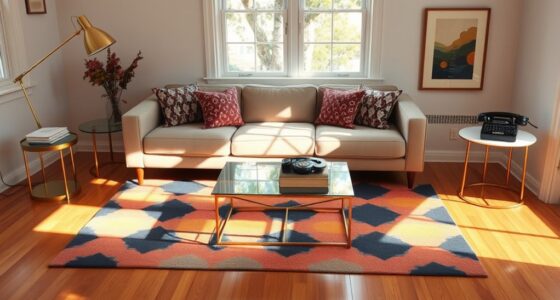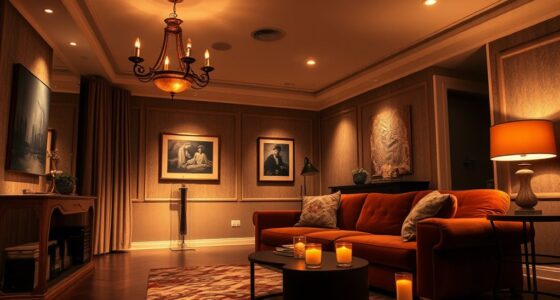
To merge your decor with your parents’ tastes, start by understanding each other’s preferences, focusing on shared elements like neutral colors or vintage accents. Incorporate personal touches and respect traditions through meaningful decor or heirlooms. Use versatile furniture that adapts to both styles and create defined spaces for individual expression. Balancing communication and collaboration guarantees everyone feels comfortable. Keep exploring ways to blend styles seamlessly, and you’ll find the perfect harmony in your shared space.
Key Takeaways
- Identify common preferences like neutral palettes or vintage elements to create a cohesive foundation.
- Incorporate personal touches, such as photos or heirlooms, that reflect individual stories and cultural backgrounds.
- Use versatile, multi-purpose furniture and neutral colors to balance contrasting styles seamlessly.
- Communicate openly about each other’s tastes and collaborate on decor choices to foster mutual understanding.
- Implement visual strategies like accent walls and decor accents to unify diverse styles and add visual interest.
Assessing Your and Your Parents’ Design Preferences

Have you ever wondered how your style preferences compare to your parents’ tastes? Recognizing the influence of cultural backgrounds helps you understand why certain colors, patterns, or materials appeal to them. Cultural influences shape their aesthetic choices, often rooted in traditions or heritage. Meanwhile, functional priorities play a key role—your parents may prefer durable furniture, easy-to-clean surfaces, or practical layouts, emphasizing comfort and usability. Evaluating these differences involves reflecting on what elements they value most in their space. Do they prioritize form over function, or vice versa? By understanding the cultural influences and functional priorities that guide their decisions, you can better identify areas where your styles align or diverge, setting the stage for a harmonious blending process. Additionally, considering space optimization can help ensure that your combined decor remains both beautiful and practical. Embracing a flexible mindset and exploring creative practice can open new avenues for integrating diverse styles seamlessly. Recognizing the importance of security considerations in your design choices can also help in maintaining a safe and comfortable environment for everyone involved. Furthermore, understanding emotional attachment to certain items can ease the process of merging styles and prevent unnecessary conflicts.
Finding Common Ground and Shared Aesthetic Elements
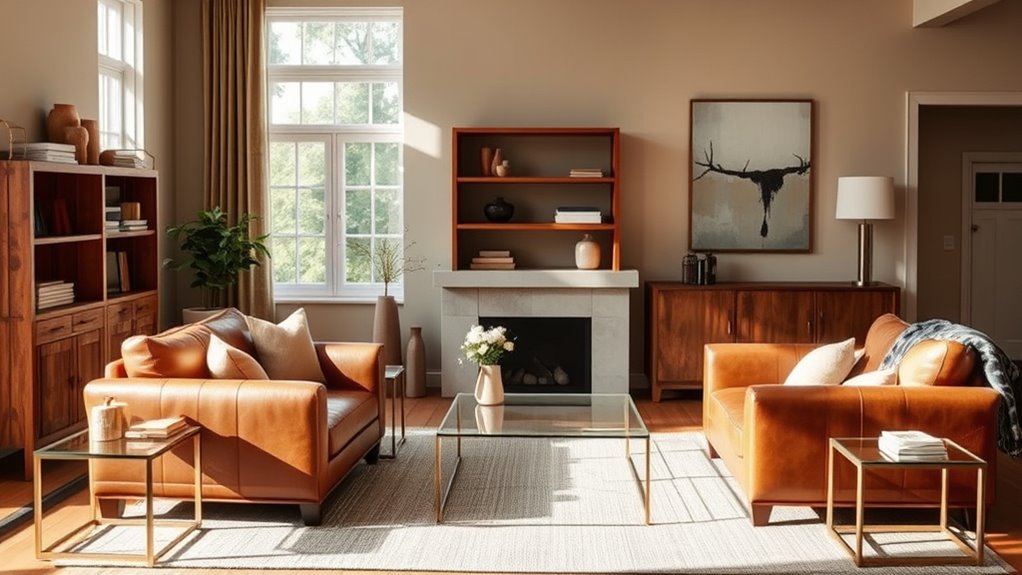
You can start by identifying mutual preferences that both you and your family enjoy, creating a foundation for your shared style. Incorporate common accents, like throw pillows or artwork, to unify different design elements. These small touches help establish a cohesive look that reflects everyone’s tastes. Additionally, choosing decor that emphasizes rustic lighting or vintage furniture can seamlessly blend your styles while maintaining a warm, farmhouse-inspired atmosphere.
Identifying Mutual Preferences
How can you uncover shared aesthetic elements when blending different styles? Start by identifying what excites both you and your parents. Do you both love vintage collectibles or appreciate sleek modern minimalism? Look for overlaps like natural textures, neutral color palettes, or simple forms. These commonalities become your foundation.
| Style A | Style B |
|---|---|
| Vintage collectibles | Modern minimalism |
| Earth tones, rustic charm | Clean lines, monochrome |
Focus on these shared preferences to create harmony. For example, combine vintage collectibles with minimalist furniture for a balanced look. Finding mutual preferences makes blending styles seamless and keeps everyone’s tastes respected.
Incorporating Shared Accents
Finding common ground when blending styles begins with selecting shared accents that reflect both your tastes. Cultural influences play a key role in creating meaningful shared accents, whether through artwork, textiles, or decorative objects. These elements serve as a bridge between different aesthetic preferences and add depth to your space. When considering furniture arrangement, aim for a balanced layout that showcases these accents without overwhelming either style. Incorporate items like throw pillows, rugs, or vases that combine cultural motifs with your parents’ preferences. This approach fosters harmony and emphasizes collaboration. By thoughtfully integrating shared accents, you create a cohesive environment that respects both styles, making your home feel unified and personalized.
Incorporating Personal Touches While Respecting Traditions
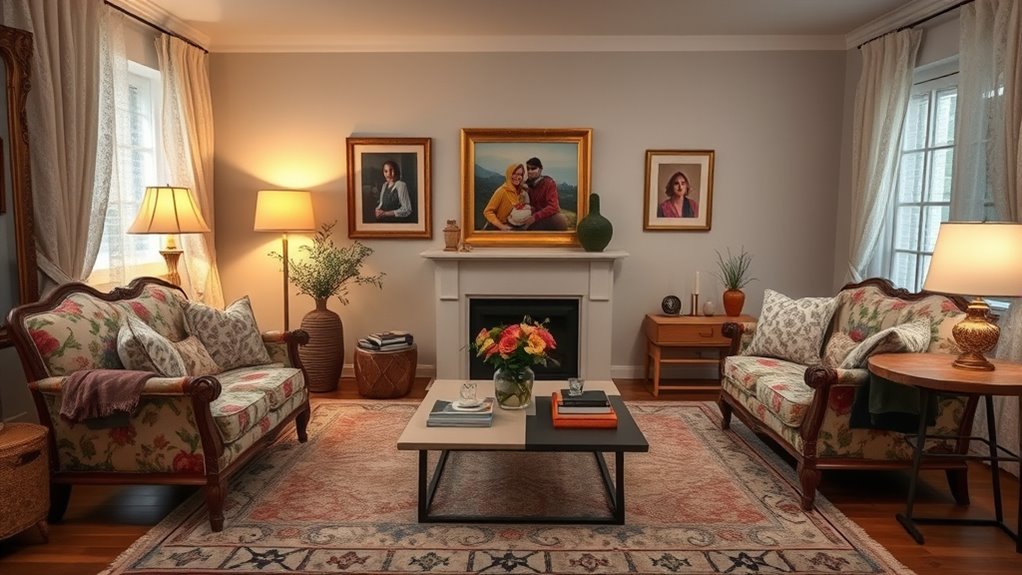
Balancing personal touches with traditional elements allows you to create a meaningful and unique style that still honors heritage. Incorporate personal memorabilia, like photos or heirlooms, to add your personality to shared spaces. These items tell your story and make your home feel authentic. At the same time, respect cultural symbolism by including meaningful artifacts or designs that reflect your family’s traditions. By blending these personal elements with traditional decor, you create a space that feels both genuine and respectful. Consider adding self watering plant pots to your decor, which combine functionality with aesthetic appeal and can complement both modern and traditional styles. Using innovative unique and wicked planters can further elevate your indoor gardening and personalize your space. Keep it simple—avoid cluttering with too many items—and choose pieces that evoke emotion and significance. Embracing personalized home decor can help you craft an environment that truly represents your identity while honoring the roots and customs that shape your family’s story.
Choosing Versatile and Adaptable Furniture Pieces
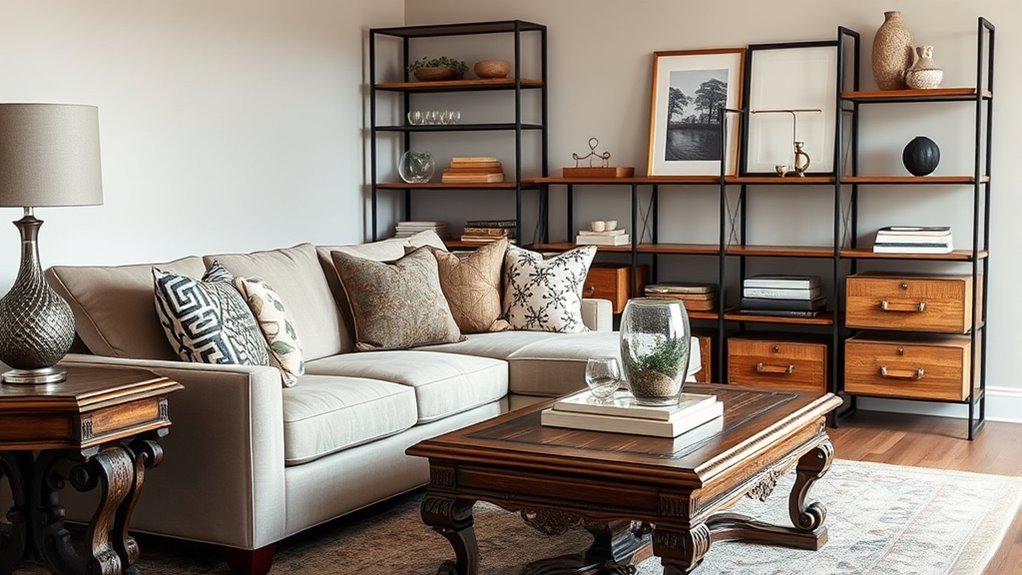
Choosing versatile and adaptable furniture pieces is essential for creating a flexible living space that can evolve with your needs. Multi-purpose pieces enhance furniture flexibility, allowing you to maximize your space without clutter. Imagine a sofa bed that doubles as a guest bed, a coffee table with hidden storage for blankets, or an extendable dining table that fits both intimate dinners and family gatherings. These options help you seamlessly blend styles while maintaining functionality. When selecting furniture, focus on pieces that can serve multiple roles and adapt to different settings. Incorporating modular design elements can further enhance your ability to customize your space over time. Additionally, understanding cybersecurity principles, such as secure Wi-Fi setups, can help protect your smart furniture and devices from potential threats. This approach guarantees your decor stays cohesive and practical, making it easier to merge your style with your parents’ tastes without sacrificing comfort or utility. Being aware of asset division laws and strategies can also inform your decisions when combining furniture styles from different sources, ensuring fair and efficient arrangements. Moreover, choosing pieces with inflation protection features can help your investment in furniture retain value over time. Incorporating versatile materials can also increase the longevity and adaptability of your furniture choices, providing more options for future style updates.
Using Color to Bridge Different Styles
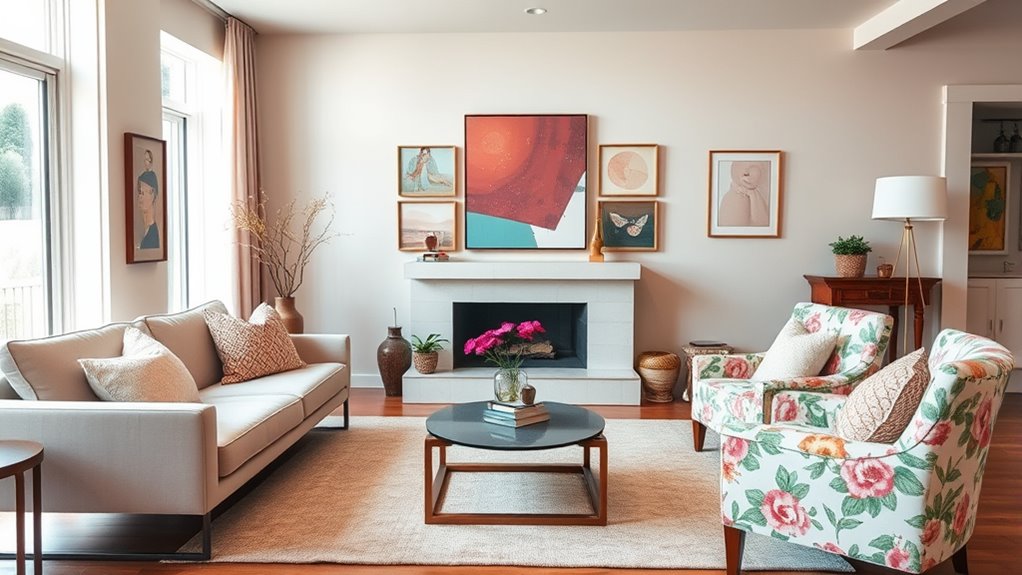
Using color is a powerful way to connect different styles in your space. By harmonizing color palettes, you create a seamless flow between contrasting elements. Accent walls also serve as bold strategies to unify diverse design themes while adding visual interest. Incorporating color trends from 2024 can further enhance the cohesiveness of your decor. Additionally, understanding the hours of popular beauty stores can help you plan your shopping trips for paint samples and decor accessories at optimal times. To maximize your decorating efforts, consider comfort solutions like quality materials and easy-to-maintain fabrics that can tie together diverse styles seamlessly. Moreover, selecting a high-contrast projector or one with adjustable contrast ratio can be a subtle yet effective way to complement your decor and improve your home cinema experience.
Harmonizing Color Palettes
Harmonizing color palettes can seamlessly connect different design styles, creating a cohesive and inviting space. To achieve this, focus on color coordination and palette balancing. First, choose a neutral base—think soft grays or warm beiges—that provides a unifying backdrop. Next, incorporate accent colors from each style, like bold reds or calming blues, to add interest without clashing. Finally, use overlapping hues or similar saturation levels to tie the elements together visually. Picture a living room where a plush beige sofa is complemented by throw pillows in both deep blue and vibrant red, seamlessly blending styles through shared tones. This approach ensures your decor feels harmonious, even when different styles coexist, making your space feel thoughtfully curated and welcoming.
Accent Wall Strategies
An accent wall offers a powerful way to unite different design styles through color. By choosing a bold hue or a wallpaper pattern that incorporates elements from both your and your parents’ tastes, you create a visual link. For example, a wallpaper with subtle patterns can introduce texture without overwhelming the space. Adjust your lighting options to highlight the accent wall; warm lighting enhances cozy, traditional styles, while brighter, cooler lights emphasize modern decor. Consider using lighting fixtures that complement both styles to tie everything together. An accent wall serves as a focal point, making it easier to blend diverse elements seamlessly. Incorporating color theory principles can help in selecting the perfect hue that balances both styles harmoniously. Additionally, understanding personality traits can inform your color choices, ensuring the space reflects the personalities within it. Recognizing relationship dynamics can also guide how you approach blending styles to create a more harmonious environment. With thoughtful color choices, wallpaper patterns, and lighting, you can create a harmonious space that reflects everyone’s personality.
Creating Defined Spaces for Individual Expression
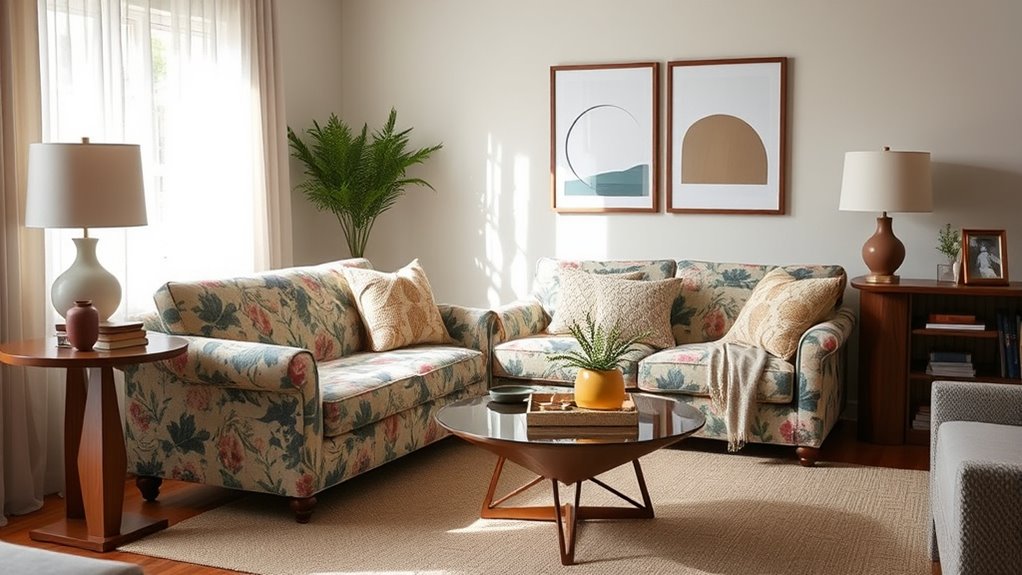
Creating defined spaces for individual expression allows you to showcase your unique style within a blended environment. It’s essential to carve out a personal space that reflects who you are while respecting shared areas. Consider these steps: 1. Dedicate a corner or small room as your personal space, decorated with your favorite colors, artwork, or collectibles. 2. Use room dividers or furniture placement to create physical boundaries that enhance privacy considerations. 3. Incorporate personal touches like photos or unique decor pieces that make the space distinctly yours. This approach guarantees you have a retreat for self-expression without infringing on shared areas. Additionally, decorating with personal items helps reinforce your individual identity within the shared environment. Creating personal spaces also encourages a sense of ownership and comfort in your living situation. Incorporating personal boundaries benefits both your privacy and your relationships with your parents. By defining these spaces, you maintain your individuality while fostering harmony with your parents’ tastes. It’s all about balancing privacy with unity in your living environment. Creating defined spaces helps establish clear boundaries that respect both personal and shared interests. Moreover, understanding how sound vibrations can influence mood and atmosphere can help you choose calming decor elements that enhance your personal retreat.
Communicating and Collaborating Throughout the Process

Once you’ve established your personal space, maintaining open lines of communication and working together with your family becomes key. Share your ideas about incorporating artistic expression and cultural influences into the decor, and listen to their perspectives. Collaborate on selecting pieces that reflect both your style and your parents’ tastes, ensuring everyone feels heard. Be honest about what resonates with you and respectful of their preferences. This ongoing dialogue helps prevent misunderstandings and fosters a sense of teamwork. Remember, blending styles isn’t just about decorating—it’s about honoring your cultural influences and creating a space where everyone feels comfortable. Incorporating wall organization systems can also help keep shared spaces tidy and functional, making it easier to see how different styles blend together seamlessly. By staying engaged and communicative, you can seamlessly merge your decor visions into a harmonious, meaningful environment.
Frequently Asked Questions
How Can I Balance Modern and Traditional Decor Without Clashing?
To balance modern and traditional decor without clashing, start with color coordination by choosing a neutral base that complements both styles. Mix patterns thoughtfully, pairing classic prints with sleek, modern designs to create visual interest. Incorporate statement pieces from each style, and keep accessories simple to avoid overwhelming the space. This approach helps you blend styles seamlessly, making your home feel cohesive and inviting.
What Are Subtle Ways to Blend Different Cultural Influences?
Imagine your home as a tapestry, woven with threads of different cultures. To blend these influences subtly, incorporate cultural motifs through small accents like textiles, artwork, or decorative objects. Use neutral backgrounds to let these details stand out without overwhelming the space. By balancing bold patterns with understated elements, you create a harmonious environment where diverse traditions coexist naturally, enriching your decor with quiet elegance and meaningful stories.
How Do I Involve My Parents in the Decorating Process?
You involve your parents in the decorating process by encouraging family collaboration, making them feel included. Share your ideas and listen to their preferences, fostering open communication. Be willing to make decorating compromises that satisfy everyone’s tastes, creating a harmonious space. Invite their input on color schemes, furniture, and decor choices, showing respect for their opinions. This collaborative approach guarantees everyone feels valued and invested in the final design.
What Budget-Friendly Tips Exist for Merging Styles Seamlessly?
Worried merging styles will break the bank? You can easily do this with DIY projects and simple swaps. Try updating your color schemes with inexpensive paint or fabric, and incorporate shared favorite patterns or textures. Mix and match existing furniture with new accessories, and use affordable decor pieces to create harmony. These budget-friendly tips help you blend styles seamlessly without overspending, making your space feel cohesive and personalized.
How Can I Update Inherited Furniture to Fit Current Trends?
To update inherited furniture and fit current trends, you can add a fresh coat of paint in modern colors, emphasizing vintage charm with a contemporary twist. Try DIY updates like new hardware or upholstery to personalize pieces. Sand and re-stain wood for a polished look, or incorporate trendy accents to blend old with new effortlessly. These simple steps help you preserve sentimental value while making your space feel fresh and stylish.
Conclusion
Blending your style with your parents’ is like mixing colors on a palette—you create a unique masterpiece. When I helped my parents redecorate, we found harmony by combining their vintage pieces with my modern touches, transforming the space into a reflection of us all. Remember, open communication is your brushstroke; it turns a potential clash into a beautiful, shared canvas. With patience and collaboration, you’ll craft a home that feels truly yours—and theirs.