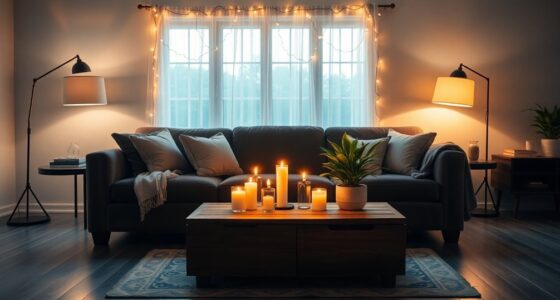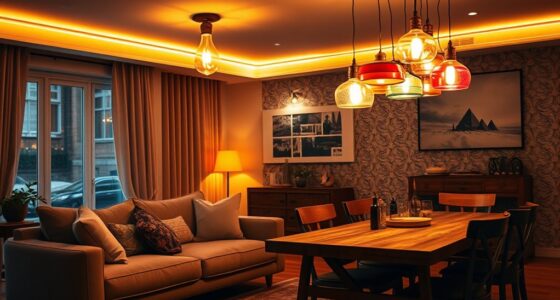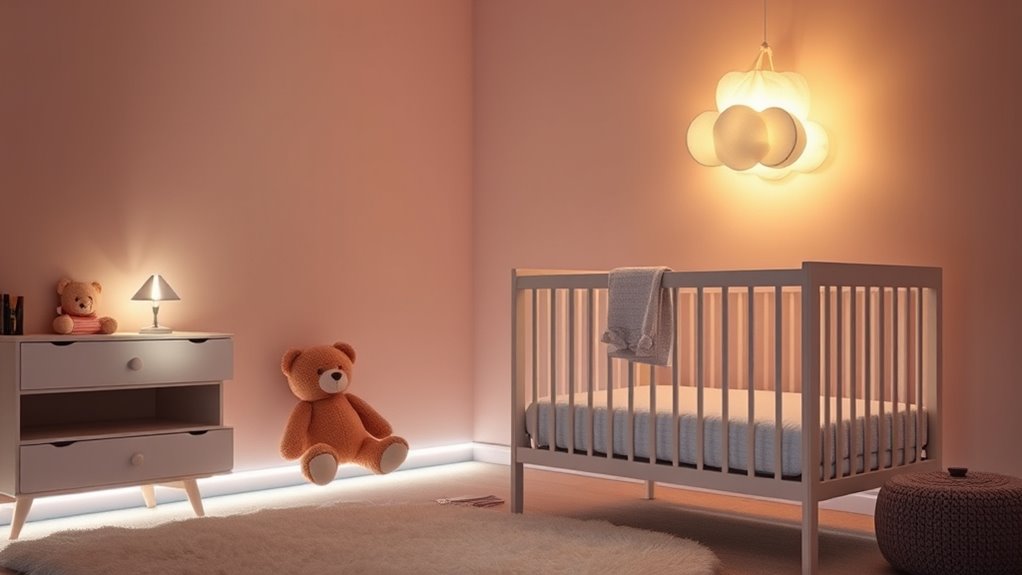

To create a safe, cozy sleep environment for your little one, use layered lighting with soft ambient, task, and gentle nightlights. Keep lights dim or adjustable at night to signal bedtime and prevent overstimulation. Position lights low and out of direct sight, avoid bright screens or flashing lights, and use warm hues like amber. Proper placement and adjustable lighting help promote healthy sleep habits and guarantee safety—continue to explore how to optimize your child’s lighting setup.
Key Takeaways
- Use layered lighting with warm, soft nightlights to create a calming environment that signals bedtime and promotes restful sleep.
- Incorporate dimmable lights in the child’s room to adjust brightness during routines and nighttime awakenings.
- Place lights low and out of direct sight to prevent glare and overstimulation, ensuring safety and comfort.
- Avoid bright, blue-toned, or flashing lights that can disrupt melatonin production and interfere with sleep quality.
- Use blackout curtains and soft indirect lighting to maintain a dark, soothing space conducive to healthy sleep habits.
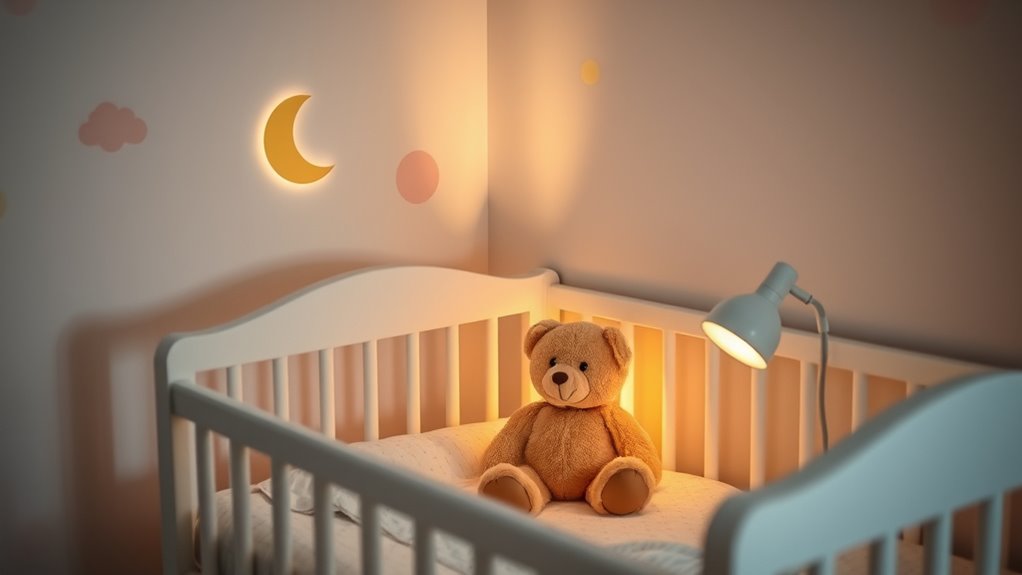
Creating the right lighting for little ones is vital for their safety, comfort, and development. When designing a space for your child, you want to guarantee that the lighting supports their nighttime routines and fosters a healthy sleep environment. Proper lighting helps signal to your child when it’s time to wind down and prepares them for restful sleep, while also preventing accidents during nighttime awakenings.
Start by establishing a layered lighting plan that balances ambient, task, and night lighting. Ambient light provides overall illumination and sets a calm mood, while task lighting is used for activities like diaper changes or reading bedtime stories. Nightlights play an essential role in creating a gentle glow that reassures your child without disrupting their sleep. Choose nightlights with warm, soft hues—think amber or dim yellow—since harsh or blue-toned lights can interfere with melatonin production, making it harder for your little one to fall asleep and stay asleep.
Incorporate dimmable lights in the nursery or child’s bedroom so you can easily adjust brightness during different parts of the nighttime routine. A dimmer switch allows you to lower the light when it’s time to settle down, signaling to your child that bedtime is near, and then brighten it slightly if they wake during the night. Using consistent lighting cues during nighttime routines helps establish a predictable schedule, making it easier for your child to understand when it’s time to sleep and when they’re allowed to be awake.
Your sleep environment should be free of overly bright or flashing lights that could startle or overstimulate your little one. Avoid placing bright lamps or screens in the room, especially close to bedtime. Instead, opt for soft, indirect lighting that promotes relaxation. If your child tends to wake up during the night, a gentle nightlight can guide them safely to the bathroom or door without startling them awake. Additionally, understanding how cookie usage can personalize your experience helps create a more comforting environment for your child.
Finally, consider the placement of your lighting sources. Keep lights at a low height and out of direct sight to prevent glare and distractions. Use blackout curtains to make the room darker during naps and nighttime sleep, but ensure there’s a way to introduce soft light when necessary. Maintaining a consistent sleep environment with appropriate lighting not only enhances your child’s safety but also supports healthy sleep habits, making bedtime routines smoother and more effective for everyone involved.
Frequently Asked Questions
What Type of Bulbs Are Safest for Children’s Bedrooms?
When choosing bulbs for your child’s bedroom, opt for LED bulbs made from safe, non-toxic materials. Look for bulbs with a warm color temperature, around 2700K to 3000K, to create a calming environment. These bulbs emit soft, non-harsh light that’s gentle on your child’s eyes and promotes better sleep. Avoid fluorescent bulbs, as they contain hazardous materials and can flicker, which may disturb your little one’s rest.
How Can I Prevent My Child From Adjusting the Lighting?
Did you know that child-proofing tips can effectively prevent your little one from adjusting the lighting? You can install lighting adjustment controls with child-proof covers or switch locks, making it hard for them to change settings. Additionally, keep remote controls out of reach and consider using dimmers with preset levels. These steps help guarantee your child’s safety and maintain consistent lighting, giving you peace of mind at all times.
Are Dimmer Switches Recommended for Nurseries?
Yes, dimmer switches are recommended for nurseries because they give you control over lighting levels, creating a calming environment for your little one. Opt for smart lighting with dimmer functions to easily adjust brightness and save energy. This flexibility helps you set the right mood for sleep and play, while also improving energy efficiency. Plus, smart lighting can be controlled remotely, making it simple to manage even when you’re busy.
What Is the Ideal Nightlight Brightness for Young Children?
Think of Goldilocks finding the perfect bed—your child’s nightlight should be just right. Aim for a brightness around 10-20 lumens to keep the room gentle yet visible, helping them feel safe. Pair this with childproof outlets and blackout curtains to eliminate hazards and excess light. This setup creates a cozy environment, easing your little one’s sleep without disturbing their dreams, just like Goldilocks’ perfect bed.
How Often Should I Check the Safety of My Child’s Lighting Fixtures?
You should check your child’s lighting fixtures regularly for safety. Aim for lighting maintenance every three to six months, ensuring fixtures are secure, cords aren’t frayed, and bulbs work properly. Conduct fixture inspection to spot any damage or wear. Promptly replace or repair faulty fixtures to prevent hazards. Consistent checks keep your home safe, providing peace of mind that your child’s environment remains secure and well-lit for their safety and sleep.
Conclusion
Remember, the right lighting keeps your little one safe and helps them sleep peacefully. But ironically, the very glow meant to protect can sometimes disturb their dreams or even hide hidden dangers. So, while you focus on creating a cozy, safe space, don’t forget that a little darkness at night might just be the safest, most soothing gift you can give. After all, sometimes the best light is the one that’s just enough to see, but not to wake.