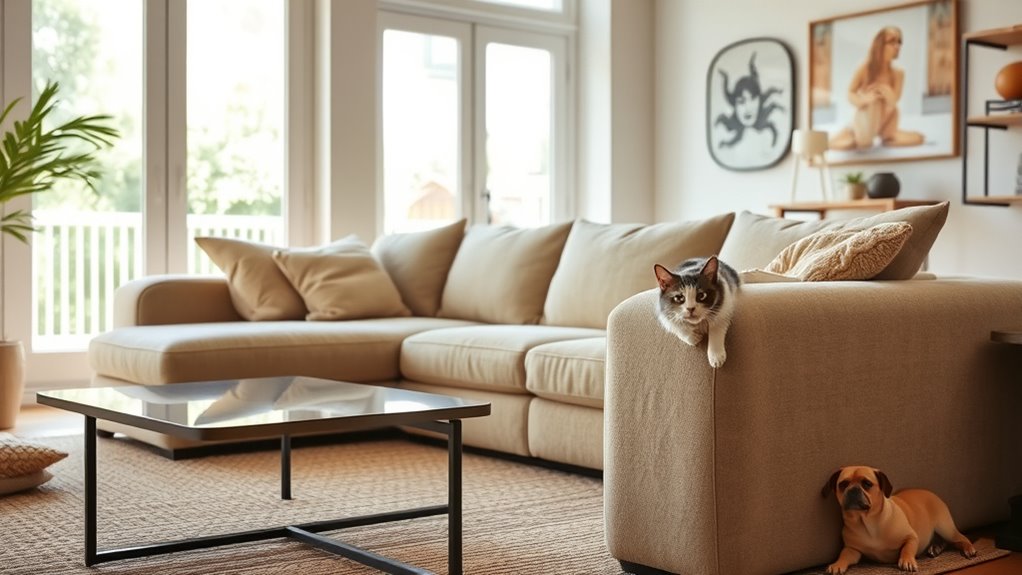

To choose pet-friendly furniture, focus on fabrics that resist pet hair, scratches, and stains, like microfiber or leather, which are easy to clean and durable. Opt for tightly woven or textured materials that hide fur well, and select darker colors or busy patterns to conceal hair. Incorporate protective measures like slipcovers or furniture shields, and maintain regular cleaning routines. Want practical tips on selecting the best fabrics and styles? Keep going to find out more.
Key Takeaways
- Choose tightly woven or textured fabrics like microfiber or leather to resist pet hair and make cleaning easier.
- Opt for durable, wear-resistant materials to withstand scratches, claws, and daily pet activity.
- Use dark colors or busy patterns to conceal pet hair and minimize visible fur.
- Regularly vacuum and spot-clean furniture with pet-safe tools to maintain cleanliness and reduce hair buildup.
- Consider slipcovers or protective fabrics to shield furniture from fur, scratches, and stains while simplifying maintenance.
Understanding Pet-Friendly Fabric Materials
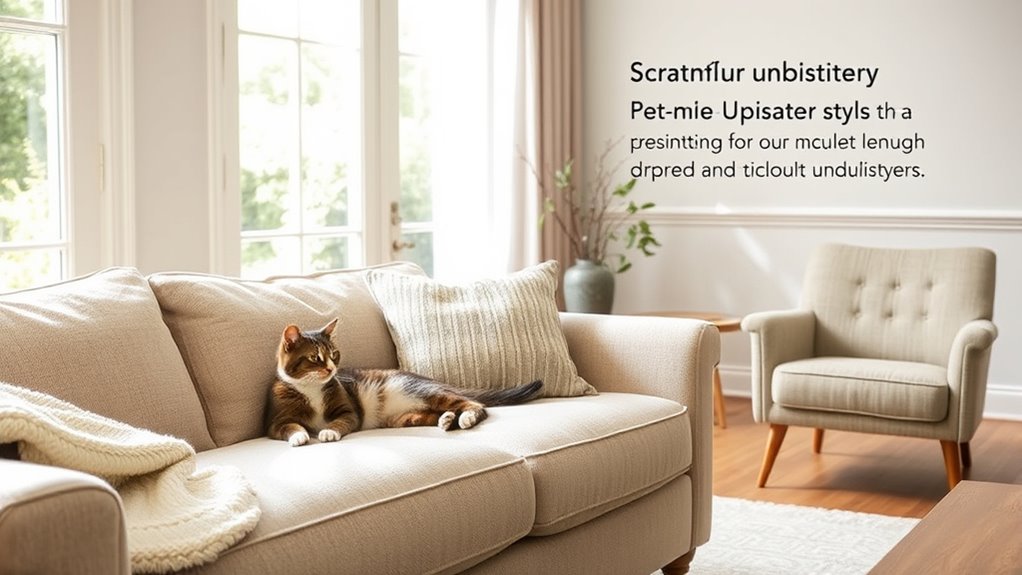
When choosing fabrics that are safe for your pets, understanding the materials’ properties is essential. You want fabrics that help with pet hair concealment, making cleanup easier and keeping your furniture looking tidy. Look for tightly woven textiles like microfiber or leather, which resist pet hair and are less likely to trap fur. Additionally, consider fabric allergy considerations; some materials can trigger allergic reactions or irritate sensitive skin. Natural fibers like cotton or linen are breathable but may attract more pet hair, so they might require more maintenance. Synthetic fabrics often offer durability and ease of cleaning, making them excellent choices for pet owners. By understanding these material traits, you can select furniture fabrics that are both pet-friendly and suitable for your lifestyle. Understanding fabric properties can help you make more informed choices, especially when considering durability and maintenance factors crucial for pet-friendly furniture. Recognizing fiber types can also guide you in selecting fabrics that are easier to clean and maintain with pets around. Furthermore, researching pet hair resistance qualities of fabrics can assist in reducing cleaning time and keeping your furniture looking fresh, and consulting treatments and coatings can enhance fabric resilience against pet-related wear and tear.
Key Factors to Consider When Choosing Furniture for Pet Owners
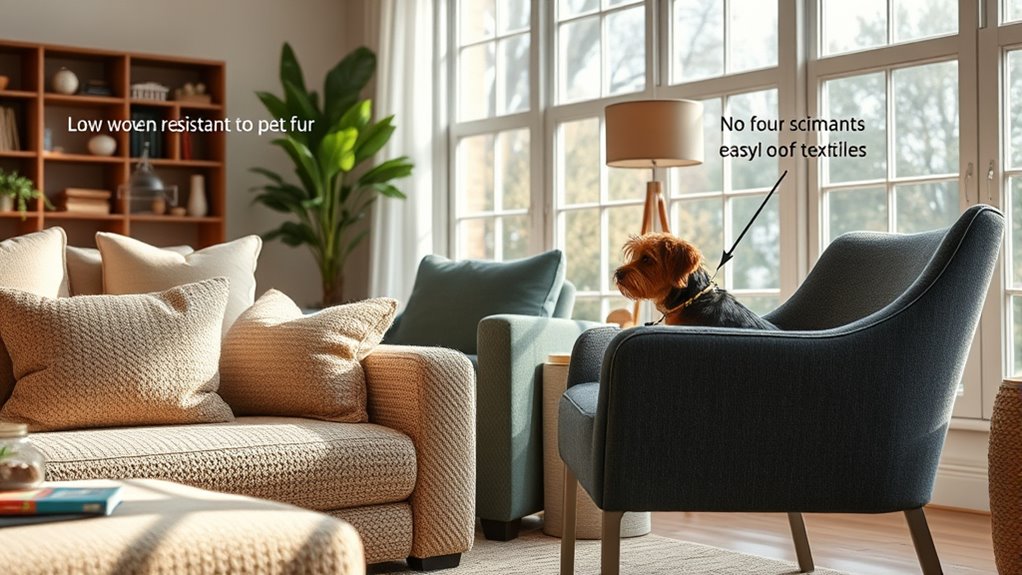
When selecting furniture for pet owners, you need to prioritize fabric durability and resistance to pet wear and tear. Pet-friendly materials that resist scratching and shedding can save you time on cleaning and repairs. Additionally, choose furniture that’s easy to maintain and clean, so fur and stains don’t become a constant hassle. Considering viral commercial star actress Laurel Coppock’s rise to fame through relatable and humorous campaigns, selecting furnishings that reflect a practical yet charming aesthetic can enhance your living space’s appeal. For added peace of mind, opting for unconditional love inspired designs can help create a comforting environment that celebrates the bond between you and your pets. Incorporating automation technologies into your furniture choices, such as removable covers or easy-to-clean surfaces, can further simplify maintenance and keep your space looking fresh.
Fabric Durability and Resistance
Choosing the right fabric for pet-friendly furniture hinges on its durability and resistance to wear and tear. You want fabric with high fabric strength that can withstand daily scratches, claws, and pet activity. Look for materials with excellent wear resistance, which remain intact despite frequent use. Strong fabrics like tightly woven textiles or synthetic blends tend to resist tearing and pilling better than delicate fabrics. Consider options that are less prone to snagging or fraying, so your furniture stays looking fresh longer. Durability also means selecting fabrics that can handle pet hair, stains, and moisture without quickly degrading. Using fabrics with anti-microbial properties can also help reduce odors and bacteria buildup caused by pets. Additionally, choosing fabrics with stain resistance can make cleanup easier and maintain the furniture’s appearance over time. By prioritizing fabric strength and wear resistance, you ensure your furniture remains comfortable, functional, and attractive, even with active pets around.
Pet-Friendly Material Choices
Selecting the right materials for pet-friendly furniture involves considering several key factors to keep your space looking great and functioning well. First, choose fabrics that conceal pet hair easily, such as tightly woven or textured materials. Second, prioritize pet hair concealment to reduce visible fur and make cleaning simpler. Third, consider fabric allergy considerations, opting for hypoallergenic options if you or your pets have sensitivities. Materials like microfiber, leather, or faux leather often resist pet hair and are easier to clean. Also, avoid fabrics prone to trapping hair or requiring frequent deep cleaning. Additionally, selecting durable fabrics ensures your furniture withstands scratches and wear from pets. Incorporating scratch-resistant materials can further prolong the lifespan of your furniture and minimize damage. Using easy-to-clean surfaces can help maintain hygiene and reduce maintenance time. Incorporating antimicrobial fabrics can also help prevent odors and bacterial growth, keeping your furniture fresher for longer. Moreover, choosing fabrics with resistance to pet stains can significantly reduce the effort needed for cleaning and maintenance. By focusing on these factors, you’ll select furniture that not only looks good but also stays fresh and allergy-friendly, making your pet-friendly space comfortable for everyone.
Maintenance and Cleaning Ease
Maintaining clean furniture is essential for pet owners, and the right materials can make this task much easier. Choosing fabrics that facilitate pet hair removal helps keep your space tidy. Look for smooth, tight-weave fabrics or microfiber that trap hair, making it simple to brush off or vacuum. Stain-resistant fabrics are also a smart choice, as they resist spills and stains, reducing the need for intensive cleaning. Regularly vacuuming and spot-cleaning with gentle solutions will keep your furniture looking fresh. Consider removable covers or slipcovers that you can toss in the wash. Additionally, selecting dog-friendly fabrics designed to withstand pet wear and tear can prolong the lifespan of your furniture. By selecting furniture with these maintenance-friendly features, you’ll save time and effort while keeping your home clean and comfortable for you and your pets.
Top Durable Fabrics That Resist Fur and Scratches
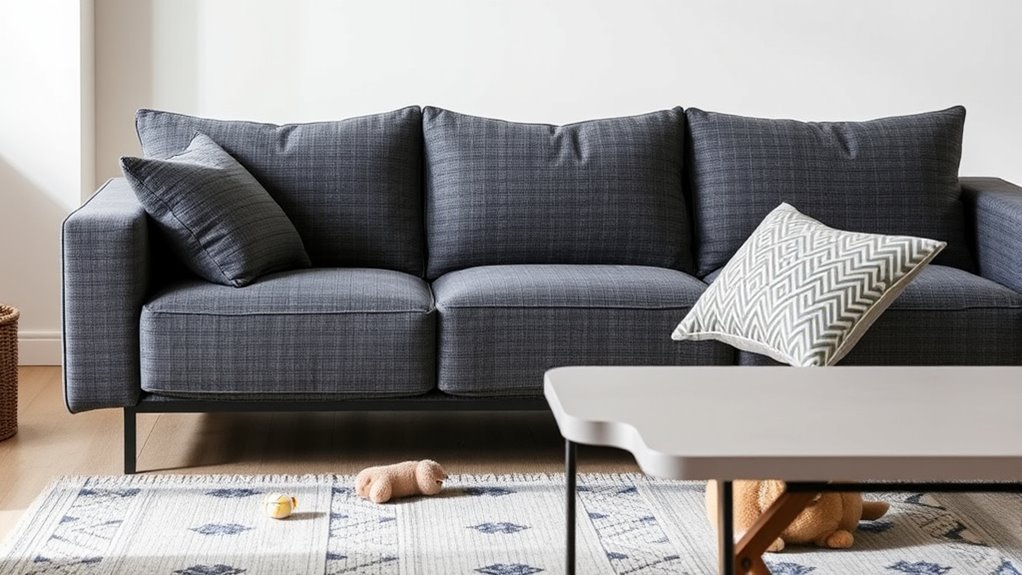
When it comes to pet-friendly furniture, durability is key, especially for fabrics that can withstand fur and scratches. Choosing the right material can make cleanup easier and keep your furniture looking fresh. Consider these top options:
- Tightly woven fabrics: They hide pet hair with pet hair camouflage and resist scratching better than looser weaves. Tightly woven fabrics are also less likely to trap pet dander, making them easier to clean and maintain. Additionally, understanding the AI’s role in cybersecurity can help protect your smart home devices that control furniture settings or security cameras, enhancing overall pet safety.
- Outdoor-grade fabrics: Designed for durability, these fabrics are tough enough to handle claws and shed fur with ease.
- Fabrics with scratching deterrents: Some textiles are treated to discourage scratching, reducing damage and maintaining appearance.
- Incorporating proper fabric selection strategies can further enhance your furniture’s longevity and appearance.
Opting for these fabrics helps keep your space clean and stylish. Combining pet hair camouflage with scratching deterrents ensures your furniture remains inviting and damage-free despite furry friends.
The Benefits of Microfiber and Leather for Pet-Friendly Spaces
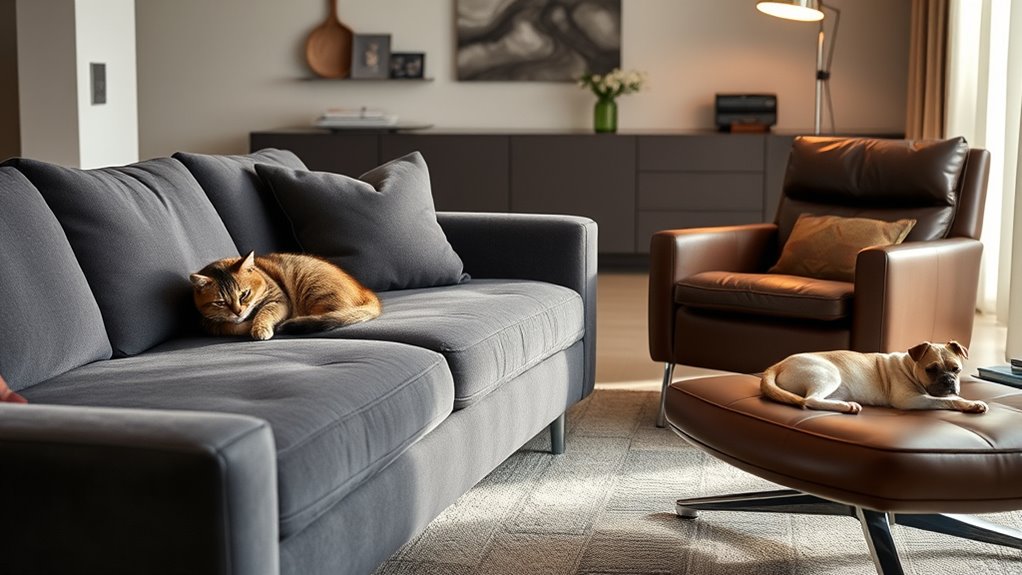
Microfiber and leather are excellent choices for pet-friendly spaces because they’re durable and resist stains, making cleanup easier. You’ll find that both materials require minimal maintenance and can handle daily wear and tear without losing their look. Choosing these fabrics helps keep your space looking fresh and fur-free with less effort. Additionally, selecting energy-efficient appliances for your home can reduce overall wear and tear on furnishings by maintaining consistent temperature and humidity levels. Proper use of fabrics with stain resistance can further mitigate the impact of pet-related messes and keep your furniture looking its best. Incorporating pet-friendly fabrics enhances the longevity of your furniture while supporting a clean, comfortable environment for your pets. Regularly reviewing QA metrics related to furniture durability and cleanliness can help you make informed choices and maintain a high-quality pet-friendly space. For added protection, consider applying furniture protectants that can help repel liquids and fur, extending the life of your furniture.
Durability and Stain Resistance
Because pet-friendly spaces require fabrics that can withstand heavy use, microfiber and leather stand out for their exceptional durability and stain resistance. These materials resist scratches and pet hair, making cleanup easier. Plus, they offer a variety of fabric color options to match your decor. Consider these benefits:
- Pet hair concealment: Microfiber’s textured surface hides pet hair better than smoother fabrics.
- Stain resistance: Leather resists spills and stains, giving you peace of mind.
- Long-lasting durability: Both materials endure frequent use without showing wear or tears.
With microfiber and leather, you can enjoy stylish, pet-friendly furniture that’s easy to maintain and built to last. These fabrics keep your space looking fresh, even with active pets around.
Easy Maintenance and Cleaning
Maintaining a pet-friendly space becomes much easier with fabrics like microfiber and leather, which are known for their simple cleaning routines. These materials are excellent for pet stain prevention and furniture odor control because they resist absorbing liquids and odors. Cleaning spills is quick—just wipe with a damp cloth or vacuum away pet hair. Microfiber’s tight weave traps dirt and debris, making it less likely to stain, while leather’s smooth surface prevents pet dander from settling. Use the table below for quick tips:
| Material | Pet Stain Prevention | Easy Cleaning Method |
|---|---|---|
| Microfiber | Yes, resists stains | Vacuum or wipe with damp cloth |
| Leather | Yes, prevents odor and stains | Wipe with dry or damp cloth |
Additionally, choosing fabrics with high durability can help ensure your furniture withstands active pets over time. It’s also beneficial to select pet-friendly fabrics that are specifically designed to resist scratches and wear, extending the life of your furniture. These fabrics keep your furniture looking fresh with minimal effort.
How to Identify Easy-to-Clean Upholstery Options

Are you wondering how to spot upholstery that’s easy to clean? Focus on fabric features that enhance stain resistance and fabric longevity. Here are three key tips:
- Look for tightly woven fabrics: They prevent fur and spills from sinking in and are easier to wipe clean.
- Choose synthetic fibers like polyester or microfiber: These materials are naturally stain-resistant and durable, making them ideal for pet-friendly homes.
- Check for treated fabrics: Some upholstery is coated with stain guard or waterproof finishes, which markedly reduce cleaning effort.
Tips for Maintaining Fur-Resistant Furniture
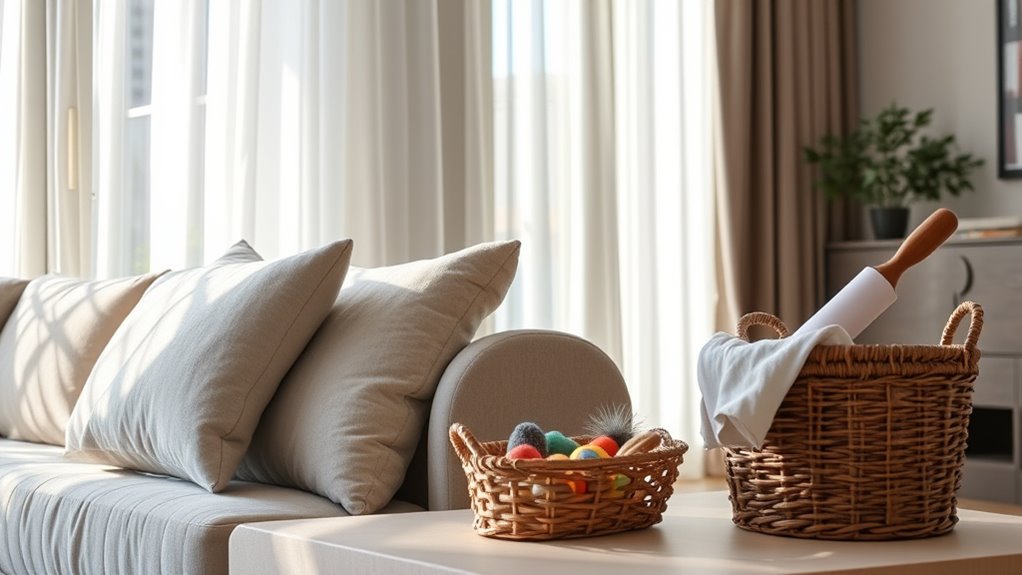
To keep your fur-resistant furniture looking its best, regular vacuuming is essential to remove pet hair and debris. You should also consider applying protective fabric treatments that create an additional barrier against fur and stains. These simple steps can greatly extend the life and appearance of your furniture.
Regular Vacuuming Techniques
Regular vacuuming is essential for keeping fur-resistant furniture looking its best. To maintain its fur-repelling qualities, you should establish a consistent vacuum frequency—at least twice a week. Using the right upholstery tools makes a difference; a brush attachment effectively lifts pet hair without damaging fabric. Here are three tips to optimize your routine:
- Schedule vacuuming on high-traffic days to prevent fur buildup.
- Use upholstery tools designed for pet hair to reach into crevices and seams.
- Adjust the suction level for delicate fabrics to avoid damage while removing fur effectively.
Protective Fabric Treatments
Applying protective fabric treatments can considerably enhance your furniture’s resistance to pet fur and stains. Fabric protection involves applying pet safe treatments that create a barrier against fur, liquids, and dirt. These treatments penetrate the fibers, making it easier to clean and maintain fur-resistant furniture. When choosing a fabric protection product, verify it’s pet safe and suitable for your furniture’s material. Regularly reapplying these treatments helps maintain their effectiveness over time. Additionally, always follow the manufacturer’s instructions for application and safety. By investing in high-quality fabric protection, you reduce fur buildup and stains, keeping your furniture looking fresh and clean longer. Protective fabric treatments are a simple yet effective way to make pet-friendly furniture more manageable and fur-resistant.
The Role of Color and Pattern in Hiding Pet Hair
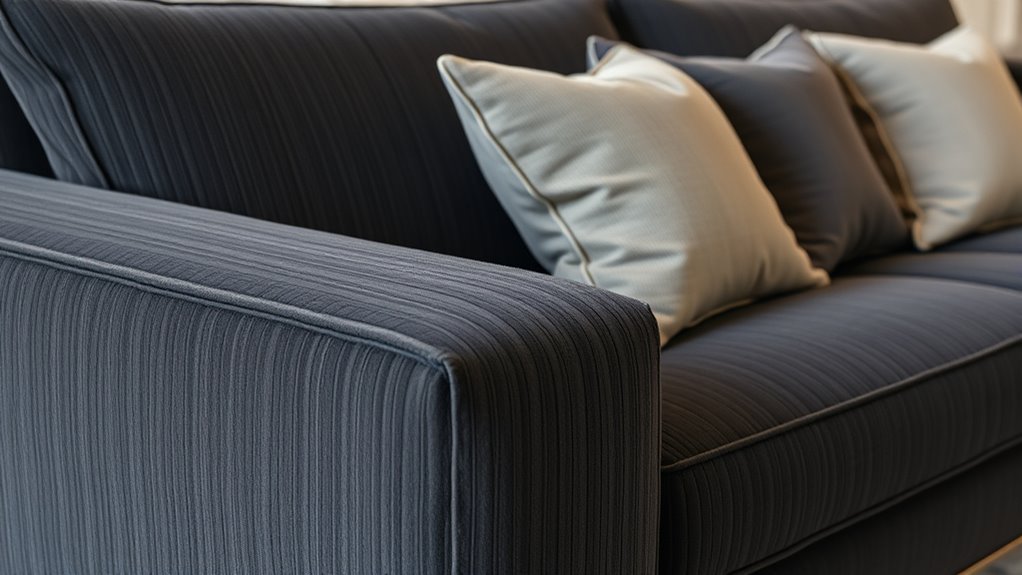
Choosing fabrics with the right color and pattern can make pet hair much less noticeable. For effective pet hair concealment, opt for colors that blend with your pet’s fur, creating natural color camouflage. Patterns also play a key role; busy designs can distract the eye from stray hairs. Consider these tips:
- Select solid, darker shades like charcoal or navy to hide pet hair better.
- Use patterned fabrics such as plaids or florals to break up hair visibility.
- Avoid light or pastel colors that make pet hair stand out more easily.
Comparing Natural vs. Synthetic Fabrics for Pet Homes
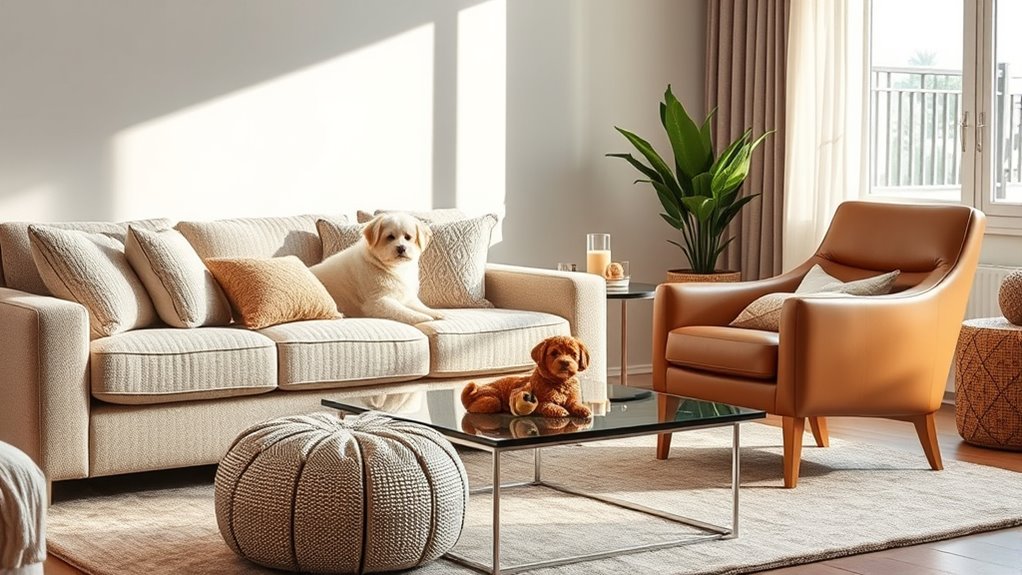
When selecting fabrics for your pet’s living space, understanding the differences between natural and synthetic materials can help you make the best choice. Natural fabrics like cotton and linen are breathable and generally better for fabric allergy prevention, but they may trap pet hair more easily, requiring frequent pet hair removal. Synthetic fabrics such as polyester and microfiber tend to resist pet hair and are durable, making cleaning easier. However, they can sometimes cause allergies if not properly maintained. Consider this comparison to guide your decision:
| Feature | Natural Fabrics | Synthetic Fabrics |
|---|---|---|
| Pet Hair Removal | More prone to trapping hair | Easier to clean and remove |
| Allergy Prevention | Better for fabric allergy prevention | May cause allergies if not cleaned regularly |
| Durability | Less resistant to wear | More durable |
| Breathability | High | Lower |
| Maintenance | Requires frequent cleaning | Easier to maintain |
Choose based on your pet’s needs and your cleaning routine.
Protective Measures to Extend Furniture Longevity

To keep your furniture looking its best despite pet activity, implementing protective measures can make a significant difference. Understanding pet behavior and adjusting furniture placement are key. Here are three strategies:
- Use slipcovers or furniture protectors to shield upholstery from scratches and fur.
- Place scratching posts or designated pet zones away from your main furniture to redirect pet behavior.
- Arrange furniture to create barriers that limit access to vulnerable areas, reducing the chances of damage and fur accumulation.
Styling Your Space With Fur-Friendly and Stylish Fabrics

Incorporating fur-friendly fabrics into your home décor allows you to create a stylish space that’s both beautiful and practical for pet owners. Opt for textured or tightly woven fabrics like microfiber or leather, which resist pet hair and are easy to clean. Thoughtful furniture arrangement can also minimize pet hair buildup, such as placing sofas away from high-traffic areas. Use tools like lint rollers or pet hair removers regularly to keep your space tidy. To help you choose, here’s a quick comparison:
| Fabric Type | Pet Hair Removal | Style & Comfort |
|---|---|---|
| Microfiber | Easy | Modern & casual |
| Leather | Very easy | Elegant & sleek |
| Chenille | Moderate | Cozy & inviting |
| Velvet | Challenging | Luxurious & plush |
Frequently Asked Questions
Are There Eco-Friendly Pet-Friendly Fabric Options Available?
Yes, eco-friendly pet-friendly fabric options are available. You can choose furniture made from biodegradable textiles that break down naturally, reducing environmental impact. Look for fabrics dyed with non-toxic dyes, which are safer for your pets and family. These options are durable and stylish, offering peace of mind that your furniture is both sustainable and safe for your pets. Always check for certifications to verify the fabrics meet eco-friendly standards.
How Do Pet-Friendly Fabrics Affect Indoor Air Quality?
Pet-friendly fabrics can impact indoor air quality by reducing airborne allergens and improving fabric breathability. When you choose fabrics that resist pet hair and dander, fewer allergens become airborne, making your space healthier. Breathable fabrics allow air to circulate better, preventing mold and bacteria buildup. This combination helps keep your indoor air cleaner, creating a more comfortable environment for both you and your pets.
Can Pet-Friendly Fabrics Be Used Outdoors?
You can definitely use pet-friendly fabrics outdoors, but focus on outdoor durability and weather resistance. Look for materials specifically designed to withstand rain, sun, and humidity, like certain synthetic fabrics or treated natural fibers. These fabrics resist fading, mold, and moisture, making them ideal for outdoor furniture. By choosing fabrics with excellent weather resistance, you guarantee your furniture stays comfortable and attractive, even when pets and weather are both active.
What Is the Cost Difference Between Pet-Friendly and Regular Fabrics?
The cost difference between pet-friendly and regular fabrics mainly hinges on fabric durability and material costs. Pet-friendly fabrics tend to be more durable and resistant to scratches and stains, which can make them slightly more expensive upfront. However, their longevity often saves you money over time. Regular fabrics are usually cheaper initially, but they may need replacing sooner due to wear and tear from pets.
How Often Should Pet-Friendly Upholstery Be Professionally Cleaned?
You should clean your pet-friendly upholstery professionally every 12 to 18 months, depending on your pet’s activity level. Regular cleaning helps maintain the fabric’s appearance and prevents stains from setting, which is essential for stain prevention. If you have multiple pets or notice more dirt and fur, consider more frequent cleanings. Consistent professional cleaning extends your furniture’s lifespan and keeps it looking fresh and inviting.
Conclusion
With the right pet-friendly fabrics, your home becomes a cozy haven where fur, scratches, and messes fade into the background. Imagine sinking into a sofa that stays pristine and inviting, even after your furry friend’s adventures. By choosing durable, easy-care materials and thoughtful colors, you’ll create a space that’s both stylish and resilient. Embrace these choices, and enjoy a warm, inviting home where your pets and your style coexist beautifully.