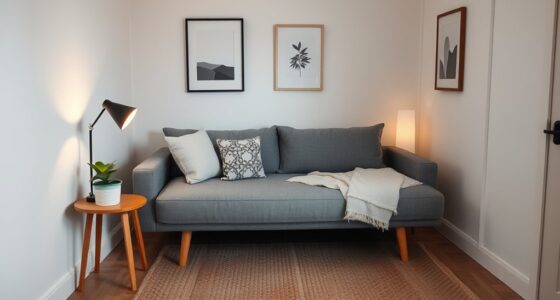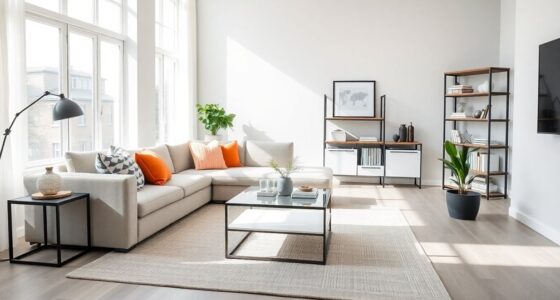
Balancing kid-friendly and senior-friendly room layouts means prioritizing safety, comfort, and accessibility. You should arrange furniture against walls to keep pathways clear and reduce trip hazards for both groups. Use rounded edges and low-profile furniture to prevent injuries and make it easier for seniors to sit or stand. Good lighting and clutter management are essential for everyone’s safety, while adjusting these features guarantees the space remains functional and secure for all. Explore more tips to perfect your room setup.
Key Takeaways
- Kid-friendly rooms prioritize soft edges, low furniture, and toy clutter management to prevent choking and trip hazards.
- Senior-friendly layouts emphasize clear pathways, accessible furniture heights, and improved lighting for mobility safety.
- Both designs minimize obstacles by arranging furniture against walls and maintaining unobstructed walkways.
- Lighting strategies differ: kids benefit from playful, bright lighting; seniors need consistent, glare-free illumination.
- Safety features should adapt over time, balancing comfort, accessibility, and hazard prevention for all ages.

Creating a safe room layout is essential to prevent accidents and guarantee comfort for both kids and seniors. When designing a space that caters to everyone’s needs, paying close attention to furniture placement is crucial. You want to arrange furniture so that pathways are clear and free of clutter, reducing the risk of trips and falls. Place larger pieces like sofas and beds against walls to keep walkways open, and avoid blocking doorways or exits. For kids, ensure that furniture edges are rounded or padded to prevent injuries, and keep toys or small objects out of walking paths. For seniors, consider low-profile furniture that’s easy to sit down and stand up from, and avoid high beds or chairs that require additional effort to get on or off.
Lighting adjustments are equally vital in creating a safe environment. Proper lighting minimizes shadows and brightens dark corners, which can be hazards especially for seniors with impaired vision. Use adjustable lighting options, such as dimmer switches, so you can modify the brightness based on the time of day or activity. For kids, ensure that nightlights are in place in bedrooms and hallways, providing enough illumination for safe navigation during nighttime trips. Additionally, natural light is beneficial during daytime hours; keep windows unobstructed to let sunlight fill the space, but also incorporate blackout curtains or blinds to control glare. For seniors, ensure that lighting is evenly distributed across the room, avoiding overly bright or dim spots. Motion-activated lights can be a great addition, illuminating pathways as needed without requiring manual switches, which can be difficult to operate for some seniors.
Incorporating these elements—thoughtful furniture placement and strategic lighting adjustments—creates a safer, more welcoming room for everyone. For kids, this means reducing hazards and encouraging independence, while for seniors, it enhances visibility and reduces fall risks. Always test your setup by walking through the space yourself or asking others to do so, paying attention to potential obstacles or poorly lit areas. Remember, the goal is to foster a home environment that promotes safety without sacrificing style or comfort. By carefully arranging furniture and optimizing lighting, you ensure that your space is as secure and accommodating as possible for both the little ones and the elderly members of your household. Additionally, regular maintenance of lighting fixtures and furniture can help prevent malfunctions or deterioration that might compromise safety over time.
Frequently Asked Questions
How Do Lighting Needs Differ Between Kids and Seniors?
You’ll notice that lighting variations are vital when catering to kids and seniors. Kids need brighter, well-distributed lighting to see visual cues clearly and stay safe, while seniors benefit from softer, glare-free lighting that reduces eye strain. Proper illumination helps both groups navigate safely, but it’s essential to adapt lighting levels to their specific needs, ensuring visibility without causing discomfort or hazards.
What Are the Best Materials for Slip-Resistant Flooring?
Are you wondering about the safest flooring options? You should choose materials like rubber, vinyl, or textured cork because they meet safety standards and provide excellent slip resistance. These options help reduce falls and injuries, especially for kids and seniors. Always check for slip-resistant ratings and durability to guarantee your flooring meets safety standards. Isn’t safety worth investing in the right materials for your space?
How Should Emergency Exits Be Designed for Both Groups?
You should design emergency exits with clear, unobstructed fire escape routes that are easily accessible for both children and seniors. Use bright, high-contrast emergency signage to guide everyone quickly during emergencies. Install handrails along paths and ensure doors are wide enough for mobility aids. Proper lighting and non-slip flooring enhance safety, helping all occupants evacuate efficiently and confidently in urgent situations.
What Safety Measures Prevent Falls in Shared Rooms?
Ironically, falls are easy to prevent if you focus on simple safety measures. You should guarantee playground supervision is constant, so kids stay on safe surfaces and avoid hazards. For seniors, secure medication safety by storing meds properly and keeping pathways clear. Use non-slip mats, handrails, and good lighting. These strategies create a safer environment, reducing fall risks for everyone, even when it seems like common sense isn’t so common.
How Can Noise Levels Be Managed for Safety and Comfort?
To manage noise levels for safety and comfort, you should implement soundproofing techniques like installing acoustic paneling and sealing gaps. These methods reduce sound transmission, creating a quieter environment. Encourage gentle conversations and limit loud activities during quiet times. Regularly assess noise levels and adjust your soundproofing measures as needed. This proactive approach helps make certain a safe, comfortable space for both kids and seniors.
Conclusion
So, whether you’re designing for the energetic kids or the wise seniors, remember: safety is king—because nothing says “fun” like avoiding a trip to the emergency room. Kids need playful chaos, seniors need cautious calm, and somewhere in the middle, we all just want to avoid the furniture gymnastics. With a little planning, you’ll create a space that’s less “danger zone” and more “stay and play.” Who knew safety could be so stylishly simple?