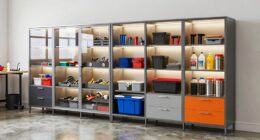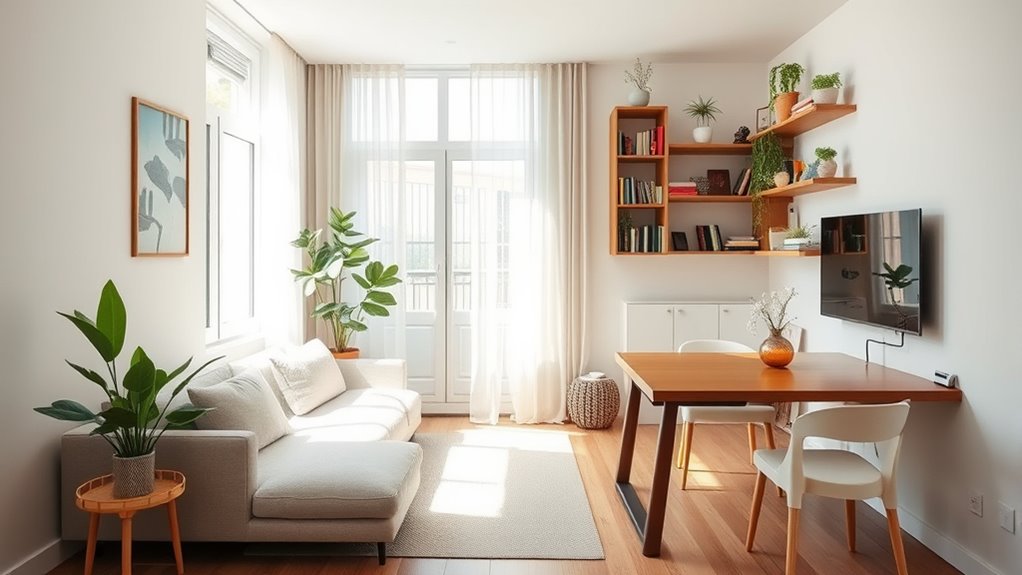

To make your small home feel bigger, focus on smart organization and minimalism. Maximize vertical space with shelves and use multi-functional furniture like beds with storage. Create clear zones for sleeping, relaxing, and working, keeping surfaces clutter-free. Enhance openness with light colors, mirrors, and strategic furniture placement to improve natural light flow. Simplifying your space will boost comfort and style—keep exploring ways to make your cozy home feel expansive and inviting.
Key Takeaways
- Incorporate vertical storage solutions and multi-functional furniture to maximize space and reduce clutter.
- Use a minimalist furniture layout with open pathways and strategic placement to enhance perceived spaciousness.
- Enhance natural light and add mirrors to reflect light, making small areas feel larger and more open.
- Regularly declutter and reorganize to reveal the home’s full potential and maintain a spacious environment.
- Choose light colors and transparent furniture to create an airy, expansive visual effect in the small home.
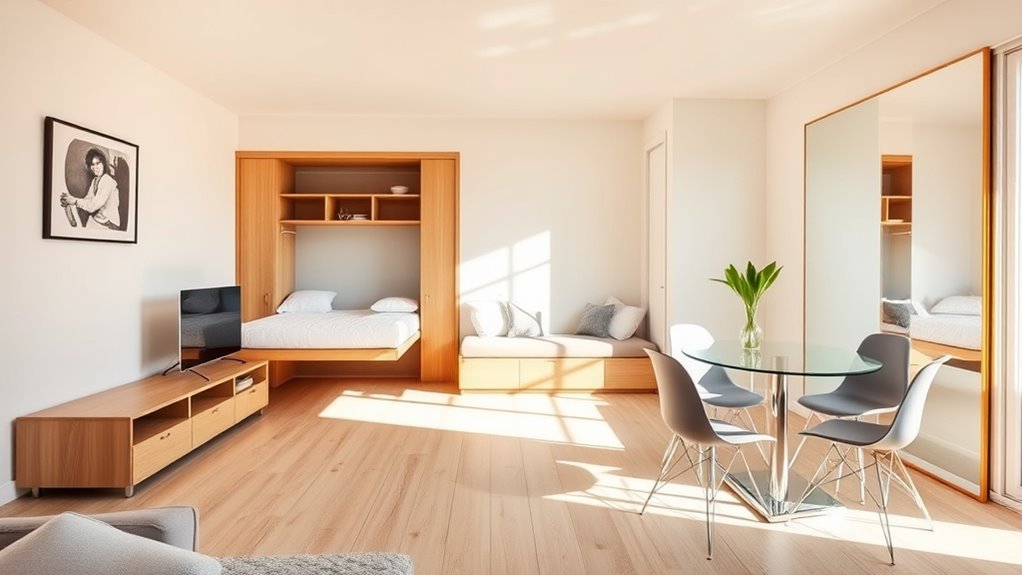
Reducing your living space can be a practical way to save money, simplify your lifestyle, and create a more manageable environment. When you downsize, every item and piece of furniture counts, so it’s essential to make smart choices about how you organize and utilize your space. One of the most effective strategies is to focus on creative storage solutions that maximize every inch of your home. Think vertically—install shelves or wall-mounted cabinets to keep clutter off the floors and create extra storage without sacrificing square footage. Multi-functional furniture is another game changer; choose pieces like ottomans with hidden compartments, fold-out beds, or coffee tables with built-in storage. These items help you maintain a clean, open feel while providing practical space-saving options.
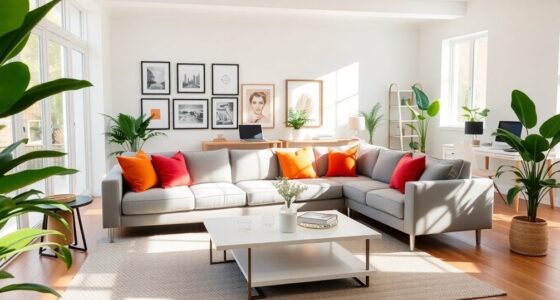
Your furniture arrangement plays a vital role in making a small home feel larger. Instead of crowding a room with too much furniture, opt for a minimalist approach that emphasizes open pathways and strategic placement. For example, position larger furniture against walls to open up the center of the room, making it feel more spacious. Use furniture with exposed legs, which creates a sense of lightness and allows your eye to see through the piece rather than being blocked by solid bases. Keep surfaces clear of unnecessary clutter—use decorative baskets or boxes to contain small items and reduce visual chaos. By carefully planning your furniture layout, you can create distinct zones within your home for sleeping, relaxing, and working, all without overcrowding.
Smart furniture placement and minimalism create spacious, functional zones in small homes.
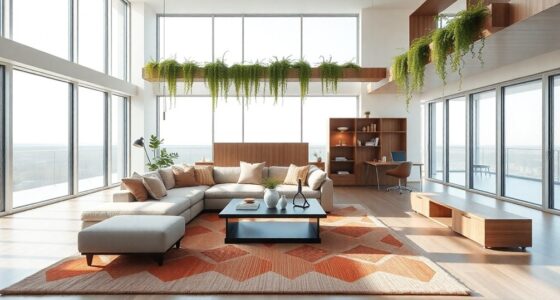
Lighting is another powerful tool to enhance your space. Well-placed mirrors reflect light and make rooms appear larger, while layered lighting—combining overhead, task, and accent lights—adds depth and warmth. When arranging furniture, consider the flow of natural light; keep windows unobstructed to flood your space with sunlight, which visually expands the room. Opt for transparent or lightweight furniture pieces where possible, as they tend to take up less visual space and contribute to an airy atmosphere. Incorporating AI security insights into your space planning can help you identify potential vulnerabilities and ensure your home remains safe as you downsize.
Finally, don’t forget the importance of decluttering regularly. When your space is free of unnecessary items, it’s easier to see your home’s full potential. Use creative storage ideas to keep belongings out of sight but within reach, and rearrange furniture periodically to refresh the layout and improve flow. Downsizing isn’t just about reducing your physical possessions; it’s about creating a smarter, more intentional environment where every piece has a purpose. With thoughtful furniture arrangement and inventive storage solutions, you can make even the smallest home feel spacious, comfortable, and inviting.
Frequently Asked Questions
How Can I Maximize Storage Without Cluttering My Small Home?
To maximize storage without clutter, you should incorporate hidden storage options like ottomans, beds with drawers, or under-stair compartments. Use vertical shelving to take advantage of wall space, keeping surfaces clear and organized. Opt for multi-functional furniture pieces that serve dual purposes. Regularly declutter to keep only essentials, and utilize behind-door organizers. These strategies help you create a spacious feel while maintaining ample storage in your small home.
What Are the Best Color Schemes to Make a Space Feel Larger?
You should choose light, neutral colors like soft whites or pale grays to make your space feel larger. For example, a small apartment painted in light shades benefits from color psychology, which creates a calming, open atmosphere. These colors reflect more light, enhancing visual illusions of space. Using such schemes makes your home appear bigger and brighter, helping you enjoy a more spacious feeling every day.
How Do I Choose Multi-Purpose Furniture Effectively?
To choose multi-purpose furniture effectively, focus on foldable furniture and modular designs that adapt to your needs. Look for pieces that serve multiple functions, like a sofa bed or a fold-out table, and opt for smart storage solutions within these items. Consider your space layout and pick versatile pieces that can be easily moved or reconfigured, helping your home feel larger and more functional without clutter.
What Lighting Options Make a Small Space Feel More Open?
You can make your small space feel more open by maximizing natural light through sheer curtains or open blinds, which brighten the room. Incorporate ambient lighting like wall sconces, recessed lights, or floor lamps to create a warm, inviting atmosphere without cluttering. Combining natural light with well-placed ambient lighting enhances the sense of openness, making your space feel larger and more comfortable.
How Can I Create Zoning in a Tiny Open-Plan Layout?
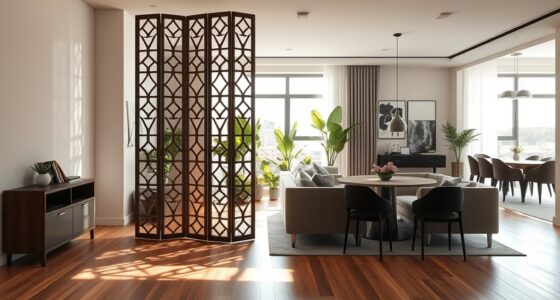
To create zoning in your tiny open-plan layout, start by adding dividing walls or using furniture placement to define different areas. Use shelving units, rugs, or sofas to visually separate spaces without blocking light or making the area feel cramped. Think vertically—tall storage or bookshelves can act as room dividers, while strategic furniture placement helps establish distinct zones, making your small home feel more organized and spacious.
Conclusion
By applying these downsizing strategies, your small home can feel as spacious as a mansion. Think of it like a well-edited closet—every item has a purpose, making the space breathe easier. Remember, smart storage, thoughtful furniture choices, and decluttering turn tight areas into open, inviting environments. With a little planning, you’ll see that less truly is more, and your cozy space can feel just as grand as you imagined.