
Choosing between open floor plans and cozy, segmented rooms depends on your safety, privacy, and social needs. Open layouts promote easy navigation and social interactions but may pose clutter and safety challenges. Cozy rooms offer comfort, privacy, and easier emergency exits but can limit accessibility. Consider your lifestyle, safety concerns, and personal preferences. To find out which suits you best and how to optimize your space, explore more insights below.
Key Takeaways
- Open floor plans improve visibility and accessibility but may pose safety risks without proper clutter management and lighting.
- Cozy, segmented rooms enhance privacy and safety with defined zones, facilitating easier emergency egress.
- Open layouts often cost more initially but support social engagement; segmented rooms may have lower upfront costs and better insulation.
- Open plans promote social interaction but can increase noise; segmented rooms offer private retreats for rest and reflection.
- Long-term, cozy rooms may require less maintenance and energy use, while open layouts offer adaptable spaces for evolving needs.
Advantages of Open Floor Plans for Seniors
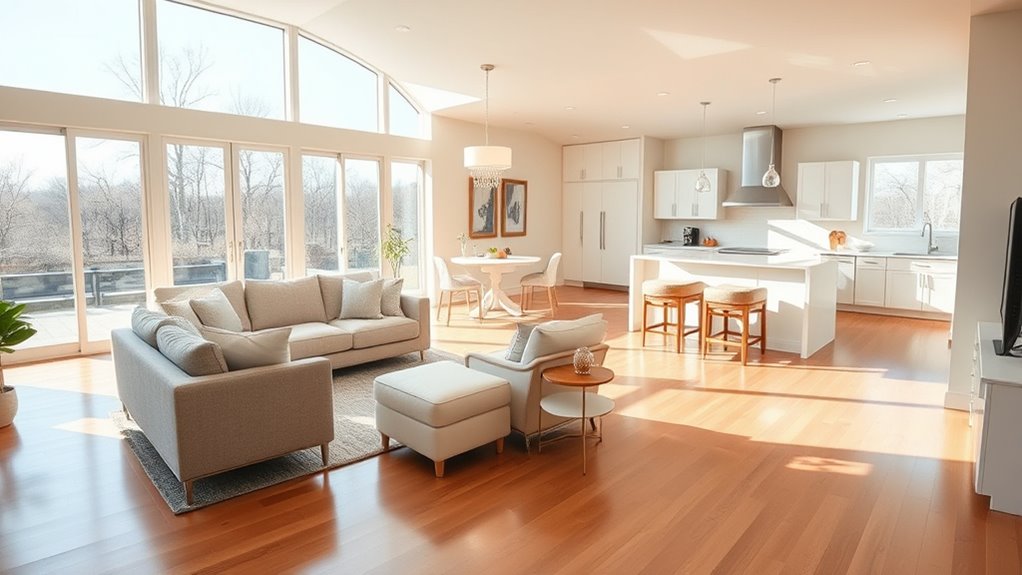
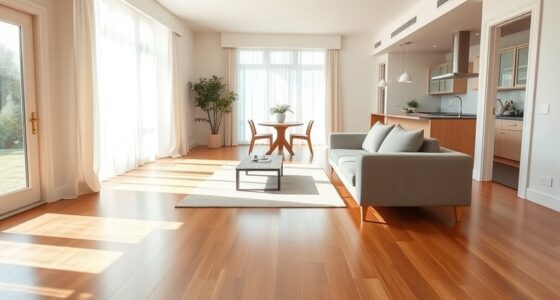
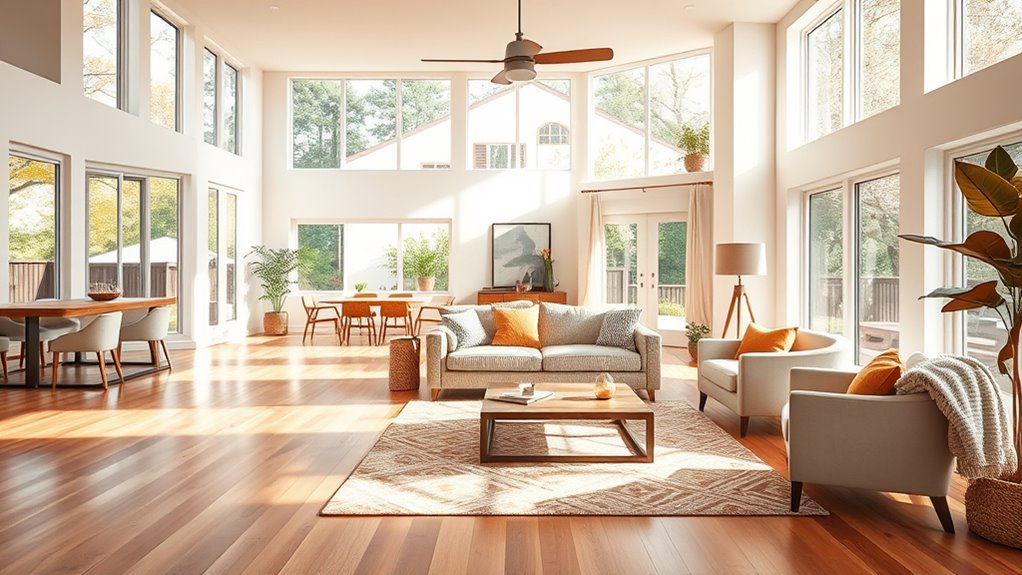
Open floor plans offer several advantages for seniors by creating a more accessible and safer living environment. With fewer walls and barriers, you can move easily between spaces, reducing the risk of trips and falls. Lighting flexibility is another benefit; open layouts allow natural light to flow throughout, brightening the entire area and improving visibility. This not only enhances safety but also boosts your mood and energy levels. Additionally, open designs add aesthetic appeal by creating a sense of spaciousness and modernity, making your home feel inviting and comfortable. You’ll appreciate the simplicity of navigation and the way natural light highlights your decor. A higher contrast ratio in lighting and design can also improve visual clarity and safety, making it easier to distinguish different areas and objects. Overall, open floor plans support independence and convenience, making everyday living more enjoyable and secure.
Benefits of Cozy, Segmented Rooms in Aging in Place
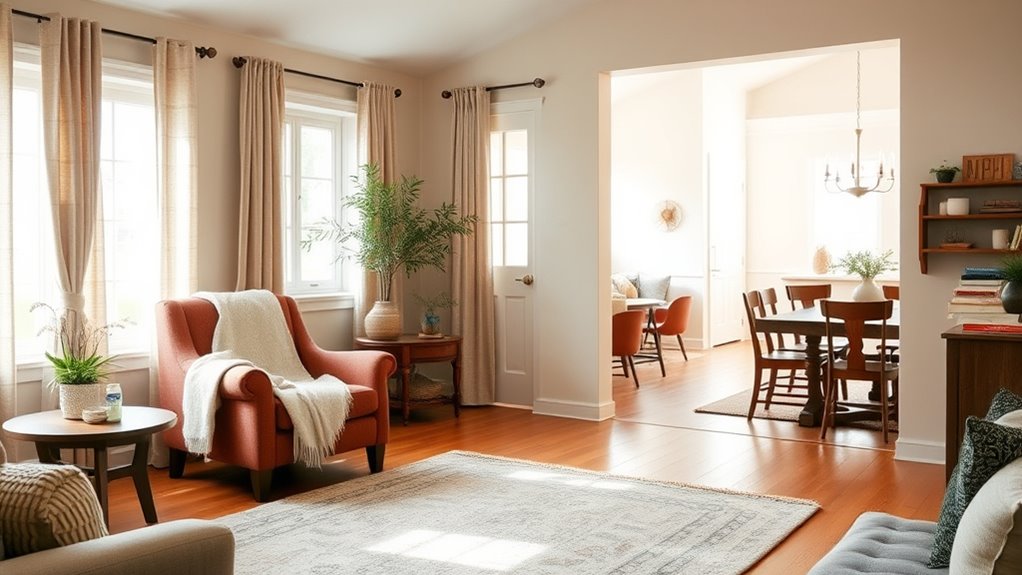
While open floor plans promote ease of movement, cozy, segmented rooms offer a different set of advantages for aging in place. These segmented spaces create distinct areas that foster comfort and familiarity, making daily routines more manageable. Cozy corners provide quiet retreats for relaxation or reflection, reducing stress and promoting mental well-being. Segmented spaces help you maintain independence by clearly defining areas for specific activities, minimizing confusion. Additionally, these rooms enhance safety by limiting the need to navigate large open areas, preventing falls or accidents. They also support social engagement by creating intimate zones for interaction without overwhelming the senses. Segmentation allows for better control over the environment and promotes a sense of ownership and comfort within the home. Segmented spaces can also improve overall home organization by clearly delineating functional zones, making daily tasks easier to manage. Incorporating familiar decor elements from bedroom design, such as personal mementos or vintage furniture, can further enhance comfort and a sense of belonging. For example, using specialized planters to organize indoor plants in designated areas can boost both aesthetics and functionality. Furthermore, understanding the financial impact of home modifications can guide smarter decisions for aging in place.
Safety Considerations in Open Versus Closed Designs
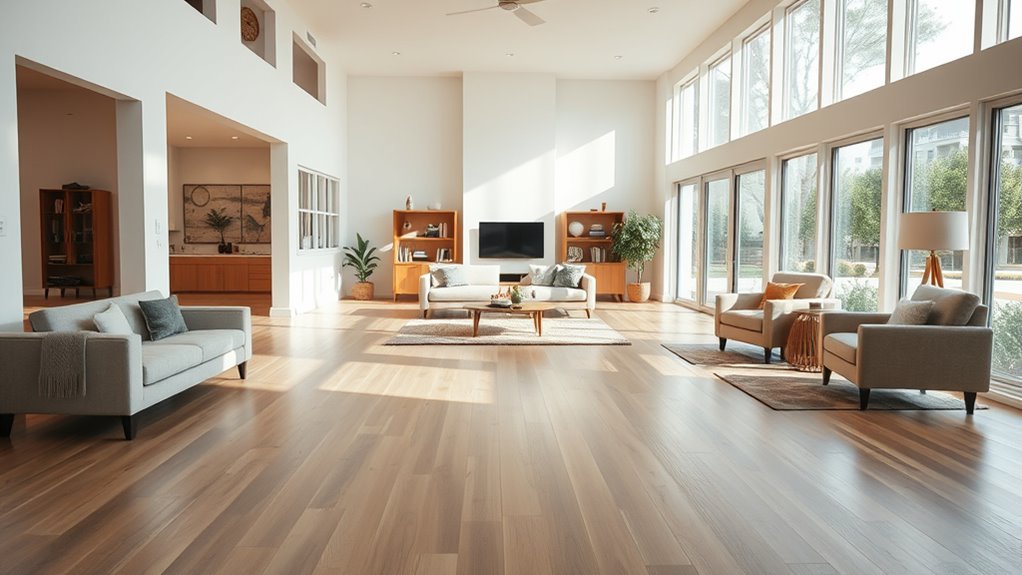
Open floor plans can make fall hazards more visible but may also create clutter that’s harder to navigate. Closed rooms often provide easier emergency egress, especially in urgent situations. Consider how obstacle placement and room layout impact safety when choosing between open and closed designs.
Fall Hazards Visibility
Because open floor plans lack walls and barriers, they can make fall hazards more visible but also more challenging to navigate safely. They highlight obstacles but require careful attention to details like decorative lighting and furniture placement to prevent trips. Proper lighting ensures pathways are well-lit, reducing the risk of unseen hazards. Strategic furniture placement creates clear routes and minimizes clutter, making movement safer. Additionally, consider these factors:
- Use contrasting floor colors to highlight changes in level
- Install motion-activated lighting for better visibility at night
- Keep walkways free from loose rugs or cords
- Position furniture to avoid sharp corners in main pathways
- Ensure adequate lighting over stairs and transitions
- Being aware of spatial awareness helps in navigating open spaces more safely. Incorporating electric bike safety features, such as bright lights and reflectors, can also improve visibility during low-light conditions and promote safer movement around your home. Developing balance and coordination through exercises can further reduce the risk of falls. Regularly practicing mindfulness techniques can enhance your attention span, making it easier to stay alert to potential hazards as you move through your environment. Additionally, understanding the local building codes can ensure your home modifications comply with safety standards to prevent accidents.
These measures enhance fall hazard visibility, helping you move confidently through open spaces.
Emergency Egress Ease
Emergency egress is a critical safety consideration that varies markedly between open floor plans and closed-room designs. In open layouts, exits are more accessible, and lighting control can be quickly adjusted to illuminate escape routes, enhancing safety. However, the spacious aesthetic appeal might make it harder to identify exits quickly if lighting isn’t well-planned. Closed rooms offer distinct escape points, but narrow hallways or locked doors can hinder rapid evacuation. To better understand, consider this table:
| Design Type | Lighting Control | Egress Accessibility |
|---|---|---|
| Open Floor Plan | Easier to illuminate entire space | Clear, wide escape routes |
| Closed Rooms | Focused lighting for safety | Potential barriers, narrow halls |
| Mixed Designs | Balanced lighting, strategic exits | Varies by room and layout |
| Accessibility | Automated lighting for quick escape | Door placement influences ease |
| Aesthetic Appeal | Seamless integration of lighting | Can compromise egress clarity |
Both designs require careful planning to prioritize safety without sacrificing aesthetic appeal. Additionally, incorporating emergency lighting can further enhance safety during evacuations.
Obstacle Navigation Simplicity
Navigating obstacles in a home layout directly impacts safety, especially during emergencies. Open floor plans often offer fewer barriers, making obstacle movement straightforward. However, clutter or furniture placement can hinder movement, impacting decor customization and aesthetic appeal. Conversely, cozy rooms with defined spaces can reduce confusion but may introduce tighter pathways, increasing trip hazards. To enhance obstacle navigation:
- Keep walkways clear and unobstructed
- Use low-profile furniture for easier movement
- Ensure sufficient lighting in all areas
- Incorporate non-slip flooring for safety
- Balance decor customization with functional layout
Both designs require mindful planning to prioritize obstacle movement simplicity, ensuring safety without sacrificing aesthetic appeal. The goal is a layout that’s safe, adaptable, and visually pleasing, supporting aging in place comfortably.
Impact on Social Engagement and Privacy
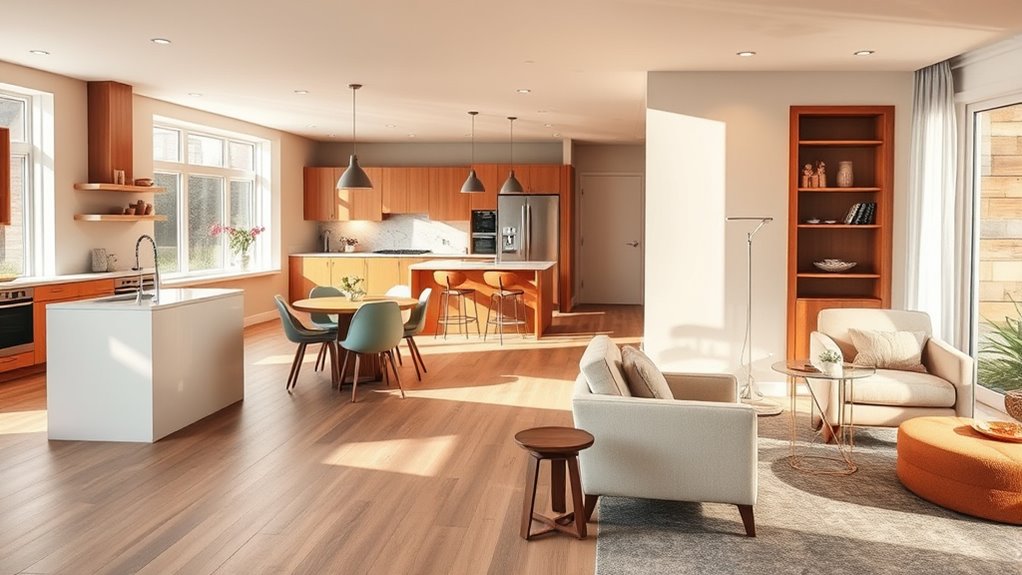
Open floor plans often encourage social interaction by removing barriers between spaces, making it easier for you to connect and engage with others. However, this openness can raise privacy concerns, especially if you value quiet or personal space. Noise levels tend to increase in open layouts, which can disrupt conversations or rest, potentially leading to frustration or a feeling of being exposed. If you’re someone who enjoys frequent socializing or hosting visitors, an open plan supports your needs. But if privacy is a priority, especially for resting or private conversations, cozy rooms provide a natural retreat. Balancing social engagement with privacy means considering how much noise you’re comfortable with and whether you need quiet spaces for reflection or confidential talks. Understanding your privacy preferences can help you choose the best layout for aging in place.
Cost and Maintenance Factors in Different Layouts
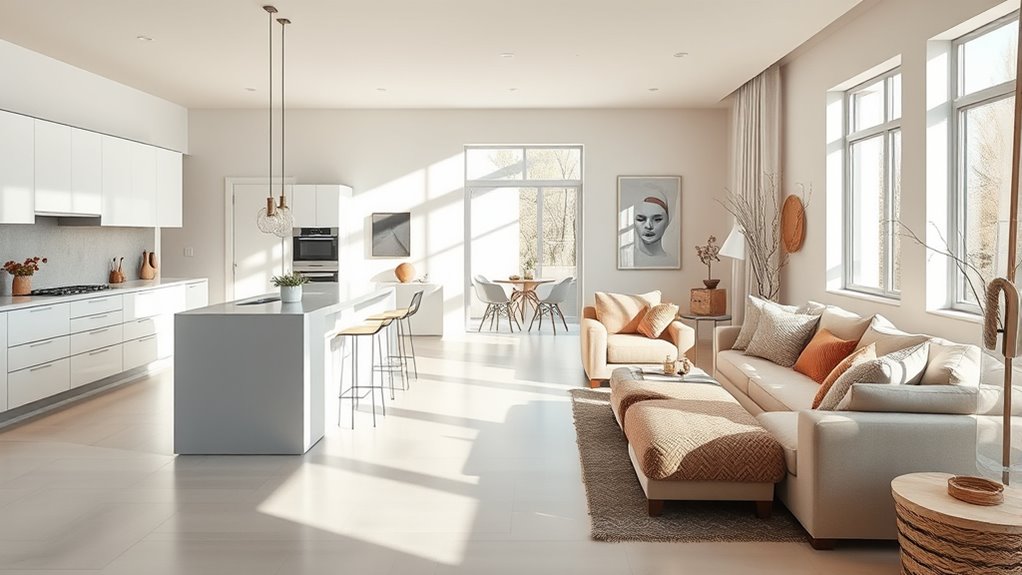
Open floor plans often require higher construction and renovation costs due to open wall structures and specialized materials. Cozy rooms typically cost less upfront but may need more maintenance over time, like painting or repairs in smaller, enclosed spaces. Considering long-term upkeep expenses can help you decide which layout fits your budget best. Implementing regular quality assurance practices can also ensure that maintenance is performed efficiently and effectively over the years. Additionally, understanding lifestyle and money factors such as ongoing costs can assist in making a sustainable choice.
Construction and Renovation Costs
When choosing between open floor plans and cozy rooms, understanding the construction and renovation costs is essential, as these layouts can considerably influence your budget. Open designs often require more extensive structural modifications, affecting costs related to architectural aesthetics and material durability. Cozy rooms, on the other hand, may involve simpler renovations, but could need upgrades for safety and accessibility.
Consider these factors:
- Structural reinforcement for open spaces
- Costs of high-quality, durable materials
- Potential need for custom architectural features
- Costs associated with soundproofing and insulation
- Flexibility for future modifications
Your choice impacts not only initial expenses but also the long-term value and maintenance needs of your home. Balancing aesthetic appeal with durability helps guarantee your space remains comfortable and cost-effective over time.
Long-term Upkeep Expenses
While initial construction costs vary between open floor plans and cozy rooms, it’s equally important to contemplate how these layouts affect long-term expenses. Open floor plans often mean fewer walls and less maintenance, saving money on repairs and updates. However, they can lead to higher energy bills due to increased heating or cooling needs, impacting energy efficiency. Cozy rooms, with more divided spaces, may require more frequent garden maintenance around smaller outdoor areas, but they often contain better insulation, reducing energy costs over time. Additionally, the presence of features like heated mattress pads can contribute to energy savings by providing targeted warmth without heating the entire space. Moreover, the choice of layout influences long-term upkeep, as different configurations may necessitate varying levels of ongoing maintenance and repairs. For instance, open spaces may require less frequent updates to interior finishes but might need more attention to soundproofing to maintain comfort. Properly designing and maintaining your layout can also help mitigate unforeseen costs associated with home repairs. Consider how your layout influences these factors, as ongoing expenses can substantially affect your ability to age comfortably at home. Balancing initial costs with long-term upkeep helps you choose a layout that supports both your budget and your lifestyle.
Personal Preferences and Lifestyle Needs
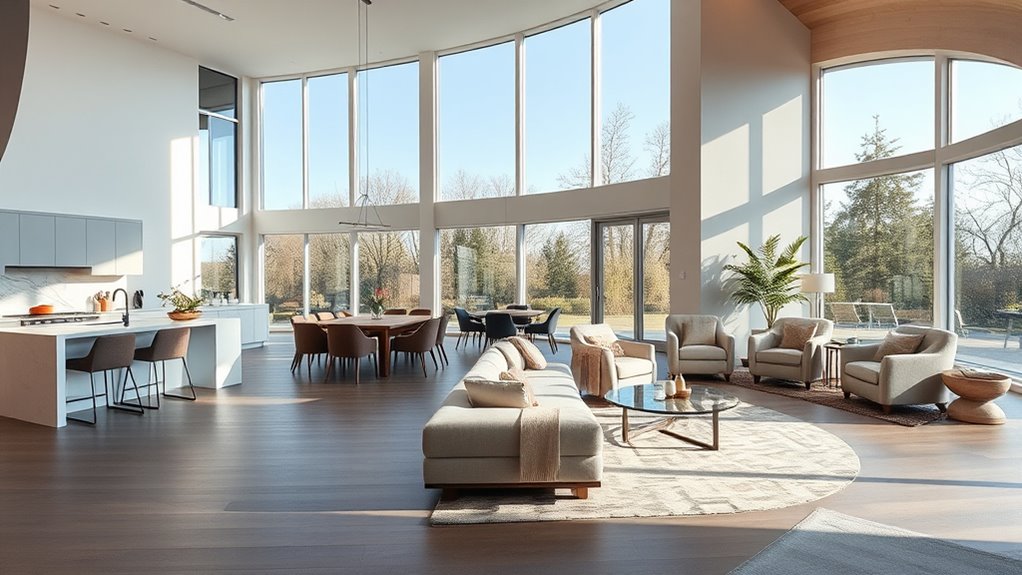
Choosing between open floor plans and cozy rooms often depends on your personal preferences and lifestyle needs. Your interior decor style and lighting design play essential roles in creating spaces that feel comfortable and functional for aging in place. Consider how you prefer to engage with your environment: – Do you enjoy social gatherings or quiet, private spaces? – Is mobility a concern, requiring clear pathways and accessible layouts? – Do you prioritize natural light or specific lighting design for safety? – Are you drawn to minimalist or traditional interior decor? – Do you want spaces that can adapt to changing needs over time? Your choices should reflect what makes you feel most at home, ensuring your living space supports both your independence and comfort. Incorporating adaptive design principles can help create a flexible environment that evolves with your needs.
Frequently Asked Questions
How Do Open Floor Plans Affect Emergency Evacuations for Seniors?
You might find that open floor plans make emergency evacuations easier because they reduce obstacles and improve visibility. With home automation, you can quickly alert seniors and guide them to exits. Additionally, knowing your neighborhood safety permits you to plan safe routes. These features help guarantee seniors can evacuate swiftly and safely, even in urgent situations, making open layouts beneficial for aging in place.
Are Cozy Rooms Better for Managing Medical Equipment and Assistive Devices?
Cozy rooms often excel at managing medical equipment and assistive devices because they provide dedicated spaces for storage solutions and privacy. Unlike open floor plans, these rooms reduce clutter, making it easier to organize and access essential items quickly. You’ll appreciate the privacy considerations, which help maintain dignity and focus on health needs. In smaller or more sensitive environments, cozy rooms support better management and comfort for your aging-in-place journey.
Which Layout Minimizes Fall Risks for Elderly Residents?
You should choose a layout that minimizes fall risks by focusing on room lighting and furniture placement. Well-lit rooms help you see obstacles clearly, reducing trip hazards. Keep furniture spaced out and avoid clutter, making it easier to navigate safely. A more structured, cozy room with clear pathways and ample lighting typically offers better fall prevention for elderly residents, supporting their independence and safety at home.
How Do Different Designs Impact the Mental Health of Aging Individuals?
Imagine your home as a warm hug, where every space nurtures your mental well-being. Different designs shape your mood and social interaction; open layouts invite lively conversations, boosting mental health, while cozy rooms offer comfort and security. You benefit most when your environment balances connection and tranquility, helping you stay engaged, happy, and resilient as you age. Your home becomes a sanctuary that supports your emotional robustness every day.
Can a Home Be Both Open and Cozy Effectively for Aging in Place?
You can create a home that’s both open and cozy by focusing on design harmony and space optimization. Use open layouts for easy navigation, reducing fall risks, while adding cozy nooks or warm lighting for comfort. Incorporate multi-functional furniture and thoughtful placement to balance openness with intimacy. This approach guarantees your space feels welcoming and functional, supporting aging in place with both accessibility and a sense of security.
Conclusion
Choosing between open floor plans and cozy rooms depends on your personal needs. Did you know that nearly 70% of seniors prefer homes that balance safety, social opportunities, and privacy? Whether you prioritize easy navigation or intimate spaces, your comfort and independence matter most. By understanding these options, you can create a living environment that truly supports your aging journey. Ultimately, the right layout helps you stay safe, connected, and comfortable at every stage.