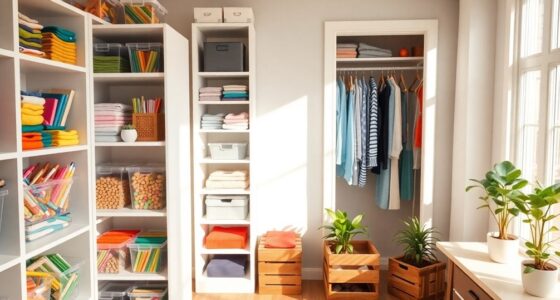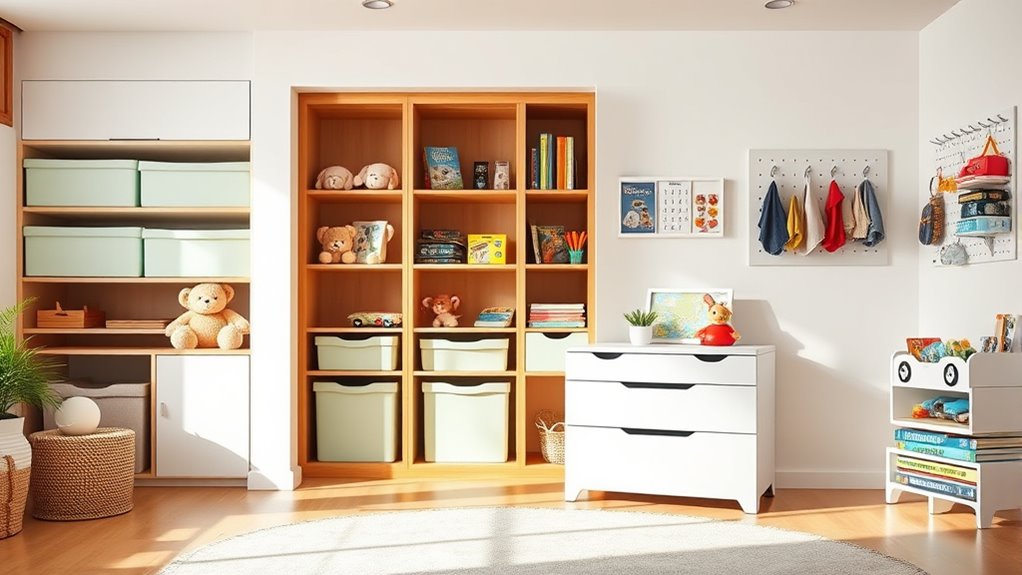

To keep your family room clutter-free, try repurposing household items like wooden crates, fabric bins, and baskets for organized toy storage. Use wall-mounted shelves, pegboards, and hanging baskets to save space and keep toys accessible. Multi-purpose furniture such as ottomans or benches with built-in storage can double as seating. Involving your kids in decorating and organizing enhances responsibility. For more smart solutions to manage toy chaos effectively, continue exploring these clever ideas.
Key Takeaways
- Use repurposed household items like wooden crates and fabric bins, clearly labeled for easy toy identification.
- Maximize space with wall-mounted shelves, pegboards, and hanging baskets to keep toys organized and off the floor.
- Incorporate multi-purpose furniture such as ottomans and benches with hidden storage to combine seating and toy organization.
- Involve children in decorating and deciding storage spots to promote responsibility and make cleanup fun.
- Maintain a clutter-free space through consistent organization, themed decor, and DIY storage solutions tailored to your room’s needs.
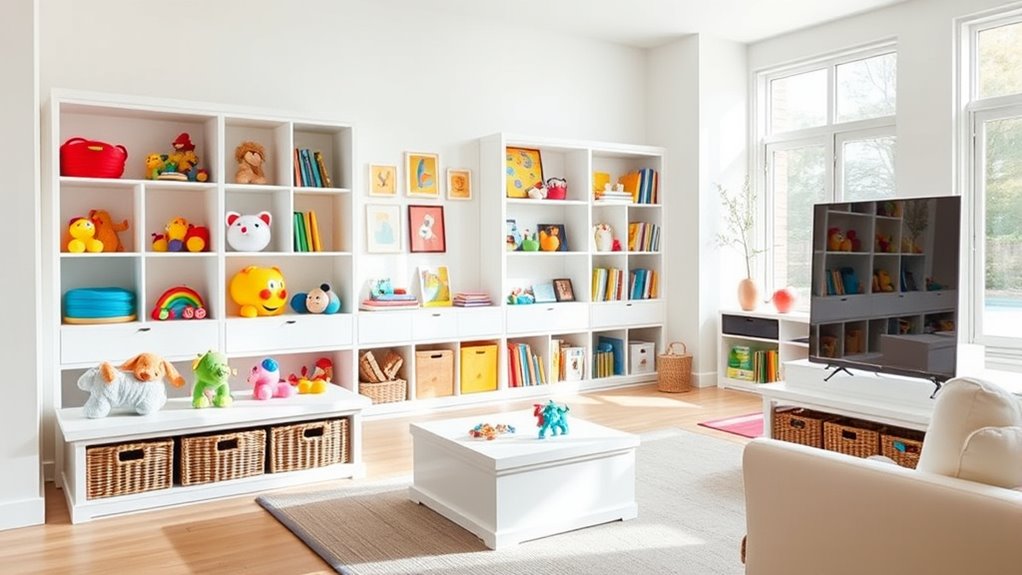
A cluttered family room can quickly become overwhelming, but with the right storage solutions, you can keep everything organized and easily accessible. When it comes to managing toys and kids’ belongings, effective playroom organization is essential. It not only keeps your space tidy but also encourages your children to be responsible for their items. One of the best ways to achieve this is by incorporating DIY storage ideas into your setup. Creating customized storage options allows you to tailor solutions to your space and your kids’ needs, all while saving money.
Start by repurposing items you already have around the house. Wooden crates, fabric bins, or even old baskets can serve as stylish and functional storage containers. Label each container clearly with words or images so your children can easily identify where each toy belongs. This simple step helps foster independence and makes cleanup time faster. For smaller toys, consider using stackable containers or drawer system units that can fit into tight spaces, ensuring nothing gets lost or left out.
Repurpose household items and label containers to boost independence and simplify cleanup.
When designing a playroom organization system, think vertically. Wall-mounted shelves, pegboards, or hanging baskets free up floor space while keeping toys within reach. Installing low shelves or cubbies allows your kids to access their favorite items without your help, making cleanup more manageable. Incorporate open storage for frequently used toys and hidden compartments for items you want to keep out of sight. This balance keeps the room looking neat and prevents clutter from piling up.
Another effective DIY storage idea is using multi-purpose furniture. Ottomans with internal compartments or benches with built-in storage serve dual functions—providing seating and a place to stash toys. These pieces are especially useful in small rooms where space is limited. Plus, they add a cozy touch to the room’s decor.
Lastly, involve your kids in the process. Let them help decorate storage bins with stickers or paint, or decide where certain toys should go. This involvement makes them more likely to put things back in their designated spots after playtime. Additionally, anime movies can be a fun and inspiring theme for decorating storage spaces, making organization more engaging for children. Remember, the key to maintaining a clutter-free family room is consistent effort and smart organization. By implementing DIY storage ideas and prioritizing playroom organization, you’ll turn chaos into order, creating a welcoming space where everyone can enjoy themselves without the stress of clutter.
Frequently Asked Questions
How Can I Encourage Kids to Clean up After Playtime?
You can encourage kids to clean up after playtime by involving children in the process and establishing reward systems. Make cleanup fun by setting timers or playing their favorite music. Use positive reinforcement, like praise or small rewards, to motivate them. Consistency is key—set clear expectations and routines. When kids feel involved and rewarded, they’re more likely to develop good habits and keep their play areas tidy.
What Are Eco-Friendly Storage Options for Toys?
Eco-friendly storage options offer sustainable solutions for your space. You can choose biodegradable containers that naturally break down, reducing waste. Recycled material baskets are stylish and sturdy, giving your kids a responsible way to store toys. By opting for these eco-conscious choices, you promote environmental awareness while keeping your family room organized. This simple switch saves space, supports sustainability, and sets a great example for your children’s eco-friendly habits.
How Do I Choose the Right Storage Solution for Different Toy Sizes?
When choosing a storage solution, consider toy size and storage compatibility. For smaller toys, opt for bins or baskets that fit neatly on shelves, making cleanup quick. Larger toys like plush or building blocks need bigger containers or toy chests. Measure your space and toy dimensions first, then select versatile options that accommodate a variety of sizes. This way, you keep your family room organized and guarantee every toy has a perfect spot.
Can Storage Solutions Be Stylish and Match My Home Décor?
You can absolutely find storage solutions that are both stylish and match your home décor. Look for options that prioritize design harmony and aesthetic integration, like sleek baskets, stylish bins, or furniture with built-in storage. Choose colors, materials, and finishes that complement your existing décor. This way, your storage blends seamlessly into your space, keeping it organized without sacrificing style or visual appeal.
How Often Should I Declutter and Organize Toy Storage?
Think of your toy storage like tending a garden—regular pruning keeps it flourishing. You should declutter and reorganize every few months, using storage container labels to streamline the process. Implement toy rotation strategies to keep things fresh and manageable. Regular attention prevents chaos from taking over, ensuring your family room stays inviting and organized. Consistent care transforms clutter into harmony, making tidying up a natural, stress-free part of your routine.
Conclusion
Now that you’ve uncovered these clever storage ideas, imagine the transformation your family room could undergo. With just a few simple changes, you’ll create a space that’s both organized and inviting—yet there’s one final trick that could take it even further. Are you ready to discover it? Stay tuned, because the secret to maintaining a clutter-free haven might be closer than you think. The best is yet to come—are you prepared to embrace it?